Category Archives: Book Notes

The Burning Bridge

The Burning Bridge (Ranger's Apprentice, Book 2)Author: Flanagan, John
Rating:
Reading Level: 4th to 7th

Pages: 262
Publisher: Philomel
Edition: Hardcover, 2006

A solid follow-up to the really fun first Ranger’s Apprentice title. Although the world is quite fantastic with monsters and some magical elements, most of the plot evolves around military tactics and your basic adventures (sword fights, archery, etc.) The main characters do not possess magical abilities. The pacing is tight and there are some surprises that will keep even a seasoned fantasy reader focused.

View all my goodreads reviews.

Leave a comment

Filed under Book Notes

The Last Olympian

The Last Olympian (Percy Jackson and the Olympians, Book 5)Author: Rick Riordan
Rating:
Reading Level: 3rd to 7th

Pages: 381
Publisher: Hyperion
Edition:Hardcover, 2009

Pure adrenaline inducing 381 pages of fun. I’m so glad that the level of action and humor is maintained throughout the entire series — that the last book did not suddenly become some deep philosophical revelation. (I definitely did not get into these books for their messages or meanings.) It’s been quite a craze here at the school and the waiting list of eager readers is mighty long, deservingly so.

View all my good reads reviews.

1 Comment

Filed under Book Notes

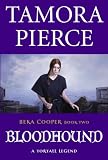
Bloodhound: Beka Cooper II

Bloodhound (Beka Cooper, Book 2)Author: Tamora Pierce
Rating:
Reading Level: 6th grade and up

Publisher: Random House
Edition: Galley, 2009


I really liked the first one and have been waiting for the second installment for a long long time. The second book still works. My initial quibble of not believing Beka able to write all of the stuff down in her journal still stands — even with the explanation of ciphers and reports and how events are chopped down into several installments. Still seems a bit far-fetched. However, I guess if one believes in ghost-carrying pigeons and a young woman talking to street dust winds, one has to somewhat allow her to be able to write dialogs and descriptions in such minute details when recording her own exploits.

That’s another thing: the pacing is a bit draggy at moments because it seems a bit too much of JUST Beka — just her thoughts, just her experiences, and just her achievements. All the secondary characters (POUNCE, for example, who is absent for most of the story) take a real Secondary position here. Achoo the hound, although very important to the plot, is not satisfying as a strong supporting character because she is too much of a hound, no human traits at all. I love her, but she cannot replace Pounce whose wry humor adds so much to the flavor of the story.

Dale, as a secondary character at the beginning of the story, never got his chance to even remain in that position. By mid-book, he’s already just a bit of thoughts in Beka’s mind. This shows Beka’s dedication to her work and how incredibly sensible she is, but I feel slightly let down by Dale’s demotion. He definitely could have played a larger part in the story (either helping or hindering Beka’s tasks) because he was positioned to do so from the get go (but peters out…)

Having Hanse explain all the rhymes and reasons seems a bit of an easy and very basic mystery device (for that is what this series is… Law and Order meets Tortall Fantasy.) I was hoping for huge surprises and unexpected villains and deeper plots.

Oh, I sound too critical, I do believe. Going to end by saying that I definitely enjoyed following Beka through the streets, watching her eat sea food, seeing her fight various villains — above ground and underground. It’s great to be back in the land of such cool magic. Am I now again eagerly waiting for the next book? You betcha!

View all my reviews.

Leave a comment

Filed under Book Notes

Ranger’s Apprentice: The Ruins of Gorlan

Author: John Flannagan
Rating:
Reading Level: 4th to 6th grade

Pages: 249
Publisher: HarperCollins
Edition: Hardcover, 2006

The Ruins of Gorlan (Ranger's Apprentice, Book 1) I finally got around to read this first book in the ever-more popular series that my students have loved for the last few years. I know now why they like the stories and characters so much. The world is easy to understand — since in this first book, the young people are “in schools.” They are being trained in their various trades with cool skills like tracking, archery, sword play, and cooking. One of the main characters gets bullied and eventually those bullies get their just deserts! I can hear the cheering from the young readers! I will from now on describe the book (or the series) as Fantasy Spy Story, a blend of Alex Rider and Lord of the Rings. (Prob. a bit exaggerated but I think that will help interest the next reader!)

View all my goodreads reviews.

Leave a comment

Filed under Book Notes

The Bartimaeus Trilogy

Author: Jonathan Stroud

Reading Level: 6th grade and up

This is a guest blogger post. Josh is 16 years old and just finished the trilogy. (I feel remiss here — since I neglected to recommend this series to him when he was in middle school!) He sent me a long email with his reviews of the three books and we subsequently exchanged a couple more emails, especially about the endings of this trilogy and the His Dark Materials trilogy. There are plot spoilers.

ABOUT The Amulet of Samarkand

Bartimaeus is hilarious. I simply love the djinn. Nathaniel is interesting to follow as well, a fun character with a couple flaws. There really isn’t much to speak of in this book other than plot: it’s fun, but Bartimaeus is the real winner of this one.

ABOUT The Golem’s Eye

Here we see Nathaniel turn into the pompous, arrogant named John Mandrake. He falls into the very trap Bartimaeus told him to avoid: letting the corrupting influence of magicians twist him into something horrible. The things he does and says are unbelievable, and the effect is doubled by how he behaved in the 1st book. We get introduced to Kitty, who’s a good person at heart, and then gets caught up in the whole Honorius affair. Mandrake shows his bastardness with his perpetual breaking of vows, many only hours or less after having made them. Bartimaeus is fun as ever: was sad about Queezle, that she got introduced and then snuffed out, but oh well. So goes the storyline.

ABOUT Ptolemy’s Gate

By far the most interesting, most powerful, most moving, most climactic of the three (well, for that last one I suppose there’s a reason, being the end and all). We see Mandrake turn from arrogant into the marginally better (or worse, depending on your POV) “top magician”. Bartimaeus evokes a lot of sympathy with his sorry state, and Kitty becomes my favorite character for the majority of the book.

And then Mandrake slowly crumbles, leaving a mature Nathaniel. He still has flaws, but then, so does everyone but Bartimaeus. As Kitty and Nathaniel work together, with each other (and slowly begin to admire each other: my guess is given a couple years, they’d end up as very good friends or more, provided Nathaniel doesn’t relapse, which I don’t think he would), it’s my favorite part. To see Kitty put the same trust in Bartimaeus that Ptolemy did, showing greater understanding of him than perhaps even the Egyptian boy (though Ptolemy did not have someone’s notes or previous history as guides, admittedly).

And then, when Nathaniel accepts Bartimaeus into his own body…this is where N/B takes over as my favorite character(s). The fact that, working together, they manage to destroy far more powerful spirits than they. The fact that, working together, they are the culmination of Ptolemy’s hopes and dreams, the ultimate climax of Nathaniel and Bartimaeus’ relationship, the fulfilling of the purpose of Kitty’s visit to the Other Place…once they become both two souls and one, a single 2-part mind in a single body, I could not put it down even for work. I was breathless as they turned the staff on Nouda…

AM. Nathaniel hit by the Detonation. Coming from Barti’s POV, it is even more effective. And then when Nathaniel realizes the seriousness of the wound, his acceptance of his fate and determination to do selfless good is such strong writing. The last meeting with Kitty, where N/B both know what has to be done, and the whole concealing it from K thing…I really felt it. Comparable, at least for me in my after-reading-state, to when Lyra and Will realize they must separate in Amber Spyglass.

True to form, he breaks his final promise, having finally made one beyond his power to keep. This was where I was sad that the “item” could never happen (Kitty’s picking through the wreckage at the end made me think she was feeling the loss of a possible future, one containing more happiness, or at least more possibility, than her current one, a future with a united djinn/human in it).

I thought that writing N and B’s end at the very end was the best move of the whole trilogy. We already know what happens: we know that the great evil is destroyed by the heroic death of N/B. Now we get to see the heart of darkness, the center of the inferno, as N/B march to their death. The connection between them in this scene is so powerful I thought they might actually survive. This isn’t the usual master-servant relationship; this isn’t even Ptolemy’s relationship. Ptolemy was a trusting, kind, benevolent, freedom-giving master, yes, but he was a master, as evidenced by his final dismissal of Barti. N and B banter as friends, they speak as equals, as 2 halves of the whole. Nathaniel’s character at the end here practically radiates goodness off the page. And then, the way he dismisses Bartimaeus, I feel, is from an equal to an equal. The delivery of the dismissal is not that of a master dismissing a slave, but of a friend releasing a friend.

My throat was seized up the whole final scene, but it was the 2nd-to-last paragraph, where the Staff breaks, that the tears almost fell (almost, because I usually manage to keep them in while reading, though I failed during Amber Spyglass several years ago). The simplicity of the writing there – “Nouda did this. Nathaniel finished the Dismissal. I went. The Staff broke.” had so much raw POWER in the way it was written. Stroud simply couldn’t have written that end any better (except maybe Nathaniel surviving: just as he turns good, he turns so good that he must make up for the magicians’ sins and evildoing. He dies for a better world, and I do rather prefer when they get to actually see that world).

I’d discuss the last paragraph but I need breakfast. Barti’s final words in the trilogy, starting with “typical master”, given that Nathaniel was anything but, either give the paragraph a tone of affection or a tone of disgust. Choice of the reader, so I chose affection :)

*** (Another email discussing the endings of Amber Spyglass and Ptolemy’s Gate is omitted.) ***

Amber Spyglass had a Tough ending…but I think that, for me, Ptolemy’s Gate takes the cake. To see what Nathaniel becomes by the end of the trilogy…in book 1 he was bumbling but likable, in book 2 I nearly burned the pages with him, in book 3 first couple parts I was a little put out with him (especially given his treatment of Barti), in last 150ish pages I thought, “This is what he should have become from book 1.” The opposition of him + Barti and him from the previous books was so pronounced, and the tentative friendship springing up between him and K…it all made his death doubly sad and twice as noble.

Still tugs at the hearstrings, reading it. It’s his Redemption, and yet he goes so much farther than he “needed” to, to redeem himself. For once, a magician of the old generation does what people of such power are supposed to do (at least in our society): use it for the people, sacrifice himself for the commoners.

FAIRROSA:

I cannot really honestly say which one affected me more at the moment of reading — but I do think that Lyra and Will’s final parting has a much stronger lingering effect. I read that scene, what, 8 – 9 years ago and I can still feel the sorrow now; whereas I do recall Nathaniel’s final sacrifice (and you described it so well below) and how much I sobbed over it, it does not give my heart a blow whenever I think of it.

JOSH:

It’s something about the way the two are written, I think. Something about them makes Bartimaeus stronger than HDM for me. I can’t place it…my first guess would be that in Barti, the whole experience comes from 1st person, and their unity is such a 180 from everything before it, but I’m not sure if that’s it.

Maybe it’s the fact that N/B was 4 days ago, and L/W was 4 years ago…but there’s no way to either prove or disprove that.

Argh.

Given the time difference between reading the two (not too much for an adult, but for me it’s my entire emotional maturation to date), I don’t think I can honestly say either one. L/W affected me more, but I hadn’t read many books before then in which the heroes either die or must sacrifice something HUGE to win. I’m more used to it by now, and being a fan of happy endings, anything with such sacrifice will .
Leave a comment

Filed under Book Notes

Watchmen

WatchmenAuthor: Alan Moore, illus. by Dave Gibbons
Rating:
Reading Level: YA, Adult

Publisher: DC Comic
Edition:
Paperback, 1987

It took me a long time to finish this seemingly slim volume. I took in every word, every image, and every reference as slowly as I could manage. Not that the story is too complex, but its form does demand some attention and appreciation: the interwoven stories of the masked vigilantes and the embedded graphic novel of the Black Freighter (or the Pirate story as my students refer to it) and the various texts of the story-within-the story by one of the side characters and all the other para-“documents.”

I enjoyed all the double-descriptors: words and phrases that convey the meaning for one scene but also aptly describe the situations of another scene. Moore employed this technique through out the novel — it did not get tired for me, just amusing.

The final two “chapters,” however, seem to rely too much on Adrian’s explanation of his whole back story and his reasons behind all the plans and schemes, slowing down the momentum and diminishing the thrilling mystery part of the whole tale. I wish Moore had figured out a more active and exciting way for the exposing of Adrian and his plot.

I also must say that I think the filmmakers did a fantastic job translating the novel into the movie. The only real gripe I have is in the odd casting of Adrian’s role — instead of an athletic superhero, the actor seems fragile and without the kind of commanding presence that this role demands. The movie ends differently from the book — having gotten rid of the entire side story of the vanishing artists, novelists, and scientists with their creation of the “alien being” that devastates half of New York City — but by putting the blame on Dr. Manhattan, the film has added another layer of emotional burden onto a major character and I have to applaud that particular line of changes. And, may I say that I absolutely ADORE Rorschach in the movie — his scenes are most memorable and the actor’s skillful portrayal of this tragic hero is impeccable!

View all my Goodreads reviews.

1 Comment

Filed under Book Notes

Graveyard Book and the Newbery

Ok. I am SUPERBLY excited about The Graveyard Book, by Neil Gaiman, won the Newbery. But, I’d have to point out to all those who have been writing/thinking along the line of, “finally, a Newbery winner that has been very popular with kids — see it’s been on the New York Times Bestselling List for children, like, forever” that if you REALLY look into who have been reading The Graveyard Book (and see who the 15,865 Neil twitter followers, who attend his Graveyard Book reading events and bought the book then, and who have written to him on his blog about this book,) you can EASILY find that the book has been a lot more popular with his adult fans. The New York City Graveyard Book reading event that I attended had about 500 people in the audience and only about 10 (or fewer) of them were children.

My husband read the book aloud, and loved every moment of it, to our 10-year-old daughter who really enjoyed listening to this intriguing and beautifully crafted story. And some of my students have read it and thoroughly enjoyed it as well. But, that is not to say that The Graveyard Book has been extremely popular with children (at least, not like the trendy but not as delicately crafted Twilight Saga, Diary of a Wimpy Kid, The Warriors series, Princess Diaries, or Cirque du Freak series – and dozens of others)

The Graveyard Book won the Newbery because it contains linguistic nuances, humor, dramatic tension, vivid and memorable characters, and unique world building — and because these qualities are recognized and awarded by the 2009 Newbery Committee members.

It seems to me insulting all around to imply that 1. the Newbery Committee members did not examine the work for its literary and artistic achievements, but simply went with a “bestseller” and 2. Neil Gaiman did not win the award for his fine literary craftsmanship but for being a popular kid author — which, he has really not been and we don’t know what the future brings.

Like I said, being a HUGE fan of Gaiman’s and The Graveyard Book, I am tickled all colors of the rainbow to see that the book got the recognition it deserves, but, please, folks, do not jump to conclusions!

3 Comments

Filed under Book Notes

Graceling

GracelingAuthor: Kristin Cashore
Rating:
Reading Level: 7th, 8th, and older

Pages: 471
Publisher: Harcourt
Edition: Hardcover, 2008

I absolutely loved this book — against my initial somewhat negative reaction to the very plain and sometimes clumsy prose and exposition. (The “listing” of kingdoms/names and their relationships definitely, or starting two consecutive sentences with the word And, or slightly muddled sentences like this, “… as if he’d done nothing wrong, nothing completely and absolutely wrong.” — none of this held much promise.) And of course, since I was reading it with the Notable Children’s books in mind, the one sort of heavy sex scene stood out as not entirely necessary at the time. (Although, a lovely scene.)

And then, something changed: the characters became real and vivid and completely compelling and the plot took some unexpected turns that caught even me, a veteran fantasy reader, by surprise. I could not put it down and rushed to find out what happened next. Here are some of my thoughts as I read it:

1. In some ways, this one reminds me of Twilight: with its two main young protagonists completely absorbed with each other, against all odds and other people’s views over their “talents.” But, it is somehow “anti-Twilight” in that these two made a choice to have a physical relationship without conforming to the socially acceptable norm.

2. In some ways, this one reminds me of Jane Austen — I know it is a far cry — in that the two characters are initially at odds against each other emotionally, even though they are completely attracted to each other. It also is much like many many Harlequin Romance novels in this aspect — except, except that they reconcile their differences early on, not dragging or making that sexual/emotional tension into the entire focus of the story (THANK GOODNESS!)

3. In some ways, this one alleviated a little bit of my need to read something akin to George R.R. Martin’s Song of Ice and Fire series: there are several very surprising plot twists that made me go, “WHAT?” and almost drop the book! (Of course, SoIF is so much so much more complex and so much grander in so many ways…)

View all my goodreads reviews.

2 Comments

Filed under Book Notes

Here Lies Arthur

Here Lies Arthur

Author: Philip Reeve
Rating:
Reading Level: 5th to 8th grade

Pages: 352
Publisher: Scholastic
Edition:Hardcover, 2008

This is a book for the Arthurian Legends enthusiasts, and I happen to be one. Having read many re-imagined Arthurian tales, I was completely delighted by this fresh take on the “true story” behind the legends. Reeve’s conceit is a fabulous one: it is all about the power of stories, storytelling, and story tellers. The title alone is worthy of much examination, with its double meanings of “lying dead” and “telling lies.”

At the beginning, I was perplexed by the switches between past tense and present tenses. Slowly, I realized the why and when of such passages. This is a meta-fiction in a slightly different form and it really works for me.

I imagine that, though, this might not be as much fun for some others. If you don’t find piecing together pieces of a complex story puzzle (who’s who and which event eventually “became” which well known tale,) then, you won’t be having as much fun as I do. If you are not usually a sucker for stories that “discuss” the underlying philosophical elements of story-telling or humans’ needs for such elaboration, then, you probably won’t like this book as much as I do. And if you are not totally loving the meta-fiction genre, then you definitely will not enjoy it as I do. Also, if you only want a story with magic and valor, (that’s what I expected, before reading the actual text) then, you definitely will be disappointed. This is one Arthurian tale, featuring heavily the prototype character or Merlin (Myrddin) that definitely has NO magic whatsoever!

What’s even more impressive with this tale is Reeve’s ability to actually tell a cohesive story, with a highly believable and admirable main character, set against a convincing backdrop. (Although one might say that the language of the telling is fairly contemporary 21st century, it is to be excused because the teller could be anyone in any time – everything is apparently made-up anyway.)

To say that I am highly impressed is to put it lightly. I hope many others (especially middle school readers) will find this an intelligent and satisfying read!

View all my goodreads reviews.

Leave a comment

Filed under Book Notes

Christo and Jeanne-Claude: Through the Gates and Beyond

Christo and Jeanne Claude: Through the Gates and BeyondAuthor: Jan Greenberg and Sandra Jordan
Rating:
Reading Level: 4th to 6th grade

Pages: 50
Publisher: Roaring Brook/Neal Porter
Edition: Har
dcover, 2008

I am speechless and teary-eyed, reading and having finished reading this thrilling little biography of Christo and Jeanne Claude and of their art. Greenberg and Jordan did not disappoint — as always, their words are as vivacious and artistic as the artists they chronicle. One cannot help but being completely infected by the passion from all of those involved: the artists and the biographers.

And to this one, since it is something I deeply experienced, with friends, students, and family, my emotional reaction is even stronger. Between me and my husband, we took about 500 photos — both under a bright blue sky and in the snow, with the gates winding around and the fabric flapping wildly in the wind. In fact, when it was time for my then-kindergarten daughter to do her “hundred day” project, she chose to draw a tree with branches and then glue 100 miniature pictures from our collection as leaves — a Fall Tree, as she called it, because these were orange leaves. The artwork is still hung next to my desk at work.

(Hmm… I was slightly perturbed why there have not been more pictures of the Gates in this book, especially of the Gates when they were “in action and in motion”?)

The meticulous and artistic design of the book itself also echoes the free and playful spirit of Christo and Jeanne Claude. I applaud all who worked on this book! Thank you for a precious gift.

And I simply cannot help but posting a couple of the snowy pictures (the blue sky ones are on a DVD somewhere else…) — to commemorate a fabulous time in New York City:

And of course, my friend Monica Edinger had her class document the process on a web page. Go HERE to see!

And here’s a link to many more Central Park Gates Pictures by searching google images of simple: Central Park Gates.

View all my goodreads reviews.

5 Comments

Filed under Book Notes

Little Mouse’s Big Book of Fears

Little Mouse's Big Book of FearsAuthor: Emily Gravett
Rating:
Reading Level: K to 4

Publisher: Simon & Schuster
Edition: Hardcover, 2008

This is a fantastic offer from a truly creative mind, and I believe also, from a team of designers and editors who put in so much in carrying out all the ideas: from the nibbled cover and pages, to the flip-the-flap effects, to the completely black page (yes, I was fooled in thinking, ‘huh? this is the end of the book? No way…’ and found out, to my great delight, that there is still half of the book to go and plenty more of information to come!) And of course, Gravett’s talent in illustration is unparalleled! I just love that pencil, getting gnawed to a stub bit by bit.

It will appeal to those children who love words and love to collect the names of so many phobias. It will appeal to those children who love poring over pages with extra words and details quite a few times over. It will appeal to those who enjoy visual jokes (“I worry about having accidents.” page has Little Mouse … um… accidentally leaves something on the bottom of the page… — opposing the picture of a toilet.)

I love the page where all the feathers “have eyes” and “sharp teeth.” I love the page with the newspaper clipping about the farmer’s wife and the three mouse tails. I love the page with the fold-out map of the Isle of Fright. Actually.. I think I simply love all the pages, each for a different reason.

View all my goodreads reviews.

Leave a comment

Filed under Book Notes

That Book Woman

That Book WomanAuthor: Heather Henson, illus. by David Small
Rating:
Reading Level: K – 2

Publisher: Atheneum
Edition: Hardcover, 2008

Even though I knew from page 2 that this is a little story on the power of books and libraries, and that this young boy narrator will become a reader in the end, I did not feel disappointed when all the prediction came true. This is due to the artistry of both the author and the illustrator. Henson’s text is folksy and true, with a wonderful lilting pace, while Small’s illustrations are gentle but at the same time with a quiet but majestic integrity. Of course, being a librarian, I am completely won over. (Just so you know, I am usually very suspicious of books glorifying Library Services and Librarians — oftentimes, I find those “books and reading are GREAT stories” corny and cringe-inducing.) I hope that others who are not in our profession will also find this fact-based story completely winning.

View all my goodreads reviews.

Leave a comment

Filed under Book Notes

The Unnameables

The UnnameablesAuthor: Ellen Booraem
Rating:
Reading Level: 4th to 6th

Pages: 318
Publisher: Harcourt
Edition: Hardcover, 2008

This is an allegory that works on many levels, made rich with well-portrayed and multi-faceted characters. Which, I guess, renders it not a true allegory since the characters are not all confined to single traits or symbolic equivalents. At the very beginning, I was dubious: thinking that the symbolism and “names” are all too transparent and too easy to predict. And yet, with the blusterous arrival of the Goatman and then all the tangential but significant side trails and events, the story drew me in and kept me highly interested and entertained. I bated my breath, hoping for a satisfying and well paced ending, and was not let down.

I very much appreciate the rich imagery, the successful world-building, and the economy of the text — also its gentle humor in the friendly way these simple folks behave. I’m also so pleased that the Unnameable acts (what one might easily interpret as “art” or “craft”) are given a made-up name of “runyuin” (which has the word “ruin” embedded — I wonder if this is even intentional) so that the interpretations can be surprising from minds not as set as mine. I can see how this book might be of great use in a 4th-6th grade classroom since it is both well-crafted and can generate good conversations!

View all my goodreads reviews.

Leave a comment

Filed under Book Notes

Swords: An Artist’s Devotion

Swords: An Artist's DevotionAuthor: Ben Boos
Rating:
Reading Level: for all readers

Pages: 96
Publisher: Candlewick
Edition: Hardcover, 2008

I couldn’t believe my eyes, flipping through page after page of beautifully rendered swords from many time periods and many cultures, how visually perfect this book is! No matter whom I showed this book to (HS students, MS kids, other adults) – the reaction was the same: an astounded delight at this Feast of the Artistry of Beautiful and Elegant Swords. I’m glad the inclusion of Asian and African swords and their histories (although would have like a more balanced proportion in treatment…)

This makes a great holiday gift for any child who enjoys this topic. The general and specific notes on various types, their usages, their histories, and those who used such and such swords are easy to read and absorb. But one definitely doesn’t need to read all the text to enjoy the book.

I am so happy of this book’s existence!

View all my reviews on Goodreads.

6 Comments

Filed under Book Notes

The Graveyard Book

The Graveyard BookAuthor: Neil Gaiman
Rating:
Reading Level: 4th grade and up

Pages: 320
Publisher: HarperCollins
Edition: Hardcover, 2008

This one definitely reached deeply into my heart. Love the world building. The Graveyard became a “residence” for my soul for the duration of reading/listening to the book — a real place where my mind can wander. I could picture the sights, the light, the details, both described in the book and not described, undefined. My mind filled in all the corners and expanses and turned that world into a tangible space. Even after the storytelling is over, The Graveyard remains in my heart. Now it’s as real and as cozy (if a cold graveyard can be cozy) a place as my Library’ Reading Room.

I think the short story format works really well. Each “story” has a satisfying conclusion. Each advances the larger tale forward, too. Bod’s maturation is expertly handled. And then, the conclusion of the entire tale is bittersweet, and yet not disappointing. (Oh, I guess I was sad that Bod might lose all the ghostly skills he possessed as a child and slightly mad of Gaiman for that — why can’t he still straddle the two worlds, even when he chooses to venture out into the world? My mind does not wish to accept that conclusion so I am making up other adventures for Bod that requires him to go into the other realms, to fade, and to haunt!)

I was shocked but really appreciated how Gaiman handles Bod and Scarlet’s necessary parting. Keeping us readers on our toes, always. (And that little scene where Scarlet hugs Bod… so achingly revealing: since the age of two, he has not really been hugged, by real flesh and bone.)

And there is the rich imagination, the host of distinctive and adoring characters, a most chilling villain, and all that witty humor. How could I not love the book to pieces?

View all my Goodreads reviews.

Leave a comment

Filed under Book Notes

Thoreau at Walden

Thoreau at WaldenAuthor: John Porcellino (illus.)
Rating:
Reading Level: 4th and up

Pages: 112
Publisher: Hyperion
Edition: Paperback, 2008

To say the least, this book is “interesting” — presenting some of Thoreau’s writing and ideas in cartoon format — there is not much innovative panel design but the color scheme, the panel progression, the choices of images all work harmoniously together — which fit very nicely with Thoreau’s sentiments. I especially appreciate those wordless panels — the one that he and the owl looked at each other and then went back to do their “own businesses” without further disturbance. So peaceful and effectively illustrating the essence of his existence at the time.

The extensive back matter will make this deceptively simple book “useful” for an older audience (middle school? early high school?)

View all my reviews on Goodreads.

Leave a comment

Filed under Book Notes

Brooklyn Bridge

Brooklyn BridgeAuthor: Karen Hesse
Rating:
Reading Level: 6th and up

Pages: 240
Publisher: Feiwel & Friends
Edition: Hardcover, 2008

I did not know that this would have been so good. I did not expect that I would have loved it so much and that I could not stop reading it and pretty much finishing it in one “fell swoop.” It seems Dickensian, but that might not be a fair comparison because it is actually quite sparing and except for the intentional repetitive phrasing in those dream-like segments about the children “under the bridge” (and so effective, those poetic passages.. *sigh*), there is not that much repeated sentiment. I was drawn in, felt like I lived side by side with Joseph, and often was surprised at the richness and the vividness of the world I “saw” through the text. It doesn’t hurt that I (and my family) adore the sense of place and history and the bustling life of Coney Island.

I wasn’t sure at first about the vignettes of the children under the bridge but found them so mesmerizing and expanding of the experience of the turn-of-century Brooklyn – not only those who “made it” but of those who struggled and failed… I imagine that I’ll remember Joseph’s story for a long time, but I will never forget the Radiant Boy’s, or Mattie’s, or Otto’s, or the story of May who almost died from eating the poisonous meal, twice.

It’s an intricate tapestry and an “important tale” that is beautifully woven in the hand of artisan.

View all my reviews on Goodreads.

Leave a comment

Filed under Book Notes

A River of Words: The Story of William Carlos Williams

A River of Words: The Story of William Carlos WilliamsAuthor: Jen Bryant; illustrated by Melissa Sweet
Rating:
Reading Level: pre-k to 5th grade (depending on how the book is to be used)

Publisher: Eerdmans
Edition: Hardcover, 2008

Oh, how I absolutely
love this book
adore it
for its simple
informative text
admire it
for the collage and
water color illustrations

showing the time
the world and
the spirit of the poet
who was a doctor,
healed wounds,
delivered babies,
and soothed
our souls

View all my reviews on Goodreads.

Leave a comment

Filed under Book Notes

How to Heal a Broken Wing

Author: Bob Graham (illus.)
Rating:
Reading Level: toddler to 3rd grade

Publisher: Candlewick
Edition:Hardcover, 2008


How to Heal a Broken Wing Since I am not one who usually loves books with strong and obvious messages, I surprised myself for really liking this one. Why? First and foremost, I think it is because that there is a real plot and emotional arc in the telling of this gentle and simple story of hope. Hope in healing the wounds of the world (a page with the TV screen showing the current War in contrast with the family’s loving care of the bird); hope in having our next generations to have compassion for the world around them; and hope for the inter-generational “collaboration” in finding ways to heal.

Graham’s cartoon illustrations do not reduce the emotional impact of the story — the varied composition, perspectives, page layouts, all contribute beautifully to accentuate the events and the interior motions of the characters. That one spread where you only see Will and the bird with broken wing (as an extreme close-up from the spot on the cover) is superb! The more and more closely I examine this work, the more I appreciate it. (So, just changed from 4 to 5 stars!)

View all my reviews on Goodreads.

Leave a comment

Filed under Book Notes

Wanda Gag: The Girl Who Lived to Draw

Author: Deboarh Kogan Ray (illus.)
Rating:
Reading Level: K to 3rd Grade

Publisher: Viking
Edition: Hardcover, 2008

Wanda Gag: The Girl Who Lived to Draw I am profoundly moved by this picture book biography of an amazing artist. It’s partially because of my own belief in the power and importance of art in our world, but mostly, it’s because Deborah Kogan Ray’s candid text, capturing Wanda Gag’s spirit, and her oil paintings capturing Gag’s world and time. My eyes and heart were drawn to those little lighter/brighter outlines around some of the objects and figures in each painting. I don’t really know why, but they seem to be metaphorically significant: flashes of light (hope? human spirit?) peeking through even the darkest times. This is an outstanding biography, even for slightly older readers.

View all my reviews on Goodreads.

Leave a comment

Filed under Book Notes