We Were Liars

wewereliarsAuthor: E. Lockhart

Genre(s): This is a realistic fiction … and a mystery… and also something else that I simply cannot reveal.  Trust me.  You’ll thank me for not giving it that specific genre label before your journey with it.

Basic Content Information: We have an unreliable, shaky narrator.  We have a privileged family with many untold secrets.  We have drama.  There is a teen romance complicated by a case of class struggle.  There are summers on a private island, by the beach, in big houses, near Martha’s Vineyard.  The writing is both no-nonsense, straightforward and full of hidden meanings and messages.

Edition: Netgalley

Pub Date: May 13th 2014

Publisher: Delacorte Press

(I’m only recording the bare bone facts about the Young Adult Fiction titles I read in 2014 — Serving on the Best Fiction for Young Adults committee means that I need to be quite cautious in expressing opinions on social media.  The safest way is to not express specific reactions publicly. But I’d like to keep reporting the titles I encounter throughout the year. You can always follow the link to Goodreads to see other readers’ reviews.)

Click here for: Goodreads summary and other people’s reviews.

Leave a comment

Filed under Book Notes

Why I Serve on Selection/Award Lists Commmittees

The reasons are really quite simple: to force myself to read constantly, for a purpose, and reach beyond my own comfort zone.

I’ve been quite lucky in the last 15 years or so, to have the opportunity to serve on various children’s and YA literature selection/award committees.

Each experience pushed me to expose myself to genres or books that I would not have reached for naturally —

For more than five years now, I work with Monica Edinger and Jonathan Hunt annually to prepare for SLJ’s Battle of the Kids’ Books. Both are dear friends who read quickly and have strong opinions — they keep me on my toes and encourage me to seek out worthy contenders and to discuss and argue about them!

Notable Children’s Recordings committee (back in the late 90s’) taught me how to listen for technical excellence, for great voice acting talents, and for content respecting children’s intellect and sensibilities.

Twice on the Newbery (2002 and 2013) propelled me to consider each author’s crafts critically: be they creators of nonfiction, poetry, historical fiction, or humorous realistic stories, etc.

The two years serving on the Notable Children’s Books (2008 and 2009, with about 3000 books submitted each year) committee really impressed on me the breadth and depth of the children’s publishing field and even though I was not working with younger readers/listeners, I got to relive the beauty and joy of picture books that I almost had otherwise forgotten!

Deciding to help with CYBILS first round of Graphic Novels selection panel (2013) was my way of urging myself to know more about this ever trending field for children and YA and it definitely served me well — and of course, I hope that it serves the world at large well, too! I also served as a final round judge for Cybils Fantasy panel in 2006, supporting passionately for our winner Jonathan Stroud, Ptolemy’s Gate.)

Now, embarking on the 2015 Best Fiction for Young Adults (even though my term of service does not start until February) adventure, I can’t even start fathoming the great benefit I’ll reap from this experience: becoming more familiar with the field: the top authors, new and talented creators, trending and/or tired themes, and perhaps even glimpses of future directions.

And every committee also allowed me to admire and take from my fellow committee members the wealth of literary knowledge the enriched my own.

Yes, I definitely feel quite selfish when it comes to “serving” on these committees — but, hopefully it also in turn serves my community: having a well stocked mental library to draw inspirations and information from, I have ready answers and recommendations whenever a child asks for the next book or series to fall in love with, whenever I need to compile a reading list or conduct a literary lesson, and whenever consulted by teachers, administrators, and parents.

Serving on these committees is really the best (and possibly the ONLY) way for me, an extremely slow reader, to continue sharpening my tools of the trade! So, let me continue to be indulgent and selfish… and revel in the excitement and responsibilities of such committees!
Leave a comment

Filed under Field Reports, Views

Not 100…. but perhaps 200??

I set a goal at Goodreads again — for 100 books in 2014. However, looking at the current nominated titles list for BFYA (Best Fiction for Young Adults) with its 175 titles on the list, I realize that 200 will be what I have to strive for…. At least to give it a valiant try!!!!

http://www.ala.org/yalsa/bfya-nominations — There are a lot of good books on this list

Leave a comment

Filed under Uncategorized

Finished We Were Liars Moving on to A…

Finished We Were Liars. Moving on to A Matter of Souls.

Leave a comment

January 3, 2014 · 12:11 pm

My Favorite 2013 Graphic Narratives

These are just a few of my favorite graphic narratives of 2013 (and a couple from 2012) — from those for fairly young readers to those only for adults.

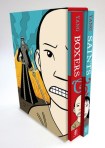
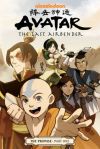
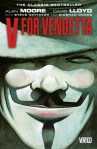
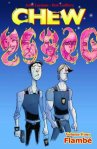
boxersandsaintsavatar5805chew4chew5chew6

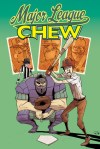
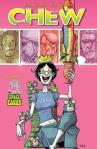
I already wrote about Boxers and Saints (the two volume set that really must be read together… and I recommend to read Boxers first, Saints second.) And I also greatly enjoyed Avatar: The Promise and look forward to the second storyline The Search (2013).  V Is for Vendetta is a GN classic and richly deserving.  Also almost caught up with the Chew series — read #4, #5, and just finished #6 last week. These new story lines just get more and more incredibly “unappetizing” in a most deliciously gross way by these two twisted and talented minds!  Panel after panel of shocking new developments and gory images — definitely not for those whose minds crave redemption and hope…

Now.. onto those that I loved but didn’t have time to write about in 2013:

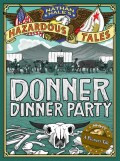
nathanhaleNathan Hale’s Hazardous Tales: Donner Dinner Party
by Nathan Hale

What I love most about this detailed historical account of the somewhat gruesome chapter of the American westward expansion history is Hale’s mindfulness of his young readers and their potential emotional reactions to some of the events along the way.  The executioner’s extreme sensitivity toward harmed animals and the surprising nonchalance toward human cannibalism added not only humor but relief.

mousebirdMouse Bird Snake Wolf
by David Almond, illustrated by Dave McKean

This is in between a picture book and a graphic narrative — it’s a poetic allegory, addressing our inner selves. Since I am a huge fan of Dave McKean’s, it’s not surprising that I adore this book!

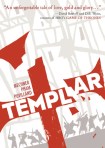
templarTemplar
by Jordan Mechner, illustrated by LeUyen Pham and Alex Puvilland

I had the pleasure and the privilege to read, advocate for, and annotate this powerful tome as a finalist on the CYBILS YA Graphic Novels slate.  It’s historical fiction at its finest: Mechner was compelled to tell an emotionally charged hidden tale of the every day people unrecorded in history texts (in this case, low-ranking Templar Knights).  Readers are treated to an ensemble of well drawn (both in words and illustrations) characters set against a sweeping historical landscape and a bitter-sweet story of loyalty, romance, and the tragic futility against the powers that be.

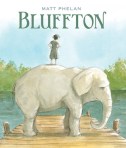
blufftonBluffton
by Matt Phelan

The tone of the text, gentle, nostalgic, reverent to a time and an art form from the past, is perfectly matched by Phelan’s pastoral paintings that capture both the setting of bygone days and the many emotions experienced by our narrator, expressed by aptly drawn facial features and gestures.  Definitely a gem.

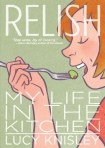
relishRelish
by Lucy Knisley

This is an energetic, often humorous, and delicious memoir of a new adult — and I do think it is for new or older adults — with a “looking back” and learning something from past experiences quality.  Not saying that I don’t think some teens will find the topics (food and cooking and making art and growing up/college life) quite attractive!  It is highly enjoyable and leaves a lasting impression.

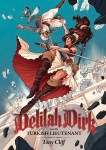
delilahdirkDelilah Dirk and the Turkish Gentleman
by Tony Cliff

I fell instantly in love with this book!  The art is exquisite in a very traditional, high-end graphic novel fashion, the storyline is exciting and entertaining, and the two delightful main characters Delilah and Selim have great chemistry as pals in a series of misadventures.  There is a bit of a gender-stereotype reversal here: Delilah is the dare-devil, with martial arts training and an appetite for dangers while Selim is the solemn gentleman who is courteous and practical but couldn’t help following Delilah on all the risky businesses. I just adored it!

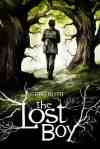
lostboyLost Boy
by Greg Ruth

The art is stronger in this strange fantasy/horror tale than the actual storyline which could have been developed neater with more convincing turns of events or final resolutions.  However, the black and white artwork is so gorgeous and breathtaking to behold that I was just happy to witness scene after scene visually. I do think there will be many young readers appreciating the slightly nightmarish but ultimately fun and safe tale.

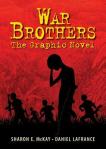
warbrothersWar Brothers: The Graphic Novel
by Sharon E. McKay, illustrated by Daniel LaFrance

The harrowing, extremely hard to swallow story based on true events involving the terrorist group led by war criminal Joseph Kony that continues to plague young boys in Uganda is important to share with any teen reader!  It does not hurt that the artwork for this graphic narrative edition of McKay’s realistic fiction absolutely captures the range of emotions and the lush and dangerous backdrop.

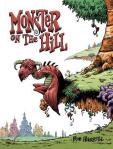
monsteronthehillMonster on the Hill
by Rob Harrell

This is a story to be shared in families with children from ages 4 to 7!  The scenarios are just outlandish enough to tickle everyone’s funny bones — while townspeople from village to village are proud to have their own effective Monsters, one village sorely misses the time when they had a scary monster!  So the quest is on to cure the Monster on the Hill of its lack of terrorizing abilities or desires!  Adorable (yes, adorable) monsters, a befuddled scientist/doctor, and a wiser than his age little boy are indeed wonderful ingredients for this romp.  Oh, and the cartoony but detailed artwork definitely works to enhance the reading experience.

hereville2Hereville: How Mirka Met a Meteorite
by Barry Deutsch

I was so thrilled to find that this second installment of Mirka’s story is even more enjoyable than the first one.  I wrote the annotation for CYBILS:

Mirka– the 11-year-old, troll fighting, singularly charming Orthodox Jewish girl–appears in her second, even more daring adventure in How Mirka Met a Meteorite, where she has to face a much more dangerous adversary: her own dark side, which manifests as a duplicate of herself. This “copy” is better groomed, more talented, and self-assured, and it means to stay on and obliterate Mirka’s existence. Deutsch and team deliver a humorous and action-packed tale with theatrical facial expressions, effective uses of varied panel designs, and bold strokes and skilled shading techniques.

And there are more stellar aspects to mention: this is a book with a great message that is delivered in such a way that does not feel forced or dryly didactic.  Mirka’s experiences will speak to many young readers and give them strengths to be the perhaps “less than perfect” but “full of individual flavors” selves!

mameshibaMameshiba: Enchanted
by James Turner, illustrated by Jorge Monlongo

I have to admit that I was very skeptical when I received the review copy of this slim volume — it definitely has a supermarket-cheap-impulse-buy-at-the-check-out counter look.  But since I loved all the short videos imported from Japan of these weird “beandogs,” I decided to give it a try.  And boy were the stories FUN!  None of the three stories is really all that original: the Kitchen is Haunted, a Mameshiba is punished for being too self-centered and has to learn a lesson to in humility and compassion, and the magic of stories sucks a host of beandogs into the storybook for them to battle the monsters.  But the cute creatures and the often silly remarks just make me smile (or laugh out loud.)  So glad it didn’t disappoint!

Leave a comment

Filed under Book Notes

The Girl with the Dragon Tattoo

dragontattooby by Stieg Larsson, Reg Keeland (Translator)
Audiobook narrated by Simon Vance

I have SO many issues with this book.  The top three:

It has the longest, most boring exposition section of pretty much ALL the books I’ve ever read.  The tedious laundry lists of the company and personal histories that do not propel the story and also do not really illuminate the personalities that much more made me want to just KILL the audio!

I find neither of the protagonists portrayed convincingly to fit the author’s high esteem of both: Mikael does not quite “show” how he is the most moral person as proclaimed by other characters and the narrator; and Salander seems to me more broken and angry than badass and vulnerable.  I really don’t find her appealing.  But, hey, I’m not a fanboy/fanman of this character.

I am not particularly squeamish or prim when it comes to book/story contents — as long as I feel that whatever details or events included in the book serve some literary, storytelling, or creative purposes.  But for some reason, the portrayal of Salander (the female protagonist) really bothers me — her “toughness” and lethal personalities, mixed with her supreme helplessness and brokenness are all probably very realistic (I’m no psychoanalyst) and yet this mixture does not appeal to my sensibilities at all.  The fact that so many young and middle-aged men highly recommended this book to me, and especially expressed their appreciation of Salander as a cool character made me actually uncomfortable and worried.

This, along with some other children’s and Young Adult books I read in 2013 featuring “tough girls” made me start pondering about the current trend of readers’ readiness and urge to applaud tough female characters in books.  Because, it seems to me, that instead of patience, resilience, open-mindedness, what I consider true strengths in human spirit, many authors have been creating vengeful or single-minded “tough” female characters whose most prominent and “appealing” personality is rooted mostly in aggression: a traditionally (and physiologically?) masculine trait. What are we applauding then? Are we praising a female character because she is free to be “whomever” she wants to be, liberated from the traditional and “weak” traits associated with femininity – or are we just saying that she is to be lauded because she behaves more like a male specimen since masculinity is clearly superior?

I will be reading many many 2014 Young Adult books this coming year and how young women are portrayed in these books will be something I pay special attention to and report here.

By the way, here’s a funny re-title from the site: betterbooktitles —

BetterBookTitle for The Girl with the Dragon Tattoo

1 Comment

Filed under Book Notes

Half way through WE WERE LIARS by E…

Half way through WE WERE LIARS by E. Lockhart. So far, intriguing and easy to fall for :)

Leave a comment

Filed under Uncategorized

CYBILS Finalists Announced

Happy New Year and I’m excited to share with you the two lists that I have had the pleasure of working on for the past few months: The finalists for the 2013 CYBILS Middle Grade and Young Adult Graphic Novels.

The finalists are:

MG Graphic Novels:

Bluffton: My Summers with Buster Keaton
Matt Phelan

Hereville: How Mirka Met a Meteorite
Barry Deutsch

March: Book 1
John Lewis

Monster on the Hill
Rob Harrell

Nathan Hale’s Hazardous Tales: Donner Dinner Party
Nathan Hale

Squish #5: Game On!
Jennifer L. Holm

The Lost Boy
Greg Ruth

YA Graphic Novels:

Bad Machinery
John Allison

Boxers & Saints Boxed Set
Gene Luen Yang

Captain Marvel, Vol. 1: In Pursuit of Flight
Kelly Sue Deconnick

Delilah Dirk and the Turkish Lieutenant
Tony Cliff

Templar
Jordan Mechner

Uzumaki Deluxe Edition
Junji Ito

War Brothers: The Graphic Novel
Sharon McKay

All the finalists and annotations can be found here: http://www.cybils.com/2014/01/the-2013-finalists.html.

Leave a comment

Filed under Field Reports

Far Far Away

farfarawayby Tom McNeal

An usual narrator (ghost of Jacob Grimm, the German folklorist), a small town that feels subtly unsettling, and a villain that really creeped me out made this a memorable read.  The book feels like a combination of a classic Hawthorne short story and a Coen Brothers movie — the sinister thread goes through the whole book and you are just wondering worriedly what’s going to happen next… I was not sure who’s the audience of this dark tale but am hoping that it will find some deserved adoration from teen readers.


Leave a comment

Filed under Book Notes

Continue reading as many graphic novels as I…

Continue reading as many graphic novels as I physically can! Really enjoyed the little volume of Mameshiba short stories. And contemplating on the graphic novels publishing world — the major children’s books houses vs. the major comic books publishers. (Graphix – Scholastic, FirstSecond – Macmillan, for example, and Viz, Image, Dark Horse, DC, Marvel, etc.)

Leave a comment

December 10, 2013 · 10:03 pm

Thinking Graphics

I’ve been reading more graphic novels of late, due to my responsibility as the first round selection judge on the CYBILS Graphic Novels (both MG and YA) panel.  And my mind swirls — especially after reading many reviews of graphic novels: both from educators/librarians and from GN fan sites.  What glares back at me review after review is how most people spend at least 85%, if not more, of the review addressing plot, character, setting, writing style, etc. and only one or two sentences on the artwork.  Often these sentences are general, broad, and feel like an after-thought.

Very few reviewers get into the actual artistic aspects of the books — how the artist uses lines (effectively or excessively?); how the facial expressions are captured (or not); do the background/foreground receive the same details (should they or should they not, depending on the style and the demand of the narrative); are there effectively varied perspectives; are depths of perception employed (in a good way or unnecessarily?); what TYPES of artistic styles or media are employed: cartoony? impressionistic? modern? realistic? pen-and-ink? watercolor?; how about tonal discussion: humorous? harsh? gentle? intense? and how did the artist achieve these tones?  And so so many more things that should be addressed in any review of a graphic novel — including the colorist’s achievement, the letterer’s choice and accomplishment (yes, many people use computer fonts instead of hand lettering now, but the CHOICE of font is still important), the panel layouts, the employment of comic books conventional elements such as gutters, speech bubble placements/usages, narrative boxes, etc.

I am no art critic and have only a limited vocabulary when it comes to discussing artwork and layout designs but I intend to improve upon that and hopefully in the future, when I write about graphic novels, I will include a good balance between discussion of the text and examination of the artwork.


1 Comment

Filed under Uncategorized

Congrats to Cynthia Kadohata for her book The…

Congrats to Cynthia Kadohata for her book The Thing About Luck winning the Young Readers fiction category at National Book Awards!

Leave a comment

November 21, 2013 · 10:35 pm

The Thing About Luck

the-thing-about-luckby Cynthia Kadohata

Kadohata once again proves that a book does not have to have an outlandish or extremely inventive premise to capture the reader’s attention and interest.  Once I started reading this book about a young girl’s simple wishes and dreams, her family’s struggle to stay afloat as seasonal wheat harvesters, and her brother’s difficulty in connecting with his peers, I could not stop.  I cared so deeply about Summer, her brother, and her elderly grandparents.  It’s really quite a feat for such a slim and quiet book!  Its inclusion as one of the five finalists of the 2013 National Book Award Young People’s Literature category is well deserved!

Leave a comment

Filed under Uncategorized

In the middle of Fangirl It’s a lot…

In the middle of Fangirl. It’s a lot less fun and a lot more serious (and angsty) than I was expecting.

Leave a comment

November 9, 2013 · 8:49 pm

Defending Ender's Game, the Book

Recently on an online listserv, a member posted some objections re Ender’s Game and I responded with the following. (I will be paraphrasing and truncating the original objections):

Since I have read (and listened to the audio book) multiple times, I hope that potentially I have done the “close reading” that [the listserv member] and her students have done with the book. I am going to address each of the four points:

1. A question on how could Ender repent/whine/moan when he obviously knew he was enlisting in the military for a total war?

We must consider the world that Ender is born into. He did not really have a choice to be on the training path to be chosen or not. His existence as a THIRD is quite literally unbearable, and his living in the house with a monster brother who at any moment might murder him definitely does not make staying home as a desirable option. He went up to Battle School at age 6 — even as brilliant a strategist as he was, he was naive in many many ways of the people — he was NOT given the opportunities to develop those. Just consider his first encounter on the launch shuttle, how he BELIEVES that Graff is his FRIEND and gets his wish shattered into pieces. So, to say that he “signed on to be the killer” because he joined the military and blame him later on for not being able to deal with not just WAR and KILLING but GENOCIDE — seems to me not fully understanding the book’s themes. Ask many service men, how many of them are shocked (in their late teens, early 20s or even later?) when they actually are put in combat? I’d say a LOT of them. So why can’t Ender be repentant? (He never moans or whines — his sorrow is SO much deeper than those emotions.)

2. Orson Scott Card praises children’s intelligence in the foreword but then makes his child character so manipulatable — that’s self-contradicting.

Not at all — In fact, in the end, Graff’s “intelligence” and “manipulation” – although ensured the winning of this ONE total war, makes him and the world leaders look like the worst people possible while Ender comes out as a lot more Humane and Saint-like. We must not forget that they live in a post-Alien attack world where everyone’s brainwashed to a certain extend, and there is a whole entire system of manipulation, lots of secret keeping, etc. For those of us who have read Ender’s Shadow, we would know how Card created another brilliant child who was NOT AT ALL manipulated by the System — and the reason why Ender was so manipulatable was the fact that he’s incredibly trusting and has “a flaw of wanting to form connections with others” — which is EXACTLY why he is a BELOVED leader and Bean is just his second in command whom everyone respects but cannot truly adore. So, no, the author (Orson Scott Card) knows exactly what he’s doing with his child characters.

3. Orson Scott Card romanticized total warfare and the video-game-style warfare, making him socially irresponsible.

I don’t really have much to say about this point except that I do not see how this book or the whole series is romanticizing total warfare where the ending was the strong sentiment AGAINST fighting against another group of people AT ALL — Ender finally understands The Other and spends the rest of his life to make peace and to make others see the peace that is necessary and achievable. And I am totally at a loss as to how “predicting the video-game-style warfare” that we are developing these days is “irresponsible.” Please elaborate.

4. To favor elitism is offensive. The book dismisses anyone who is not a genius.

I think this is definitely where people have to agree to disagree. For me, it is SO great that we have a book that celebrate intelligence and political savvy over brute forces or some sort of magical talents. I cannot understand how that is offensive. Are we saying that if we have characters who are geniuses, we should somehow portrait them as undesirable leaders of the society? We should make fun of them? We should “put them in their places”? and refuse to let them tell others what to do??? I also am not sure that there are ANY “not geniuses” characters in the book — and that’s kind of the point — Battle and Command Schools are for those who have the capacities to fight and to lead — we are not given the rest of the world and Card didn’t set out to write about the rest of the world. That’s the scope of the book’s setting — if Card included other aspects of the world (which he did in Ender’s Shadow and definitely in Speaker for the Dead and other sequels) and botched it, we should definitely discuss the flaws — but as an author, he made a choice: he CHOSE to set the tale within a confined environment. Surely we cannot fault him for that? (That would be like faulting Baum for not giving a good picture of Kansas at the turn of the 20th century when he wrote OZ stories!)

1 Comment

Filed under Views

Listening to Girl with the Dragon Tattoo waiting…

Listening to Girl with the Dragon Tattoo… waiting for the story to BEGIN (1/3 of the book seems to be just exposition…. wow!) Reading Picture Me Gone… so far, very enjoyable and, may I say, Brilliant!

Leave a comment

November 3, 2013 · 11:14 pm

Ender’s Game: the movie

So, last night, more than 30 high school students of mine (SciFan Club) went to see Ender’s Game at the IMAX.  Here are some thought I shared with the kids afterwards.  For the most part, the teens who have all loved the book for a long time thought that the movie did as good a job in being faithful to the book and they all kind of agreed that it is really difficult to appreciate Ender as much in the movie as you would in the book because we simply were not shown his interior as much as in the book.  The pitfall of a visual storytelling media.

I posted on our school’s internal email conference the following:

I am not sure that I can objectively critique the movie at all.  I know that I’ll have to see it again AS a movie, and not something “translated” from a book into a movie to aptly analyze it — and even then I might not be able to do it.

But, here are some positive points first:

1. I think Asa Butterfield is a great choice for Ender and he really delivers.  He’s not 6 – 11 as was in the movie, but he looks like 14-15 (since they truncated the timeframe by a WHOLE LOT) and not too old for the role.

2. Pretty much every actor did their job well (but a little sad that they didn’t put any stock in the guy who plays Peter so I can’t imagine sequels from Ender’s Shadow series featuring him heavily.)  Harrison Ford and Ben Kingsley are just old pros.  

3. Even though the battle room and the “stars” are totally different from my own imagination, it works well in the movie and the Null-G effects are well done.  Actually, all the designs and CG effects are excellent.

4.Certain important phrases that stand out in the book are incorporated into the movie well — and most of the gist of the story is conveyed.

Then, there are some stuff on my WISH LIST:

1. I wish that somehow they could have incorporated Valentine and Peter’s brilliance and how they took control over governing Earth while Ender is away battling the formics. (But I totally understand why they have to eliminate that part for the flow of the movie.)

2. I wish that there is more scenes showing Ender’s brilliant leadership skills and his ability to unite and to strategize.  You never truly see why everyone LOVES him so much — because they didn’t show the Launchies training scenes or all the fun things he figures out for Battle school games: such as freezing bent legs or rushing their enemies, etc.  As one of the freshmen said, the movie really could have been a little longer (by 15 minutes?) and thus incorporating some montages of his final Crew.

3. I DEFINITELY wish that the shower room fight scene is longer, a LOT bloodier, and that Ender didn’t go to the operating room.. or mention that he sat beside Bonzo’s bed for days…

Leave a comment

Filed under Uncategorized

Squirrel Seeks Chipmunk

squirrelby David Sedaris, read by the author

Finished listening to Squirrel Seeks Chipmunk… here are my thoughts: I was really smitten with this audio production and the stories at the beginning — Sedaris is definitely hugely talented and oh so so very clever. And the excellent reader/actors (David Sedaris, Dylan Baker, Elaine Stritch and Sian Phillips!) definitely enhance the listening experience. However, half way through, I realized that Sedaris’ life view is just too bleak and his humor too mean-spirited for me at this time of my life. I almost cringed at the thought of listening to the next grotesque and undoubtedly bleak tale… … but I went on and finished the book — and enjoyed The Grieving Owl (toward the very end of the book). Looking back, that might have been the only story that I could say that I truly enjoyed (about 95% of the tale… the ending wasn’t pretty and I didn’t much love it). I almost wish that I had not encountered some of the denizens in this story collection or witnessed that much ignorance, vanity, pride, and all kinds of unattractive human traits, even when the author’s intention is to belittle and make fun of these traits. Now, I cannot unread or un-know these stories. Shucks!

Leave a comment

Filed under Book Notes

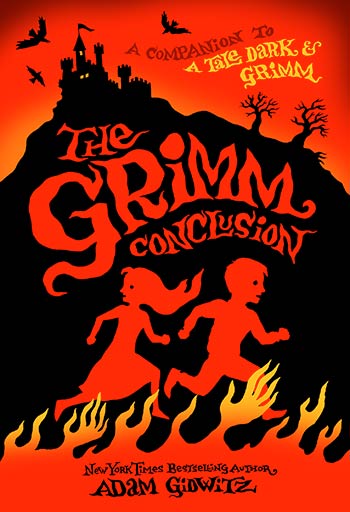
The Grimm Conclusion

grimmby Adam Gidwitz

I waited for a while to read this one.  Was somewhat apprehensive.  When one becomes friendly and very fond of an author, one sometimes also becomes worried.  What if… What if the book isn’t as good as you’d hoped?  As good as you  believe that particular author could have made it?  What it…

So, I didn’t read the galley.  I did attend an overwhelmingly successful event at Book Court in Brooklyn with Adam entertaining a host of young readers and their parents.  And then, finally, after I started seeing my students toting around this third volume and hearing that they really really enjoyed it (one of them read it more than twice in the week of its publication) I braced myself and delved into it!

What a treat!  I couldn’t put the book down.  Adam not only featured some of MY favorite Grimm tales, he even used one of my favorite STORY TIME staple (Anansi and the Moss-Covered Rock!)  And not only Adam continues with the intrusive and flippant (but often kind and comforting) storyteller/narrator, he brings this narrator INTO the story (or, rather, brings the protagonists OUT of the story and into current day Brooklyn.)  I was worried when I knew that there is a metafiction element of the tale that it would have seemed trite or forced — but Adam did it in a natural and fluid way that really works.  The story as a whole seems a bit darker than the first two, but it is to my liking.  And as in so many stories for children (and adults) the power of storytelling is celebrated at the end!

Same as in the first two books, there are definitely some very sticky moral dilemmas that the two kids have to face and conquer.  I am happy to report that the messages do not get in the way of the enjoyment of the tales. And I suspect that these important “lessons” are being absorbed and are strengthening child readers everywhere as I type!

Finally, the new “Kingdom of Children” that the narrator refers to in the end of this book is an apt metaphor for the realm of imagination, for stories and books, and especially for the Grimm trilogy, where children venture in to “run, to play… to tell their tales and face their fears and let whatever is inside out.”

Leave a comment

Filed under Book Notes

Reading Primates Jane Goodall Graphic Narrative biography and…

Reading Primates (Jane Goodall, Graphic Narrative biography) and Chew #6, Space Cake. Listening to David Sedaris’ Squirrel Seeks Chipmunk (hilarious but also gross and dark. Definitely from a twisted — but brilliant — mind.)

Leave a comment

October 24, 2013 · 10:41 pm