This is a short and charming caper story with some not-quite-so-believable reconciliations — especially the incredibly fast and easy resolution of the mother-daughter relationship which was so extremely strained. I did enjoy the notion of aunt Polly being such a generous soul and that her legacy was felt and practiced throughout the town by those who truly loved her. I think many young readers will find great satisfaction in reading this story but those who came to PIE because they loved So B. It! should be told before hand to not expect the same kind of intensity, originality, and affecting ending as that previous most-beloved tale.
Tag Archives: 5th
Wonderstruck
I adored The Invention of Hugo Cabret, Brian’s Caldecott winning, form-innovating, ground-breaking novel told in text and pictures. I have been waiting for Wonderstruck with both happy anticipation and a slight dosage of anxiety: what IF it is not as good? What if it feels like the author has set a trap for himself and cannot top his last achievement? Would I be as taken by this story as the mysterious tale of Hugo? Would I feel that it is merely a repeat of what he already did once and since it is such a singular and unique format, it might not bear the weight of a second attempt…
I am so pleased that the book is not at all these What Ifs… Instead, it tells a fascinating and moving story succinctly and attractively with text and pictures. And instead of a novelty, it might start a different kind of storytelling form for others who are similarly minded and have suitable tales to present in this way.
I did so want to SEE Ben’s story, though. I was craving pictures for his part of the tale! That, to me, is a strength of the book: I can see how young people can be compelled to “illustrate” parts of the text. Others might be inspired to curate a personal “Cabinet of Wonder” (a personal museum.) And all of us will learn to appreciate all the connections that we make throughout our lives with others.
The release date of the book is September 13th, a day after the start of the year at my school, and I can’t wait to have it on display to herald a year of reading with a wonderful new book for all my students! Let’s shout HURRAY together for another tour de force by Brian Selznick!
Filed under Book Notes
Drawing from Memory
I’m not sure that this is “graphic novel” treatment of Say’s personal life as many have categorized it. It has text and it has graphics but it feels more like a scrapbook with clippings of thoughts and images (both photographs and drawings). I probably would call this a picture book memoir. It is brutally honest: I felt pained by the lack of tenderness and affection from family members that Say received as a child and a youth. But it also shows how one can make one’s own family from those who appreciate and spiritually and emotionally adopt one as a child or a sibling. I hope by making this book, Allen Say has made and found peace with his unhappy past. This is definitely a title worth sharing with many.
One question though: how would a young reader (say, in 2nd or 3rd grade) perceive the Japan-America conflict of War World II by reading these lines:
page 10: Then a war began in 1941. When bombs started to fall on our city, Mother took us and fled to a village named Tabuse between Hiroshima and Iwakuni.
page 12: When the war ended four years later, everything was broken.
page 13: The American forces occupied Japan on my eighth birthday, August 28, 1945. Our house in Yokohama had been destroyed. Father went to the south island of Kyushu and found work in the city of Sasebo.
I must admit that as a Chinese person who grew up in Taiwan (which was a Chinese province colonized and occupied by Japan for 50 or so years until the conclusion of WWII) and whose mother lost her entire family due to the Japanese occupation of North Eastern China, when I read a Japanese author’s personal perspectives on these events or the time period, I had to forcefully remind myself that: this is a person who happened to have grown up in a country that invaded my own country and that Allen Say was not personally responsible for the atrocity (and yes, it IS an atrocity) that his mother land caused in my mother land way before I was born. And yet, I still wonder if there could have been other ways to make those statements that show clearly to any young reader that War did not come to Japan without Japan’s bringing it on to itself AND that instead of using the word “occupied,” although accurate, Say and his editor could have found a different word to describe the American Forces’ presence in Japan post WWII – especially since the young readers encountering this book most likely wouldn’t have had much background knowledge of the whole sequence of events that led to such occupation.
Filed under Book Notes
Brain Camp
by Susan Kim, Laurence Klavan, and Faith Erin Hicks
It’s really quite an oddly enjoyable weird tale. Some of the images can be disturbing, but effectively and purposefully so. I think plenty of young readers will find this a very interesting read.
Filed under Uncategorized
The Dark City
I found myself thoroughly engrossed in this tale of fantasy/scifi blend. Usually, I get annoyed by authors who mix magical elements in otherwise supposedly a science fiction world. It always seems to be a cop-out: when something cannot be sufficiently explained with scientific theories or technical knowledge, we just throw in some magical powers and voila, the story can move on. Fisher did something different here: she created a world of magical elements with a few technological gadgets thrown in here and there. The little guessing games of what each object is (an easy one is a pair of binoculars made with the “unfamiliar” materials – plastic? -) entertains and intrigues the reader.
I would have liked to see the Dark City developed a bit more — the city is too vaguely described and I simply couldn’t figure out why there are still people in this place since the readers are not shown how the commerce works to support such a place and its inhabitants.
Still, can’t wait for the book to be released (May) so I can promote it to my young readers and can’t wait to read the 3 sequels which will come out in quick succession: June, July, and August!
(Based on the Advanced Readers Copy)
Filed under Book Notes
The Recruit
by Robert Muchamore (First in the Cherub series)
It’s definitely a fun ride. Many young readers must really enjoy the fast pace, the satisfying notion that one can behave badly with light consequences or even rewarded for such behaviors, and the espionage aspects of the storyline.
Filed under Book Notes
The Name of This Book is Secret
I really should have heeded the recommendations, enthusiastic and spirited, from many different readers in several grades for the last few years. Why I felt reluctant to read this title for so long, I have no idea. Reading this book was absolutely a fun experience! Although some more experienced readers might find the meta-fiction aspect a bit heavy handed or derivative (ala Snicket or Scieszka & Lane,) I think young readers who encounter this type of storytelling format for the first will definitely eat it up with gusto! At the same time, I don’t find myself propelled to read on the rest of the series. What is lacking? Perhaps certain genuine emotional bond between this reader and the characters who serve as pieces on a game board and don’t quite come through as “real” people.
Filed under Book Notes
My Life in Pink and Green
I can see why 4th grade girls like this book: it’s about 7th/8th grade kids with a little bit of “grown-up” stuff like first crushes and family financial problems; and it is also SO much about “beauty tips” that are just like reading a clean teen magazine. I find nothing wrong with this book that has some tension to keep the readers going and will recommend it for a light, enjoyable read that also encourages, somewhat realistically, activism by young people.
Filed under Book Notes
A Long Walk to Water
This is a quiet book; it is also an explosive and extremely powerful book. For such a short book, it really packs a huge punch — one that lingers in my mind and makes me want to know more, find out more, and help out if I can!
It is a quiet book because Park reports and does not sensationalize. At times, in the beginning of Salva’s journey, I felt a slight disconnect: I did not feel that his forced exile from his village or even the loss of his new friend are scenes that moved me emotionally. As I kept reading, my mind and my heart mingled: the words that are matter-of-facts also became matter-of-heart and matter-of-wisdom. The portion of the journey involving Salva’s uncle, his guidance, and his death, is the center piece of the tale. I even feel that I’ve learned a precious lesson from his mantra of taking one step at a time, solving one problem at a time — to conquer seemingly insurmountable obstacles or to achieve seemingly impossible goals.
It is a powerful book because Park manages to tell a harrowing tale to a young audience that will surely stimulate empathy and activism.
Filed under Book Notes
The Lost Hero
Of course, my view on this book is heavily influenced by my students’ reactions: a LOT of enthusiasm from the 4th – 7th grade crowd. Many of them have been waiting impatiently for the launching of this series for a LONG time. (Yes, it’s only a year and a half — but to the current sixth graders, the Last Olympian came out when they were mere babies: in 4th grade!) (And, for my 9th grade students, they read the last of the Percy Jackson when they were, *gasp,* still in 7th grade!)
Like these young readers, I really enjoyed the book. Many of them think that it is the strongest first book by Riordan; and although some of them are a bit sad that the book is not as humorous (what, no funny chapter headings?) as The Lightning Thief, they feel that the sheer inventiveness and the coolness of the heroes and the battle scenes more than made up for the slight lack of levity.
We all agree that Leo is the most interesting and cool character to read about and can’t wait to see their next adventures: where traditional and Riordan-made story lines, characters old and new, and the worlds of Gods and Humans will all converge.
Are there some flaws in this book? Sure. It would have been great to me if Riordan does not repeat the same information more than once in several places and did a bit self-editing to tighten up the pacing a bit. (So instead of more than 550 pages, perhaps a 400+ pages would have made the book better… for me.) However, for the eager young readers who wanted so badly to read more adventures inspired by Greek and Roman Myths, I imagine, the MORE stuff the better! So, in the end, I say, Bravo, Mr. Riordan, for staying true to what you set out to do: writing fun and gripping adventurous stories for young readers and making the publication and reading of your books a huge excitement in their life.
Filed under Book Notes
Hereville: How Mirka Got Her Sword
There is so much to like about this book: the humorous and very realistic treatment of the family dynamics between stepmother and children, between siblings, and between neighbors; the expressiveness of the faces and the bodies; the magical realistic setting and all the references of Orthodox Jewish traditions; and the pure energy and joy of knowing a new and plucky girl character. And yet, since I liked it so much from page 1, and built up such high expectations of wanting a truly enlightening ending, the last portion of the book became a bit of a let down because of a somewhat rushed and unsatisfying wrap up.
Filed under Book Notes
The Ring of Solomon: A Bartimaeus Novel
I am giving it Five Stars because:
A. It gave me so much pleasure to re-acquaint with an old favorite, namely, the witty, boastful, and oftentimes powerful, but also self-deprecating and silly Bartimaeus. (A bit like Bruce Willies in Fifth Element.)
B. Stroud manages to present several different angles of the plot line and bring everything together in thrilling culminating sequences.
C. The three main characters: Barti, King Solomon, and Asmira, the young royal guard of the Queen of Sheba, each is layered and real and inspire admiration in very different ways.
D. And I believe that it is a book that many many young readers will find enjoyable….
… among many other reasons — cool magic, interesting twists in the plot, a tinge of melancholy that only a couple-of-thousand-year-old Djinni could experience, etc.
Filed under Book Notes
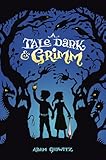
A Tale Dark and Grimm
I really really enjoyed the journey into and out of the dark dark woods that is this book by a new comer of the Children’s books scene. To be honest, because I love and respect traditional fairy tales (mostly Grimms, Jacobs, with some Norse, Arabian Nights, and Russian tales thrown in) to such a degree, I get very suspicious and highly critical when it comes to authors playing with and retelling these tales.
I especially resent the ones that make light of these grim and dark and powerful tales and turn them into cutesy products.
That is not the case with Gidwitz’s offering. It is slated to be published in November and I simply can’t wait to report on it! The frame story, using Hansel and Greta, substituting them as protagonists in several Grimms fairy tales, works brilliantly. As the story progresses, the resemblance to the original versions of the tales is reduced: they are more and more fractured and eventually, you are offered a few original short tales by the current author — but the Faerie, unsettling, and dark tone of the fairy tales tradition remains. As the story follows less and less the constrain of the original tales, the readers who know these tales sense the strength of the two children, rebelling against a cage that tries to tie them down.
For readers who are not familiar with the original tales, they can still vividly experience the growth, physically, emotionally, and worldly of these two characters.
This is not a simple construct, stringing a bunch of fairy tales together, but a successful novel that has a lot to offer to its young readers.
I can’t wait to share the tales — the new and the old — with my students in the fall!
Filed under Book Notes
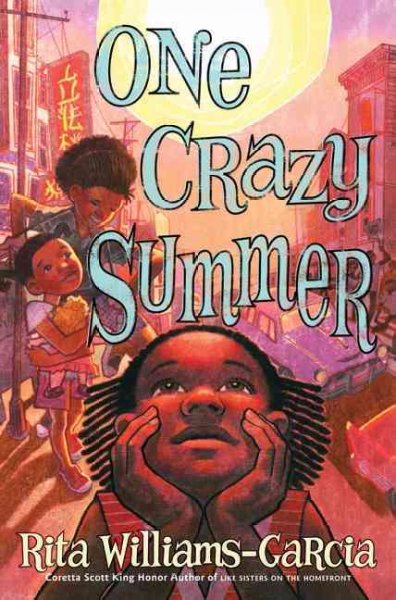
One Crazy Summer
The quiet power of the book builds and builds and builds until at the end, my heart is squeezed and my eyes are wet. I feel for these characters as if they are my closest friends and Delphine’s resilience and vulnerability and her final “triumph” made me want to hug her and tell her how incredibly proud she should feel about herself and also to “be eleven” and to perhaps now relax just a smidgen and to be loved and cuddled once in a while.
My huge appreciation also goes to the author and editor. What a hard thing to achieve portraying a young woman whose sole focus is on herself and her craft as a poet, who comes off as uncaring and abusive, but the entire time, this reader senses an admirable dedication and stoicism and does not view her as a monster mama. The final explanation of her hard life comes at the right time and gives just the right amount of information to let me know that she is just coming out of her own protective shell and there will be some softening and relationship building in the future. (But, no false hope of her suddenly and irrationally becoming a pampering, snuggling kind of mother.)
Filed under Book Notes
The Red Pyramid
by Rick Riordan
What a romp! Riordan kept all his success formula from the Percy Jackson series: likable and realistic teens who support each other even if they bicker, a lot of cool magic and magical battle scenes (a bit MORE than a single Percy Jackson book and a bit more than I care to read in such details but I imagine many young readers lap them up like pots of chocolate,) quite a few powerful and caring adult figures, and a sprinkle of romantic interests. And he sets up the sequel wonderfully without short changing the current readers. The resolution for the quest is thoroughly satisfying. Now I can’t wait to read the next volume — it sounds so promising… and yet must remain patient for another year… *sigh*
Filed under Book Notes
Where the Mountain Meets the Moon: An Elegantly Written Book?
I started reading Where the Mountain Meets the Moon, by Grace Lin, while it was still in galley form and had never been able to finish the book. Friends in my Children’s Literature circle have heard from me for almost a year now how baffled I have been regarding the success of the book (a Newbery Honor) and the adoration of the book from so many reviewers, teachers, and librarians.
And today, I read this blog post from Story Sleuths in which the bloggers praise and analyze the strengths of the writing by Lin. (This is only Part 1, and posted 4 days ago. I imagine more posts will follow.)
Finally, I feel compelled and brave enough to share some counter points regarding this book.
I am going to focus on my reaction to the usage of words and phrases by the author and demonstrate how I am not convinced that this is an elegantly crafted volume. (Although, as a woman who grew up in Taiwan and was exposed to countless Chinese folk tales in book, opera, TV forms, I have a lot of discomfort with Grace Lin’s appropriation of the stories she read as an American girl of Taiwanese descent — even if she made it clear that these are NOT simple retellings of the original stories but based on her views on how these stories COULD have been told.)
Now, I was already a bit annoyed by page 4 because of a personal pet peeve.
- The book is set against a nondescript mystical China, by the way the village is described and the people are portrayed. Yet, in this fantasy land, in “Ancient” China, Minli’s father replies to her request for a story with “Okay” — an unfortunate word choice that carries strong western and contemporary flavors. (p. 4) This is a strong personal pet peeve, as explained in my About Fantasy — Is it OK to say “Okay”? post.
Grace Lin really loves using the word “seemed” in delivering her descriptive sentences. It occurs with such frequency that it becomes monotonous and because “seem” is such an uncertain word, it often weakens the impact of the imagery. (p. 110 “… the silence of the room seemed to ache with loneliness.” p. 111 “She seemed to glow like a pearl…” p. 117 “light of the moon seemed to bind the magistrate still.” p. 140, “The king’s words seemed to hang in the air.” p. 141, “The moon seemed to tremble…” and on and on… and in this one page, the narrative contains three “seemed” in three short paragraphs.
- . . . Minli’s footsteps seemed to hush the night as she made her way toward the Jade River. (This one works all right for me because her footsteps could not have hushed the night but could have created the sense of hushing the night.)
- . . . The moon shone above so even in the darkness of the night, the fish seemed to burn a bright orange. (This one puzzles me. I know that the fish did not burn but was it bright orange? If the sentence were “the fish seemed to burn with an orange flame” or “the fish seemed to burn, glowing bright orange” it would have delivered a clearer imagery.)
- . . . For the moment the fish seemed shocked and was still, like a flickering flame on a match. (It would have worked if the fish was simply socked or in shock. And we wouldn’t have had three consecutive “seemed’s” on one page.)
Now, that last sentence kind of “shocked” me when I first encountered it. How could a fish that is shocked into “stillness” be also “flickering” like a flame on a match that does not stop moving? (After considering this several times, I could have explained that perhaps the water has been moving moments before so that the water makes the brightly lit orange fish scales sparkle and flicker. But this figure of speech did not make the imagery clear. It does not illustrate or illuminate.)
Here are two more examples of odd similes:
- On page 42 … “only barely could he see the faint footprints on the ground — it was like searching for a wrinkle in a flower petal.” I did a triple-take and quite a bit of head scratching when I read this sentence: Many flowers have petals that are full of wrinkles. Did the author mean that it is extremely EASY to make out the faint footprints on the ground? If so, does not it contradict the “barely” sentiment proposed in the first portion of the sentence?
- On page 61 … “Under his gaze, Ma and Pa suddenly felt like freshly peeled oranges, and their words fell away from them.” To this day, after re-reading this sentence countless times, I still could not quite figure out how a “freshly peeled orange” might feel. I guess that it addresses the notion of their “words falling away” from them. Does that make them feel naked? Does it have something to do with the speed of the peeling (which does not happen instantly but can be pretty fast, unlike peeling an apple)? This figure of speech confounds this reader and conceals the full meaning from view.
Of course, plenty of readers disagree with my reaction and I am eager to hear from others who can shed some light on these and other passages from the book that, to me, seem to be on the “Composition 101/Figure of Speech Exercise 5” level and do not always flow organically to tell a vivid story.
I probably will post more musings on how metaphors and similes should only appear to illustrate, interpret, and illuminate the scenes and emotions and should be avoided at all cost when they contradict, confound, or conceal the underlying, true meanings of the passages. (My 3-Is and 3-Cs rule!)
Filed under Book Notes, Views, WIWWAK
Uglies
by Scott Westerfeld
I’m so glad that I finally got around to read Uglies — a popular book amongst many of my students, mostly girls. Now that I have read it, I have to adjust my perception of it 180 degrees — it is NOT a book for just girls; it is NOT really a YA-only book; it has a LOT of adventurous actions; it has QUITE A BIT of complexities. A gripping read and I will promote it to both boys and girls, to SciFi readers, and to those who want to think hard and dig deep into a world of dystopia.
Filed under Book Notes
The Illustrated Mum
by Jacqueline Wilson
Being my second time reading the book, I had the opportunity to pay more attention to Wilson’s incredible talent in portraying her characters without being shocked or distracted by the harrowing experiences that Dolphin must suffer through, growing up and living with a mother who is mentally unstable. It amazes me how the reader can just “listen” to a couple of sentences and “see” a few gestures or facial expressions from a character and become totally aware of this character’s personality, even predicting his/her future behaviors.
There are definitely some flaws in Wilson’s plotting: the finding of Dolpin’s father is not only far-fetched, it also seems unnecessary from a plot-construction aspect. It also does not necessarily serve an emotional relief for the character. The foster mother and the return of Star, combined with Marigold’s treatment, might do the trick to reassure both Dolphin and the young readers that hope and a brighter future is on the horizon.
This is the April 2010 Children’s Literature Circle selection.
(Children’s Literature Circle is a monthly Faculty book group that I run at my school.)
Filed under Book Notes
Buried Alive
A short read about Tim and Biscuits, two best friends who have quite an adventurous little vacation by a Welsh seashore. Although the main characters are boys, Tim, the narrator, shares a lot of traits with many of Wilson’s girl main characters: outcast, somewhat of a cowardly weakling with no self-confidence, but eventually finds inner strengths and come out on top. Plenty of funny scenes and slightly unsettling personality traits of the “best friend” of the main character.
Filed under Book Notes