Tag Archives: 7th

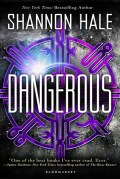
Dangerous

dangerouscover by Shannon Hale

Genre(s): Sci-Fi, Romance, Thriller

Basic Content Information: We follow two main teen characters with a supporting cast of adults (from trustworthy, to uncertain to purely evil) into a futuristic world that does not seem too different from our own except that some scientific discoveries and advancements have led the humans to encounter alien materials and finally aliens themselves.  The story is narrated from Maisie’s (mixed-race White/Latina) first person point of view, mostly in past tense.  Maisie is the brain and eventually also the brawn behind most of the operations and actions.  Her off and on, slightly torturous romance with Wilder (Jonathan) is what I came to expect from a Shannon Hale novel – whether Fantasy, Graphic Novel, or now, a SciFi.  The book is divided into 3 parts and could have easily been expanded and milked into a trilogy – but we got the whole story in one shot instead.

Edition: Paper Galley

Pub Date: March 4, 2014

Publisher: Bloomsbury, USA

(I’m only recording the bare bone facts about the Young Adult Fiction titles I read in 2014 — Serving on the Best Fiction for Young Adults committee means that I need to be quite cautious in expressing opinions on social media. The safest way is to not express specific reactions publicly. But I’d like to keep reporting the titles I encounter throughout the year. You can always follow the link to Goodreads to see other readers’ reviews.)

Click here for: Goodreads summary and other people’s reviews.

Leave a comment

Filed under Book Notes

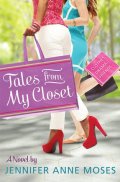
Tales From My Closet

talesfrommyclosetby Jennifer Anne Moses

Genre(s): Realistic Fiction, Girl Drama

Basic Content Information: Five girls in their sophomore years in a New Jersey high school tell their interlocked personal stories in alternative narrative first person view points — each has enough drama to fill a whole TV series: secret boy friend in Paris, contemplating “going all the way,” unfaithful father, therapist mother who tells the private life of her daughter, secret crush over the coach, annoying siblings, shopping addictions, hidden talents, social mishaps and embarrassments, etc. etc. — and all tied with constant obsessions over one’s own and others’ outfits and appearances… Plenty of positive messages mixed with illogical actions and thought processes.

Edition: Netgalley

Pub Date: January 28, 2014

Publisher: Scholastic Press

(I’m only recording the bare bone facts about the Young Adult Fiction titles I read in 2014 — Serving on the Best Fiction for Young Adults committee means that I need to be quite cautious in expressing opinions on social media. The safest way is to not express specific reactions publicly. But I’d like to keep reporting the titles I encounter throughout the year. You can always follow the link to Goodreads to see other readers’ reviews.)

Click here for: Goodreads summary and other people’s reviews.

4 Comments

Filed under Book Notes

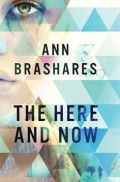
The Here and Now

hereandnow: Ann Brashares

Genre(s): Sci-fi, Mystery, Romance

Basic Content Information: Time Travelers from a devastated and plagued future back to our (Here/Now is May 2014, Tristate area) with the expressed desire to “fix the future” but as the protagonist (17-year-old Prenna) finds out, they are merely hiding in their new safe colony with stringent and suffocating rules. When an opportunity presents itself for Prenna to alter a current situation that will impact on her future, she goes for it with the help of her Time Native boyfriend. Notions of free will, choices, and sacrifices for one’s community are explored. Teen budding romance with physical ramifications are explored. Climate change, dirty and clean energies, and disease control are some scientific topics touched on in the book.

Edition: Netgalley

Pub Date: April 8, 2014

Publisher: Delacorte/Random House

(I’m only recording the bare bone facts about the Young Adult Fiction titles I read in 2014 — Serving on the Best Fiction for Young Adults committee means that I need to be quite cautious in expressing opinions on social media. The safest way is to not express specific reactions publicly. But I’d like to keep reporting the titles I encounter throughout the year. You can always follow the link to Goodreads to see other readers’ reviews.)

Click here for: Goodreads summary and other people’s reviews.

Leave a comment

Filed under Book Notes

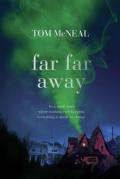
Far Far Away

farfarawayby Tom McNeal

An usual narrator (ghost of Jacob Grimm, the German folklorist), a small town that feels subtly unsettling, and a villain that really creeped me out made this a memorable read.  The book feels like a combination of a classic Hawthorne short story and a Coen Brothers movie — the sinister thread goes through the whole book and you are just wondering worriedly what’s going to happen next… I was not sure who’s the audience of this dark tale but am hoping that it will find some deserved adoration from teen readers.


Leave a comment

Filed under Book Notes

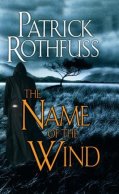
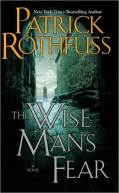
The Kingkiller Chronicle, vol. 1 and vol. 2

nameofthewind
wisemansfearVol. 1 (Day1) : The Name of the Wind and
Vol. 2 (Day 2): The Wise Man’s Fear

by Patrick Rothfuss

Altogether, these two volumes are more than 1,500 pages long and the audio book versions took about 61 hours to finish.  I mostly enjoyed the listening experience: the first volume is definitely tighter and since everything is new and the world is un-encountered before, I had a little more patience in all the details that Rothfuss put into the tale: colors of people’s clothing, the types of foods, some basic societal rules, etc.  And there are definitely a lot of thrilling moments and some good passages.

The Wise Man’s Fear, though, suffered from being too detailed at moments, too many similes thrown into the passages (that really could and should have been edited OUT of the tale,) and just too long.  I am really annoyed by authors who decided to use a particular narrative “device” and could not keep to the simplest or fundamental rules of that device.  Here, each volume is supposed to be tales told to the scribe within the duration of ONE SINGLE DAY (where people do go to sleep, where the current day contains events such as robbery, lunch, fighting, etc.)  So, almost 1000 pages of words (no matter how FAST one might be able to speak or write down the words) simply don’t compute.

One learns in writing classes that in order to create convincing and lifelike characters, one must know all the background stories (what colors they like, who was their first crush, when was their first experiences of fear and when and why and how, etc.) of the major characters.  But so much of these details should remain in the mind of the author.  Once in a while, perhaps, something can be drawn out and fill in a missing piece of a character’s traits.  But, the Wise Man’s Fear is full of such details breaking through the backstage door and cavorting on the main stage.  It just didn’t work for me.

I also got quite bothered by Rothfuss’ insistence of describing every single emotion or experience with a comparison to something else.  It is OK, Patrick R, to sometimes just say that you feel soothed by someone’s voice without having to compare the soothing feeling to a mother’s gentle touch to a child’s cheeks and the voice is just like a lover’s breathy whisper by your ears.  Some figure of speech enhances a narrative, but overindulgence in such narrative tool becomes tedious eventually.

All that said, did I love a LOT of what went into the books?  Absolutely.  I loved the world building, the mystery, the tentative romantic relationships, the exploration of language, means of communication, and how world history can be shaped and reshaped.  And I will definitely read (or listen to) the final installment when it is published next year.  Still a series worth recommending.

Leave a comment

Filed under Book Notes

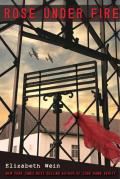
Rose Under Fire

roseunderfireby Elizabeth Wein

I have only read three books by Elizabeth Wein.  Years ago, The Winter Prince, last year, Code Name Verity, and now Rose Under Fire.  But, I now know, unwaveringly, that this is an author who can steal people’s hearts and cleanse their souls with her storytelling wizardry.

Elizabeth Wein, my friends, has a creative mind that goes forever deepr and her stories always take you to unexpected but exciting places — no matter their subject matters.  Her mind is so incredibly nimble that she can organize very complex threads into easily followed paths through intricate mazes she has devised for her readers. And, oh, the hearts and souls of her characters and the epic scale of their sufferings and triumphs! They linger on and sustain you like the LIFT under the wing of an airplane and a soaring kite! Read this book NOW and tell everyone else to read it.

I know that young teen readers will take to Rose’s story more readily than they with Verity and can’t wait to recommend this to them all!

3 Comments

Filed under Book Notes

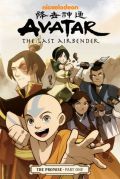
Avatar The Last Airbender: The Promise – (3 Volumes)

avatar(originally posted on 9/20/2013 on just vol. 1 — updated to include all three)
The story of two “nations” occupying the same land where one is now being demanded to remove itself mirrors eerily contemporary conditions in our current world. I’m delighted that almost all the important characters make their appearances here and their personalities consistent with the show. The artwork is definitely true to the show as well — for the most part.  Of course, the fight scenes are slightly less epic or thrilling presented in still frames and not movements, but fans of the show can probably fill in the sounds and sequences. I know I read it with the actors’ voices in my head!

The story arc is convincing and the ending is satisfying.  My biggest complaint might be that Zuko (the new Fire Kingdom King) is not quite what he looked like on the show — his features in the books are less defined and with less angsty charm that I so enjoyed from the show.

Leave a comment

Filed under Uncategorized

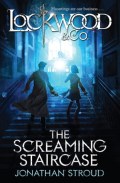
Lockwood & Co #1: Screaming Staircase

screamingstaircaseby Jonathan Stroud

I truly enjoyed Stroud’s narrative tone, characters and world building in this first volume of a new fantasy/horror series.  In Lucy we find a fresh, sharp-minded, slightly paranoid and self-doubting, but in the end completely lovable main character/narrator.  Lockwood and George are also interesting and multi-faceted characters who maintain the flavorful exchanges between these young people.  The premise also provides a new world for the author and the readers to venture into and explore — The Problem, consisting of ghosts, hauntings, and the solutions of using special child agents trained to deal with them, with all the life-threatening dangers that could befall anyone at any moment.  I’m in awe of Stroud’s talent.

So why didn’t I absolutely love the book?  Probably because I figured too many things out too early so the wait for the reveal seemed a bit long and drawn out?  Or perhaps there were just a few repetitive descriptions/scenarios too many?  (How many times do the readers need to be told how the first hints of haunting feel or look like?)  Do I still want to see what unfolds in book 2?  Yes.  If the Bartimaeus trilogy is any indicator, the sequels will give us more layers and nuanced interactions.  The story will only evolves into something grander and hopefully the ending will be as satisfying — and perhaps unexpected, too?


Leave a comment

Filed under Uncategorized

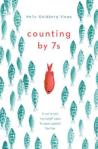
Counting by 7s

countingby7sby Holly Goldberg Sloan

My reactions to this book are quite mixed that I cannot sort them all out coherently.  So, here we go, a list of what I liked and what I had some issues with:

Starting with the positive aspects of the book:

  • I quite enjoyed the protagonist and her many interesting observations and thoughts.  Especially when she was less “normal” and more stubbornly herself the first part of the book.  I know that’s kind of the point of the book, that Willow “learned” how to interact with others and became more accepted and more accepting, but she definitely becomes less interesting a character as the story progresses.
  • I appreciated the author’s effort in pulling together a cast of diverse ethnicities, and featuring mix-raced kids and adults.
  • I definitely was curious and interested enough to know how things would pan out for Willow and the others, especially Dell.
  • I liked how at first one couldn’t quite tell the age and gender of Willow.
  • I thought that this is a thematically significant story.
  • I also thought it totally fine for the author to switch POVs — I’d rather this than having the author trying to keep it all in Willow’s head and thus making the book either too claustrophobic or Willow too wise and and unconvincing in her insights.

Now, onto the things that troubled me or did not satisfy me as much:

  • Vietnamese is presented as a language that one has to learn “verbal conjugations” for — when in reality, like many Asian languages, one uses only a few time stamps/phrases to indicate tenses while the original verbs remain the same.  I know that the author consulted Vietnamese speaking friends so it is even more curious that this oversight is in the book.  (I did read the online galley so don’t know exactly how the finished book handles this aspect exactly.)
  • I cannot wrap my head around how Pattie has SO much money that she could buy the entire building complex from the bank at the end of the book because of Willow and her predicament, and yet would subject her own children to live squalidly in the garage where her teenaged son who obviously is VERY troubled by the fact that their living condition is shameful (and he didn’t even have normal underwear) and was acting out and doing poorly at school.  Would an immigrant mother who suffered quite a bit of humiliation in her own youth, and who is presented as competent and caring for others, hide away all her wealth to this extend?  This just doesn’t compute for me.
  • There is quite a bit of rule and law breaking through the whole book, by almost every character, that I got slightly paranoid about recommending this to young readers.  Dell got by in his job without ever following protocols or performing the minimum requirements.  We hope that he has changed toward the end of the story… but that was not quite clear.  The whole “using Dell’s address” and faking that they’re all living in that apartment works quite well, but from the get go was a giant and elaborate lie, which became a wonderful truth at the end of the tale… seems too convenient and pat and is that what the author tries to convey?  As long as a lie comes from a good place, it will lead to a positive outcome?  Even Mai tells lies to the school in order to go to the custody hearing.  I am usually not one to worry about such things in children’s books, but for some reason, the accumulation of such behaviors as a way to make the story work got under my skin.

Leave a comment

Filed under Book Notes, Views, WIWWAK

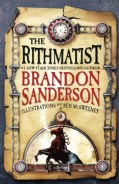
Rithmatist

rithmatistby Brandon Sanderson

with illustration by Ben McSweeney

I have had the best time reading this book: discovering a completely new and fresh world that is a twist of our real world with alternative histories and a wonderfully naive yet sinister kind of magic: two dimensional chalk drawings turned to life battling creatures.  Sanderson once again  proves his skills in creating a compelling magical system completed with intricate and convincing rules that makes the reader wish to encounter such magic in the real world.  The kind that will excite young readers to learn and master: drawing those Rithmatic defense circles and lines and dreaming up potential new designs and patterns.  The kind that will inspire game makers to create a wonderful board or video game based on the world, characters, and strategies found within the story line.  The kind that I am actually pleased to wait for the next installment in the series because I want to venture further with the characters to explore the unknown territories beyond the confine of the magical academy and the town.  I hope the next book comes out soon!  Can’t wait!

Oh, and the two teenaged protagonists are also authentic and their relationship often brings a smile to my face.

I also love the helpful and fun line drawings of the Rithmatic designs and chalklings, and the intriguing map of the United Isles with island names like Coronado, Zona Arida, Maineford, and DaKote.

Leave a comment

Filed under Book Notes

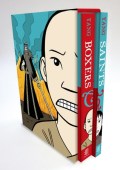
Boxers / Saints (Boxset)

boxersandsaintsby Gene Luen Yang

As I said in my notes earlier, my reactions to this two-book graphic novel set are complex and still unresolved even after several days’ reflection.  Partly because that I found so much of it outstanding, so I did not want to be nitpicking about certain details and I don’t want to color anyone’s reaction to this historical fiction based on my largely emotional reactions as a Chinese American reader who wants everyone to know THE WHOLE STORY!!  I also don’t want anyone to think that I KNOW the WHOLE STORY.  In fact, I had to do some research as I read the book since my textbook history knowledge of this rebellion was also mixed with folklore and stories I saw on tv when I was little.

I am quite aware that Yang did not set out to write a historical treatment of the entire movement, but to personalize individual experiences so that he, and the readers, can explore the impacts of these events.  He couldn’t have been more successful in reaching his goal.  I greatly appreciate how there are never easy answers in Gene Luen Yang’s stories — the readers are left to wonder whether to be angry or sympathetic toward the characters; to admire or abhor what they do; and to be enlightened or perplexed by their reasons for their actions.

I’m glad that Yang included a list of the books he used to create this narrative since the origin of the Boxers and their practices are much debated topics amongst Chinese historians.  The references to the boxers’ being spiritually possessed by powerful deities based on folk beliefs are in agreement with most historians’ findings and there was a real leader of the movement named Red Lantern Chu.  I wish, however, that some sources translated from Chinese scholars were consulted and that the main sources have more balanced views from both sides.

I wish that I could have been convinced of Bao’s ignorance of Qin Shi Huang who is one of the most famous personalities in Chinese history — even if he might not have featured greatly in the opera — but was glad that the First Emperor is portrayed with a complexity of his own.

I wish that I had not cringed so much by Yang’s referencing/highlighting the more exotic but less significant aspect of the rebellion: how some boxers believed that foreign forces’ success was due to their utilizing the “yin power” (usually refers to the female spiritual power) which is evil and undesirable (drinking menstrual blood, flags woven from women’s pubic hair, etc.)  Even if these were documented facts (as Diana Preston claims in her The Boxer Rebellion,) I simply couldn’t help feeling ashamed and hoping fervently that young readers won’t mistake such “foreign” notions as typical of my fellow countrymen in the 21st century. (Does the inclusion of such claims enhance the storytelling and the power of this book?  I am too shaken by it emotionally to see it… perhaps someone else could convince me otherwise!?)

I wish that the slogan on the war banner had been written out in traditional Chinese characters because the events happened way before the simplification of the characters.

The above are all pretty much about Boxers — and I didn’t really get a chance to talk about Saints — which, for some odd reason, I found thoroughly convincing and more intense, although it is only half the length of Boxers.  I found the timeline crisscrossing of the two books very effective and the two pages (282 in Boxers and 158 in Saints) depicting compassionate deities (Guan Yin and Christ) with the same visual design absolutely breathtaking.

These two books can generate so much discussion and are so thought provoking that I have to tag them Highly Recommended even if I had some personal reservations…

5 Comments

Filed under Book Notes

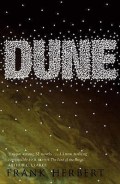
Dune

duneby Frank Herbert

I was much more impressed with the book during the reading of the book than after having finished it — largely due to my expectations of having something transcendent, something heart-felt, something truly world shattering that the journey might have led to than what actually transpires at the end.  I definitely liked the world building, the presentation of technology and training of various warrior/assassin types, and the drawing upon non-Euro-centric traditions in constructing the beliefs and social structures within the world of Dune.  (And the Sand Worms… are such cool Desert Dragons!)

With such a rich and realized world, in the end, the book is just a fairly standard story of a hero that’s born with amazing abilities who cannot escape the paths set up for him and who walks all the way to the end as destined and even though losing a few precious things along the way, there seems to be little to no effect on his person. Much of the plot is propelled and explained away with mysticism and basic political maneuvering. At a certain point, I muttered, “Paul’s better not succeeded in accomplishing this as he has planned…” — but, as always, he did. He managed to achieve all that he set out to do, from outwitting enemies, to changing the ways of a tradition, to earning back trust easily from his old pals. Yes, he did lose a son in the whole process — but his reaction? They would be able to create more heirs and the heirs will inherit the world.

The volume ends as the two generations of concubines having a short exchange where Paul’s mother assures Chani (his true love but not the proper empress) that even though they would never have the title during their lifetime, they will be remembered in history as “Wives”!! Woop-dee-doo! What an achievement!

Granted, it was created in early 1960s and perhaps Herbert was not trying to question science or future worlds as harshly as we might these days — I still couldn’t help but putting a 2013 lens on it.

I know I will not be reading the sequels any time soon.   I searched and read some book summaries of the two sequels — it seems that the question of lineage and political power play are even more centralized in the next two books. Definitely not too exciting for me!

2 Comments

Filed under Book Notes

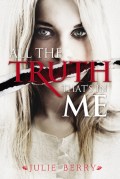
All the Truth That’s In Me

allthetruthby Julie Berry

I couldn’t put the book down, especially toward the end — really wanting to know how everything played out. I don’t want to spoil it for other readers so won’t say how the plot/romance/mystery/fate were handled by the author — suffice it to say that I was quite impressed.

The most impressive aspect of the book, to me, is the author’s ability to maintain the inner voice, authentic and powerful, of Judith.  Every thought and emotion felt raw and genuine.  Did I sometimes wish that she had thought or acted differently because I wished all the best for her at the moment? Definitely.  But did I want her to act completely rationally — definitely not — because then we would not have had this very readable and more importantly, for a school librarian, “sellable” book to my middle school readers.   I already know that those who enjoyed Scarlet Letter and The Crucible would find this a much easier but nonetheless as gripping addition on their reading list!

Leave a comment

Filed under Book Notes

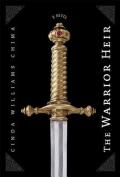
Warrior Heir

warriorheirby Cinda Williams Chima

I’ve been catching up with titles and series that I know my middle school readers have enjoyed one at a time.  That’s the main reason that I picked this title up.  For the most part, I enjoyed it.  I can see recommending this one to Percy Jackson lovers because it has some similar situations: a presumed “normal teenager” discovering his talents as both a wizard and a warrior; the training that one receives to better the skill set; the help from mentors; the resolving of conflicts via unconventional means; and a bit of romance.  I only wish that the prose has been a little less bland — either darker, more atmospheric, more descriptive, more dangerous, or more humorous — instead of just “talk talk talk talk talk.”  That’s how I felt as I read — being “talked to” not “story told to.”  And of course, I wish that I were a faster reader so I didn’t have to spend as much time on the pedestrian prose to get to the story line (which is fairly solid and quite inventive….)

I do appreciate that the main characters are from American midwest, and some Americana flavor was introduced — although the Wizarding world is still modeling after medieval European traditions.

Will I read the rest of the series?  According to my (now high school) students, this is the best of the entire series… so I don’t think I will be able to spare time when I really need to catch up with some other titles.

Leave a comment

Filed under Uncategorized

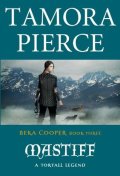
Mastiff

mastiffby Tamora Pierce

I did not read this one when it was first published in 2011 because I kind of “fell” out of love for Beka Cooper and her escapades after Terrier when Bloodhound did not quite deliver the punch that I was hoping for — even though I couldn’t quite put my finger on why.  (I vaguely recall that I didn’t like how she resolved, or didn’t resolve the relationships with the men in her life and also didn’t find the crime or investigation of the crime gripping.)

But, boy, am I glad that I went back to Beka and was not disappointed!!  It’s not that the pacing of this volume is so breathtakingly fast, and it’s not that there is more heart-wrenching romance, somehow, Mastiff just seems more mature and deeper than the previous one, fittingly so, of course, since Beka has matured herself.

This time, the whole kingdom of Tortall is in danger.  The little prince was kidnapped and mistreated.  Evil and powerful mages are setting traps and murdering innocents.  The stakes couldn’t have been higher!

This time, the newly introduced mage, Farmer, also couldn’t have been more entertaining or full of promises — AND he IS so powerful and So very clever!

This time, the mysteries keep me guessing and guessing wrongly a few times!

This time, the conclusion is both sad and satisfying.  Everything works out logically and I enjoyed the Epilogue that brings this story to the very first story I read by Tamora Pierce, Alana.  It brought a content smile to my face.

A most excellent read!

Leave a comment

Filed under Book Notes

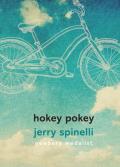
Hokey Pokey

13642591by Jerry Spinelli

This new book by established author Jerry Spinelli has sparked quite a bit of conversation in the children’s lit. circle.  And at my Children’s Literature Circle (a monthly book club that I host for faculty at my school,) our teachers (and one student) had quite a bit to say about the book as well.  So, here’s a short synopsis of what we discussed last Friday (April 19th.)

We were lucky enough that an 8th grade boy, hungry and in need of some sustenance wandered in to the classroom where some yummy chicken fingers called to him.  We said to Z (his initial) that we’d love to give him this book to read and get some feedback, since one of the common sentiment was, “Who would read this book?  Whom is this book for?”  But Z surprised us by saying, “Oh, that book?  I read it.  I really liked it.”

So we fed Z, asked him to stay for the beginning of our discussion and share with us his reaction.  He told us that the book was easy to read and he really enjoyed it.  These are some of his own words. “It resonated with me.”  “How the author describes it gels with my own childhood.” “I was confused at first.  Thought it was purely fantastical world… until it became clear that it was a childhood… it felt tribal.” ” It feels like a new fantasy world.”  “It would have felt sadder if I had read this earlier.”  Or, as we agreed, for a younger reader, it might not speak to him/her at all!

After Z left, we had a short moment of collective reflective silence — hmm… so this book IS for someone, and at least for this one 8th grader, everything WORKS beautifully.  Z also told us that he read the book in one day — which we all agreed that is the way to go.  Not a book to read in piece-meal, putting down and picking up again.  But we also all agreed that it was NOT an easy book to get in to – not by a long shot.  Anyone staying with the book until the end appreciated it so much more than they had originally thought possible.

We thought that it is daring for Spinelli to create such a unique world and he did quite a great job maintaining it.  Not an easy task.  Some of us felt that toward the end, there’s a bit redundancy in reviewing all the areas of “childhood” (Hokey Pokey) and that tightening it up more would have been  emotionally stronger.  Someone in our group suggested that the book should have been a short story.

We thought that this book will speak most directly and effectively for those who have LEFT Hokey Pokey.  (So, early teens, teens, and adults.)  And it probably will only speak to those who actually lament or miss their childhood.

Is the Allegorical land too obvious for some readers?  It is, somewhat, for me and a couple of other adult readers.  But it seems to have worked quite well for the 8th grader and there is a sense of revelation and pride in being able to name what Hokey Pokey is!

I grappled with the view points somewhat — if this is supposed to be the internal landscape of Jack, why would we be able to see so clearly some of the other characters’ internal journeys?  Especially that of Jubilee’s?    Or perhaps this is NOT an internal landscape but a SHARED Childhood Experience of those who live through it together?  Some leave earlier than others and some want to leave while others want to hold them back.

I wish that the strong dividing line of “BOYS are this” and “GIRLS are that” is less clearly stated to allow for better enjoyment by me with a 21st century sentiment.

I also think that the comparison of Spinelli to Joyce (by plenty of people) is quite off base and that this is not an example of “stream of consciousness” style!

This was definitely a conversation propelling book!  I’d love to hear more opinions for young readers!

Leave a comment

Filed under Uncategorized

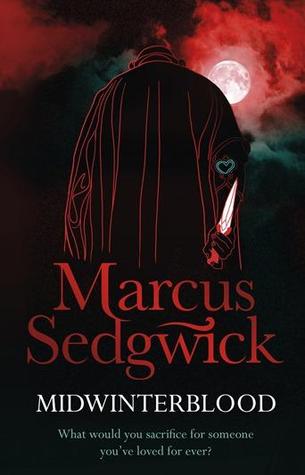
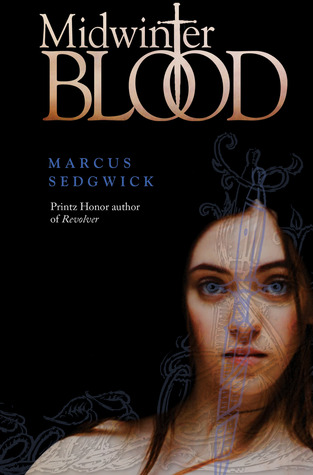
Midwinterblood

mindwinterblood15794941by Marcus Sedgwick

I put up two covers for this book because I found it so strikingly obvious that the UK edition and the US edition attempt to appeal to different readers.  The UK edition has the back of a man in robe holding a gleaming dagger while we are stared at by a beautifully young woman with mysterious patterns overlaying her skin.  Even the type choices are different (not to say that in the UK Sedgwick’s name is the selling point while in the U.S. he has to be “explained” as a Printz honor recipient.

The two design of the title are even different where the UK version Midwinterblood is one word but the US edition the title reads Midwinter Blood.

I have to confess that I was not all that impressed or emotionally invested at the beginning of the book.  It’s that darn high expectations syndrome again: high and enthusiastic praise and push from Monica and the publisher.  Both of them compared the book to other titles I loved — and especially titles that have what I consider “beautiful” writings (such as Laini Taylor’s Lips Touch.)  When I didn’t see the sparkling prose that I was expecting, my eagerness dwindled.  And, the US ARC proclaims that there are Seven Stories of Love and Passion which I interpreted as each story would be an incredibly passionate romance  (again, in the vein of Lips Touch.) Perhaps it’s my close-mindedness, but perhaps this description is indeed misleading.  And from hindsight, I could see how each tale IS a story of passionate love, just not all romantic love.

I am so glad that I stayed with the book.  As it is really clever and original.  The seven stories going back in time, each interconnected in some way, and each containing some unsettling elements (which I adore in short stories,) piece together a whole picture that is powerful and affecting.  Sedgwick even granted my wish by bringing us all back to the first tale, the first characters, and giving us closure.

I’m still left with a couple of questions, though: 1. Are we to interpret the characters ask speaking a Scandinavian language and that everyone of them is from the same linguistic cluster (the Journalist, the Archeologist, and Airman, specifically)  They all seem to have no problem communicating with each other, no matter the time periods and whether the encounter is within the community or with outsiders; and 2. I want to know more about the Orchids and their origins and powers and perhaps stories of greed and desire because of their special qualities.

Leave a comment

Filed under Book Notes

The Dead

thedead

by Charlie Higson

I am not an aficionado of zombie stories.  Yes, I’ve had a few books and movies under my belt: thoroughly enjoyed World War Z and Zombieland.  But I am in no urgent need for yellow pus, green liquidy drippings, splattered red blood, or all sorts of creatively severed  body parts — any time, anywhere.  I did greatly appreciate the first book in Higson’s zombie series, The Enemy.  And finally got around to read the second installment, a prequel, a “history,” of The Enemy. 

I cannot be more pleased by The Dead.  There is everything I love: exploration of loyalty, what makes someone a leader or a follower, what gives people courage, survival strategies — all told in a highly realized, logically plausible setting and string of events.  Tension and surprises keep the reader incredibly involved and the passages describing the mind deterioration of some characters are simply brilliant.

In a few weeks, I know I’ll be ready for book 3 – The Fear. 


2 Comments

Filed under Book Notes

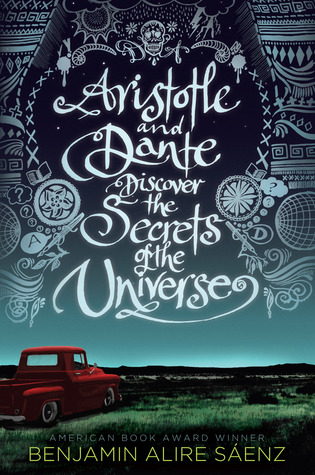
Aristotle and Dante Discover the Secrets of the Universe

Aristotle and DanteThis was high on my “to-read” list after the January 28th Youth Media Award announcement — It won the Stonewall Award, is a Printz honor and is also the Pura Belpré award winner. And the cover had always spoken to me. But, it took me a whole week to finish reading this easy and not very long book. Mostly because I found myself not being drawn back emotionally to the book every time I put it down and I also didn’t feel compelled to continue reading for a long time. I found Aristotle’s narrative too wordy, too self-analytical, too clinical, even, at times. There’s so much crying and laughing: as if those are the only two actions that can express the emotions of the characters. And the descriptions of the crying and laughing were not that varied. The way the father cries is not distinguishable from the way Dante cries. I think this is a message-y book — but the revelation at the very end of Aristotle’s sexuality does nothing to strengthen the book’s power for me. I can appreciate the everyday life style of the storytelling but at the same time, there is definitely plenty of tightening up that could be done. (Is it necessary to feature an aunt who was shunned by relatives because she was a lesbian and a brother who’s serving time for the murder of a transvestie all in one story and all in one person’s life?)

Leave a comment

Filed under Book Notes

V for Vendetta by Alan Moore art by…

5805V for Vendetta
by Alan Moore
art by David Lloyd

I really appreciated the intricate storytelling and some of the truly dark moments in this complete collection of the V stories. It’s great to finally know what this classic graphic novel is about and to have read something by the famed Alan Moore. At the same time, I’m not sure that I bought all the philosophical and political views underpinning the characters and the plot line: it seems to run too straight and too narrow down one singular line and everything worked out all according to V’s plans. That said, it is a rewarding read that demands quite a bit of focus and now I have to ponder hard about the ending: is it a brilliant treatment or does it too abrupt and unresolved? I’d love to hear others’ opinions on the series’ ending…

Leave a comment

February 8, 2013 · 6:20 pm