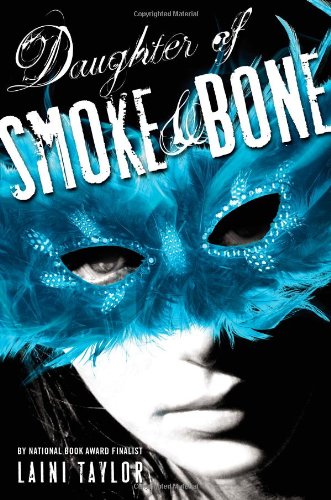
 This is one gorgeously written book. Laini Taylor knows how to create a fresh, inventive fantasy world of dark and unsettling magic and she writes with such relish of words and phrase turns that I felt I was treated to a feast of poetry and imagination. And I loved every bite and sip. And because she knew how to portion her offerings, at the end of the long meal, I felt simply satisfied and not overly stuffed. I fell in love with Karou, the 17-year-old main character who straddles the human and the “monster” worlds. She is artistic, fiercely loyal, and full of mystery. And that love sustains throughout the tale. The Madrigal chapters slow down the pace a bit and I did get a bit impatient to get back to the Karou story (although Madrigal’s IS part of her tale, too, the placement and the length of this part did disrupt the flow of the telling for me) and was a bit annoyed that the story does not end at the conclusion of this volume.
Tag Archives: highly recommended
Daughter of Smoke and Bone by Laini Taylor
Filed under Book Notes
The Knife of Never Letting Go
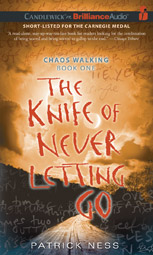 Author: Patrick Ness
Performer/Reader: Nick Podehl
Publisher: Brilliance Audio
CDs: 10 (12 hours)
Pub Date: 10/28/2010 and 9/13/2011
| MY RESPONSE |
| Fascinated, engrossed, emotionally affected, and admiring are some of the adjectives I associated with the experience of listening to this brilliant book, and its equally brilliant reader performer, Nick Podehl. Podehl chose a rustic set of tones for all of his characters. With slight variations for each speaking role, he is entirely convincing as the innocent and willful Todd, the mild, intelligent but bewildered Viola, the the crazed cult leader Aaron, the faithful dog Manchee, and a host of other supporting characters. Of course, the power of the story comes largely from the author: the imagination that created this futuristic and yet backward world, the skilled hand that penned the breathtaking pace which will NOT let go of the reader’s heart, and the thoughtful mind that wove in so many issues and themes for the readers to ponder.I find the device of the “virus” that forcefully and artificially separates men and women and how they share/not share their thoughts with others ingenious, and as a female reader, agreeing with some of the scenarios. (I wonder how male readers view this aspect.)Manchee the dog is endearing and with such a sorrowful fate which gives the book and Todd one powerful push in the direction it/he needs to move. I can’t wait to listen to the rest of the trilogy! (And my apologies to Monica for not heeding her enthusiastic recommendation for the past couple of years to read this series much earlier!) |
| SOMETHING ABOUT THE BOOK/RECORDING |
| This is a thrilling dystopian science fiction story with a very Western flavor: the characters carry rifles, farm the land, and have abandoned all modern technologies in a far off planet in an uncertain (but must be very distant) future. Lots of harrowing scenarios, people (and animals) die, and it ends with a gigantic cliff hanger. It touches on the topics of religion, of organized crimes, of government styles, of how men and women interact, and of the nature of evil. |
Filed under Book Notes
Wonderstruck
 by Brian Selznick
I adored The Invention of Hugo Cabret, Brian’s Caldecott winning, form-innovating, ground-breaking novel told in text and pictures. I have been waiting for Wonderstruck with both happy anticipation and a slight dosage of anxiety: what IF it is not as good? What if it feels like the author has set a trap for himself and cannot top his last achievement? Would I be as taken by this story as the mysterious tale of Hugo? Would I feel that it is merely a repeat of what he already did once and since it is such a singular and unique format, it might not bear the weight of a second attempt…
I am so pleased that the book is not at all these What Ifs… Instead, it tells a fascinating and moving story succinctly and attractively with text and pictures. And instead of a novelty, it might start a different kind of storytelling form for others who are similarly minded and have suitable tales to present in this way.
I did so want to SEE Ben’s story, though. I was craving pictures for his part of the tale! That, to me, is a strength of the book: I can see how young people can be compelled to “illustrate” parts of the text. Others might be inspired to curate a personal “Cabinet of Wonder” (a personal museum.) And all of us will learn to appreciate all the connections that we make throughout our lives with others.
The release date of the book is September 13th, a day after the start of the year at my school, and I can’t wait to have it on display to herald a year of reading with a wonderful new book for all my students! Let’s shout HURRAY together for another tour de force by Brian Selznick!
Filed under Book Notes
More about Mistborn
Just a couple more thoughts of why I like the book so much. It’s a Heist story. I always enjoy a good heist and this one is extremely fun: the carefully plans might still fail and yet the failed plans might lead to bigger or unexpected success. The processes of the planning and the training are both superbly enjoyable.
And there is the whole large-scaled discussion of legend, story, myth, and religion. Sanderson obviously wanted to cover a huge ground and as far as I can see, he has succeeded in clearly presenting his characters’ beliefs.
The gentle romance does not hurt, either! Ah, it defintely is a great read!
Filed under Book Notes
Mistborn: The Final Empire
 by Brandon Sanderson
It’s been a while that I felt surprised, so pleasantly, by freshly designed magic system and layers of intriguing twists in any book. This novel came out more than 5 years ago and I have been hearing about it from a trusted friend for quite some time. I’m so pleased that I finally had the pleasure to experience it. And this pleasure includes both laughter and tears.
Not only does the book have wonderfully fun magic (Allomancy and Feruchemy — both using Metals to enhance human inherent abilities,) contains within are some unforgettable characters: each one is well drawn, distinct, and most of them are so admirable that you don’t want them to leave the scene (but some of them HAVE to.. and it is heart breaking when it happens. Even a character who’s never made a physical appearance in the story becomes endearing in the last chapter.)
I am going to be championing this book from now on!!!
Filed under Book Notes
Good Omens
 by Terry Pratchett and Neil Gaiman
This is just a total delight to read. I marked pages and wanted to record all the humorous metaphors and turn of phrases. Two ingenious literary minds worked seamlessly together to create something that I’d like to just flip to any random page in the future and get either a chuckle or be amazed again. This book makes me want to memorize quotes!
Filed under Book Notes
The Lost Hero

Of course, my view on this book is heavily influenced by my students’ reactions: a LOT of enthusiasm from the 4th – 7th grade crowd. Many of them have been waiting impatiently for the launching of this series for a LONG time. (Yes, it’s only a year and a half — but to the current sixth graders, the Last Olympian came out when they were mere babies: in 4th grade!) (And, for my 9th grade students, they read the last of the Percy Jackson when they were, *gasp,* still in 7th grade!)
Like these young readers, I really enjoyed the book. Many of them think that it is the strongest first book by Riordan; and although some of them are a bit sad that the book is not as humorous (what, no funny chapter headings?) as The Lightning Thief, they feel that the sheer inventiveness and the coolness of the heroes and the battle scenes more than made up for the slight lack of levity.
We all agree that Leo is the most interesting and cool character to read about and can’t wait to see their next adventures: where traditional and Riordan-made story lines, characters old and new, and the worlds of Gods and Humans will all converge.
Are there some flaws in this book? Sure. It would have been great to me if Riordan does not repeat the same information more than once in several places and did a bit self-editing to tighten up the pacing a bit. (So instead of more than 550 pages, perhaps a 400+ pages would have made the book better… for me.) However, for the eager young readers who wanted so badly to read more adventures inspired by Greek and Roman Myths, I imagine, the MORE stuff the better! So, in the end, I say, Bravo, Mr. Riordan, for staying true to what you set out to do: writing fun and gripping adventurous stories for young readers and making the publication and reading of your books a huge excitement in their life.
Filed under Book Notes
The Ring of Solomon: A Bartimaeus Novel
 by Jonathan Stroud
I am giving it Five Stars because:
A. It gave me so much pleasure to re-acquaint with an old favorite, namely, the witty, boastful, and oftentimes powerful, but also self-deprecating and silly Bartimaeus. (A bit like Bruce Willies in Fifth Element.)
B. Stroud manages to present several different angles of the plot line and bring everything together in thrilling culminating sequences.
C. The three main characters: Barti, King Solomon, and Asmira, the young royal guard of the Queen of Sheba, each is layered and real and inspire admiration in very different ways.
D. And I believe that it is a book that many many young readers will find enjoyable….
… among many other reasons — cool magic, interesting twists in the plot, a tinge of melancholy that only a couple-of-thousand-year-old Djinni could experience, etc.
Filed under Book Notes
A Tale Dark and Grimm
 by Adam Gidwitz
I really really enjoyed the journey into and out of the dark dark woods that is this book by a new comer of the Children’s books scene. To be honest, because I love and respect traditional fairy tales (mostly Grimms, Jacobs, with some Norse, Arabian Nights, and Russian tales thrown in) to such a degree, I get very suspicious and highly critical when it comes to authors playing with and retelling these tales.
I especially resent the ones that make light of these grim and dark and powerful tales and turn them into cutesy products.
That is not the case with Gidwitz’s offering. It is slated to be published in November and I simply can’t wait to report on it! The frame story, using Hansel and Greta, substituting them as protagonists in several Grimms fairy tales, works brilliantly. As the story progresses, the resemblance to the original versions of the tales is reduced: they are more and more fractured and eventually, you are offered a few original short tales by the current author — but the Faerie, unsettling, and dark tone of the fairy tales tradition remains. As the story follows less and less the constrain of the original tales, the readers who know these tales sense the strength of the two children, rebelling against a cage that tries to tie them down.
For readers who are not familiar with the original tales, they can still vividly experience the growth, physically, emotionally, and worldly of these two characters.
This is not a simple construct, stringing a bunch of fairy tales together, but a successful novel that has a lot to offer to its young readers.
I can’t wait to share the tales — the new and the old — with my students in the fall!
Filed under Book Notes
Will Grayson, Will Grayson
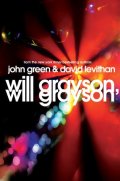 by John Green and David Levithan
Both John Green and David Levithan are known for their witticism, and both also have created stories where things get out of hand, and the reality just seems larger than life/real — I often think of it as “ultra realism.” And in Will Grayson, Will Grayson, you get a double dose of this over-the-top tone: Their nerds are just nerdier, their gay characters gayer, their jokes funnier, their sorrows more desperate, and their big finale of a High School Musical is so improbable that readers just have to suspend ALL disbelief (WILLINGLY) and simply enjoy the ride.
I enjoyed it for sure. I laughed out loud many times — both are so good at coming up with amazingly intelligent and painfully truthful funny one-liners (or one-paragraphers.)
What intrigued me the whole way was how these two YA superstar authors collaborated. Did they challenge each other with surprising scenarios or was it all planned out? Am I right in assuming that one wrote the Gay Will Grayson part and the other the Straight Will Grayson part? Who wrote which? (I thought I got it down from the beginning but now I’m not so entirely sure!)
One of my high school students read the book (a big Levithan fan, didn’t know John Green and now became a fan, too) and did not love love it because it reminds this student too much of the REAL life drama that goes on around the group of friends. It probably is painful.
No matter how ultra realistic this novel is, so much truth is dragged up from the bottom of a teenager’s heart that one cannot but admire the authors’ deep connection with their own inner teens and their abilities to capture all those feelings in words.
Filed under Book Notes
Incarceron (Chapter 32 – Gasp and Tears)
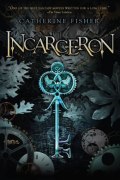 by Catherine Fisher
This is indeed a book worthy of note, worthy of passion, and worthy of thought. It amazed me how I could only guess at the truth about Incarceron as I read and when ALL the truth is unveiled, there are still many many things I want to know and now am eager to read the next installment.
I really want to know more about each major character and really need to know how things are going to turn out for both the INside and the Outside. I even feel sorry for the Prison — the synthetic se…more This is indeed a book worthy of note, worthy of passion, and worthy of thought. It amazed me how I could only guess at the truth about Incarceron as I read and when ALL the truth is unveiled, there are still many many things I want to know and now am eager to read the next installment.
I really want to know more about each major character and really need to know how things are going to turn out for both the INside and the Outside. I even feel sorry for the Prison — the synthetic sentient being that can never escape itself. SOOOO good :) *sigh* *content*
The title of this post records my reaction to the revelation that’s hidden from the readers (although a lot of clues that made me think of this possibility and that Jared and Claudia already discovered some shocking evidence by then) for most of the book (34 chapters in all.) Reading these passages (on pages 411 and 412 in the 2010 Dial HD edition) made me shudder and brought involuntary tears to my eyes. Brilliant and horrifying and unfathomable… but so believable once you’ve lived through the book as its faithful reader.
Filed under Book Notes
Half-Minute Horrors: A Librarian’s New Best Friend!
 I’ve been scaring, confounding, disgusting and delighting my 4th and 5th graders (and some older kids, even high schoolers) with the short short stories (we timed them — the way I read, many of them are more than half-a-minute long but seldom more than 2.5 minutes long) crammed into this slim volume for several weeks now. It’s not Halloween Season, but we all still welcome a spine-chilling experience in the Library’s Reading Room. We love M.T. Anderson’s EWWWWWW-inducing “An Easy Gig” where an innocent baby-sitting job turned menacingly tragic and we collectively are repulsed by Dean Lorey’s “Hank” where a beloved pet turns out to be.. um… not so endearing at all. Sarah Weeks isn’t all that sweet penning “One of a Kind” and Jack Gantos’ half-page “Up to My Elbow” makes us think twice and come to the “OMG” revelation on our own. With 72 stories in words and pictures, this proves to be the “best buy” of the school year for my library.
My students and I owe so many hours (minutes?) of reading and sharing pleasure to this cleverly conceived and brilliantly executed volume and HarperCollins and Susan Rich for putting the book together.
Filed under Book Notes
Lips Touch: Three Times
 by Laini Taylor
Gorgeous book — in every aspect. The cover is gorgeously attractive, the interior artwork is exquisite, and the writing is simply delicious. The three stories are rich in imagery, imagination, and deep emotion, and I want to collect so many sentences to make found poetry with the text. Totally taken by this book. So far, the young people that I gave the book to have enjoyed it tremendously as well.
Filed under Book Notes
Tales from Outer Suburbia

This book reminds of a third grade project that my daughter did: to write a short story that accompanies one picture from Chris Van Allsburg’s The Mysteries of Harris Burdick. In fact, on Van Allsburg’s site, there is an entire section dedicated to stories from “readers” of the book inspired by the images in the book.
Outer Suburbia has that same absurdity, the same eeriness and outlandish qualities that constantly surprise and delight the reader, even when we feel slightly uncomfortable with what we read and see. It is at times unsettling and other times deeply moving.
I am not sure that this is a book just for children or teens. It seems to me that it is very much a book made to just express the artist’s imagination and to satisfy his own storytelling needs — which, ultimately, benefits the readers who would appreciate this kind of short vignettes. My favorite stories/images are: Eric, No Other Country, Alert But Not Alarmed, Make Your Own Pet, and strangely my top choice: The Nameless Holiday.
The entire book design is so amazing as well. I remember the sense of thrill and awe when I first discovered the Griffin and Sabine trilogy by Nick Bantock. This one comes close.
Filed under Book Notes
In Cold Blood
 by Truman Capote
Finally got a chance to read this. Excellent beyond belief. No wonder it is such a famous book. Capote is not only a great sentence crafter, he is also so skilled in putting together the whole picture bit by bit with just the right amount of tension as each chapter progresses and as each section of the book falls into place. There is the “cold blood” chilling-ness permeating the book, of course, but there is also so much that is entirely human about each person’s tale. We wonder about these murderers and what went wrong in their lives and in their brains and in their hearts. I feel both a deep sorrow and a real emotional detachment – two highly opposite sensations and yet they co-exist the entire time as I read the book. I’d credit the author for giving a most unusual reading experience.
Filed under Book Notes
The Bartimaeus Trilogy

Author: Jonathan Stroud
Reading Level: 6th grade and up
This is a guest blogger post. Josh is 16 years old and just finished the trilogy. (I feel remiss here — since I neglected to recommend this series to him when he was in middle school!) He sent me a long email with his reviews of the three books and we subsequently exchanged a couple more emails, especially about the endings of this trilogy and the His Dark Materials trilogy. There are plot spoilers.
ABOUT The Amulet of Samarkand
Bartimaeus is hilarious. I simply love the djinn. Nathaniel is interesting to follow as well, a fun character with a couple flaws. There really isn’t much to speak of in this book other than plot: it’s fun, but Bartimaeus is the real winner of this one.
ABOUT The Golem’s Eye
Here we see Nathaniel turn into the pompous, arrogant named John Mandrake. He falls into the very trap Bartimaeus told him to avoid: letting the corrupting influence of magicians twist him into something horrible. The things he does and says are unbelievable, and the effect is doubled by how he behaved in the 1st book. We get introduced to Kitty, who’s a good person at heart, and then gets caught up in the whole Honorius affair. Mandrake shows his bastardness with his perpetual breaking of vows, many only hours or less after having made them. Bartimaeus is fun as ever: was sad about Queezle, that she got introduced and then snuffed out, but oh well. So goes the storyline.
ABOUT Ptolemy’s Gate
By far the most interesting, most powerful, most moving, most climactic of the three (well, for that last one I suppose there’s a reason, being the end and all). We see Mandrake turn from arrogant into the marginally better (or worse, depending on your POV) “top magician”. Bartimaeus evokes a lot of sympathy with his sorry state, and Kitty becomes my favorite character for the majority of the book.
And then Mandrake slowly crumbles, leaving a mature Nathaniel. He still has flaws, but then, so does everyone but Bartimaeus. As Kitty and Nathaniel work together, with each other (and slowly begin to admire each other: my guess is given a couple years, they’d end up as very good friends or more, provided Nathaniel doesn’t relapse, which I don’t think he would), it’s my favorite part. To see Kitty put the same trust in Bartimaeus that Ptolemy did, showing greater understanding of him than perhaps even the Egyptian boy (though Ptolemy did not have someone’s notes or previous history as guides, admittedly).
And then, when Nathaniel accepts Bartimaeus into his own body…this is where N/B takes over as my favorite character(s). The fact that, working together, they manage to destroy far more powerful spirits than they. The fact that, working together, they are the culmination of Ptolemy’s hopes and dreams, the ultimate climax of Nathaniel and Bartimaeus’ relationship, the fulfilling of the purpose of Kitty’s visit to the Other Place…once they become both two souls and one, a single 2-part mind in a single body, I could not put it down even for work. I was breathless as they turned the staff on Nouda…
AM. Nathaniel hit by the Detonation. Coming from Barti’s POV, it is even more effective. And then when Nathaniel realizes the seriousness of the wound, his acceptance of his fate and determination to do selfless good is such strong writing. The last meeting with Kitty, where N/B both know what has to be done, and the whole concealing it from K thing…I really felt it. Comparable, at least for me in my after-reading-state, to when Lyra and Will realize they must separate in Amber Spyglass.
True to form, he breaks his final promise, having finally made one beyond his power to keep. This was where I was sad that the “item” could never happen (Kitty’s picking through the wreckage at the end made me think she was feeling the loss of a possible future, one containing more happiness, or at least more possibility, than her current one, a future with a united djinn/human in it).
I thought that writing N and B’s end at the very end was the best move of the whole trilogy. We already know what happens: we know that the great evil is destroyed by the heroic death of N/B. Now we get to see the heart of darkness, the center of the inferno, as N/B march to their death. The connection between them in this scene is so powerful I thought they might actually survive. This isn’t the usual master-servant relationship; this isn’t even Ptolemy’s relationship. Ptolemy was a trusting, kind, benevolent, freedom-giving master, yes, but he was a master, as evidenced by his final dismissal of Barti. N and B banter as friends, they speak as equals, as 2 halves of the whole. Nathaniel’s character at the end here practically radiates goodness off the page. And then, the way he dismisses Bartimaeus, I feel, is from an equal to an equal. The delivery of the dismissal is not that of a master dismissing a slave, but of a friend releasing a friend.
My throat was seized up the whole final scene, but it was the 2nd-to-last paragraph, where the Staff breaks, that the tears almost fell (almost, because I usually manage to keep them in while reading, though I failed during Amber Spyglass several years ago). The simplicity of the writing there – “Nouda did this. Nathaniel finished the Dismissal. I went. The Staff broke.” had so much raw POWER in the way it was written. Stroud simply couldn’t have written that end any better (except maybe Nathaniel surviving: just as he turns good, he turns so good that he must make up for the magicians’ sins and evildoing. He dies for a better world, and I do rather prefer when they get to actually see that world).
I’d discuss the last paragraph but I need breakfast. Barti’s final words in the trilogy, starting with “typical master”, given that Nathaniel was anything but, either give the paragraph a tone of affection or a tone of disgust. Choice of the reader, so I chose affection :)
*** (Another email discussing the endings of Amber Spyglass and Ptolemy’s Gate is omitted.) ***
Amber Spyglass had a Tough ending…but I think that, for me, Ptolemy’s Gate takes the cake. To see what Nathaniel becomes by the end of the trilogy…in book 1 he was bumbling but likable, in book 2 I nearly burned the pages with him, in book 3 first couple parts I was a little put out with him (especially given his treatment of Barti), in last 150ish pages I thought, “This is what he should have become from book 1.” The opposition of him + Barti and him from the previous books was so pronounced, and the tentative friendship springing up between him and K…it all made his death doubly sad and twice as noble.
Still tugs at the hearstrings, reading it. It’s his Redemption, and yet he goes so much farther than he “needed” to, to redeem himself. For once, a magician of the old generation does what people of such power are supposed to do (at least in our society): use it for the people, sacrifice himself for the commoners.
FAIRROSA:
I cannot really honestly say which one affected me more at the moment of reading — but I do think that Lyra and Will’s final parting has a much stronger lingering effect. I read that scene, what, 8 – 9 years ago and I can still feel the sorrow now; whereas I do recall Nathaniel’s final sacrifice (and you described it so well below) and how much I sobbed over it, it does not give my heart a blow whenever I think of it.
JOSH:
It’s something about the way the two are written, I think. Something about them makes Bartimaeus stronger than HDM for me. I can’t place it…my first guess would be that in Barti, the whole experience comes from 1st person, and their unity is such a 180 from everything before it, but I’m not sure if that’s it.
Maybe it’s the fact that N/B was 4 days ago, and L/W was 4 years ago…but there’s no way to either prove or disprove that.
Argh.
Given the time difference between reading the two (not too much for an adult, but for me it’s my entire emotional maturation to date), I don’t think I can honestly say either one. L/W affected me more, but I hadn’t read many books before then in which the heroes either die or must sacrifice something HUGE to win. I’m more used to it by now, and being a fan of happy endings, anything with such sacrifice will .
Filed under Book Notes
Here Lies Arthur

Author: Philip Reeve
Rating: 
Reading Level: 5th to 8th grade
Pages: 352
Publisher: Scholastic
Edition:Hardcover, 2008
This is a book for the Arthurian Legends enthusiasts, and I happen to be one. Having read many re-imagined Arthurian tales, I was completely delighted by this fresh take on the “true story” behind the legends. Reeve’s conceit is a fabulous one: it is all about the power of stories, storytelling, and story tellers. The title alone is worthy of much examination, with its double meanings of “lying dead” and “telling lies.”
At the beginning, I was perplexed by the switches between past tense and present tenses. Slowly, I realized the why and when of such passages. This is a meta-fiction in a slightly different form and it really works for me.
I imagine that, though, this might not be as much fun for some others. If you don’t find piecing together pieces of a complex story puzzle (who’s who and which event eventually “became” which well known tale,) then, you won’t be having as much fun as I do. If you are not usually a sucker for stories that “discuss” the underlying philosophical elements of story-telling or humans’ needs for such elaboration, then, you probably won’t like this book as much as I do. And if you are not totally loving the meta-fiction genre, then you definitely will not enjoy it as I do. Also, if you only want a story with magic and valor, (that’s what I expected, before reading the actual text) then, you definitely will be disappointed. This is one Arthurian tale, featuring heavily the prototype character or Merlin (Myrddin) that definitely has NO magic whatsoever!
What’s even more impressive with this tale is Reeve’s ability to actually tell a cohesive story, with a highly believable and admirable main character, set against a convincing backdrop. (Although one might say that the language of the telling is fairly contemporary 21st century, it is to be excused because the teller could be anyone in any time – everything is apparently made-up anyway.)
To say that I am highly impressed is to put it lightly. I hope many others (especially middle school readers) will find this an intelligent and satisfying read!
Filed under Book Notes
Christo and Jeanne-Claude: Through the Gates and Beyond
 Author: Jan Greenberg and Sandra Jordan
Rating:
Reading Level: 4th to 6th grade
Pages: 50
Publisher: Roaring Brook/Neal Porter
Edition: Hardcover, 2008
I am speechless and teary-eyed, reading and having finished reading this thrilling little biography of Christo and Jeanne Claude and of their art. Greenberg and Jordan did not disappoint — as always, their words are as vivacious and artistic as the artists they chronicle. One cannot help but being completely infected by the passion from all of those involved: the artists and the biographers.
And to this one, since it is something I deeply experienced, with friends, students, and family, my emotional reaction is even stronger. Between me and my husband, we took about 500 photos — both under a bright blue sky and in the snow, with the gates winding around and the fabric flapping wildly in the wind. In fact, when it was time for my then-kindergarten daughter to do her “hundred day” project, she chose to draw a tree with branches and then glue 100 miniature pictures from our collection as leaves — a Fall Tree, as she called it, because these were orange leaves. The artwork is still hung next to my desk at work.
(Hmm… I was slightly perturbed why there have not been more pictures of the Gates in this book, especially of the Gates when they were “in action and in motion”?)
The meticulous and artistic design of the book itself also echoes the free and playful spirit of Christo and Jeanne Claude. I applaud all who worked on this book! Thank you for a precious gift.
And I simply cannot help but posting a couple of the snowy pictures (the blue sky ones are on a DVD somewhere else…) — to commemorate a fabulous time in New York City:


And of course, my friend Monica Edinger had her class document the process on a web page. Go HERE to see!
And here’s a link to many more Central Park Gates Pictures by searching google images of simple: Central Park Gates.
Filed under Book Notes
Little Mouse’s Big Book of Fears
 Author: Emily Gravett
Rating:
Reading Level: K to 4
Publisher: Simon & Schuster
Edition: Hardcover, 2008
This is a fantastic offer from a truly creative mind, and I believe also, from a team of designers and editors who put in so much in carrying out all the ideas: from the nibbled cover and pages, to the flip-the-flap effects, to the completely black page (yes, I was fooled in thinking, ‘huh? this is the end of the book? No way…’ and found out, to my great delight, that there is still half of the book to go and plenty more of information to come!) And of course, Gravett’s talent in illustration is unparalleled! I just love that pencil, getting gnawed to a stub bit by bit.
It will appeal to those children who love words and love to collect the names of so many phobias. It will appeal to those children who love poring over pages with extra words and details quite a few times over. It will appeal to those who enjoy visual jokes (“I worry about having accidents.” page has Little Mouse … um… accidentally leaves something on the bottom of the page… — opposing the picture of a toilet.)
I love the page where all the feathers “have eyes” and “sharp teeth.” I love the page with the newspaper clipping about the farmer’s wife and the three mouse tails. I love the page with the fold-out map of the Isle of Fright. Actually.. I think I simply love all the pages, each for a different reason.
Filed under Book Notes
That Book Woman
 Author: Heather Henson, illus. by David Small
Rating:
Reading Level: K – 2
Publisher: Atheneum
Edition: Hardcover, 2008
Even though I knew from page 2 that this is a little story on the power of books and libraries, and that this young boy narrator will become a reader in the end, I did not feel disappointed when all the prediction came true. This is due to the artistry of both the author and the illustrator. Henson’s text is folksy and true, with a wonderful lilting pace, while Small’s illustrations are gentle but at the same time with a quiet but majestic integrity. Of course, being a librarian, I am completely won over. (Just so you know, I am usually very suspicious of books glorifying Library Services and Librarians — oftentimes, I find those “books and reading are GREAT stories” corny and cringe-inducing.) I hope that others who are not in our profession will also find this fact-based story completely winning.
Filed under Book Notes

