Category Archives: Book Notes

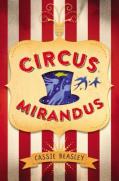
Circus Mirandus by Cassie Beasley

circusmirandusCircus Mirandus by Cassie Beasley

For the most part, the story works, and I did care about the main character and what he was hoping for. The ending is the kind that kid readers always want: the young protagonist actually GOT to enter the fantasy realm, rather than learning some precious lessons on how to hold the magic in one’s heart but knowing that “fantasy world” does not quite exist. So, kudos to Beasley on that front. I was hoping that once we learned the back story of the aunt, I would have had more sympathy toward her behavior but she remained a two-dimensional device and not fleshed out character all the way through. Definitely felt that the writing is a bit plain and some details could be trimmed to tighten the pacing, but totally see it appeal to certain young readers.

Leave a comment

Filed under Book Notes

Sunday Select, September 27, 2015

FCLSSQuote of the Week

Are you ready for a revolution?
As an African-American librarian, I am.
Think about it. It’s 2015, and we still need to campaign for “more diverse books.”
————-
The question we librarians need to ask ourselves is: Are you exposing your users to the full range of authors and literature out there? Are you going out of your comfort zone and reading and learning about authors and sharing that with the community you serve?


— by Shauntee Burns-Simpson,

from A Call to Action for Librarians @ BookRiot

We Need Diverse Books

A Call to Action for Librarians by Shauntee Burns-Simpson — from BookRiot

Ta-Nehisi Coates to Write Black Panther Comic for Marvel by George Gene Gustines — from The New York Times

Lying to Children About the California Missions and the Indians by Deborah A. Miranda — from Zinn Education Project: Teaching a People’s History

China Rich Girlfriend by Kevin Kwan reviewed by Pooja Makhijani — from The Rumpus

The Diversity Baseline Survey — from Lee & Low Books

Authors & Books

Top 25 Books from the 2015 NBA (Neri Book Awards) by G. Neri — from g.neri.com

Some Kids’ Books Are Worth The Wait: ‘They Do Take Time,’ Says Kevin Henkes  — from NPR

Jane Goodall, UN Messenger of Peace  by Monica Edinger — from Educating Alice

Children’s Books Interview – Horn Book Editor, Roger Sutton  — from Miss Marple’s Musings

A Manifesto for Children’s Literature; or, Reading Harold as a Teenager by Philip Nel — from Iowa Review 

I Am Marie Lu: Ask Me Anything  — from reddit.com/r/books

Nielsen Summit Shows the Data Behind the Children’s Book Boom by Natasha Gilmore — from Publishers Weekly

Something Great to Share


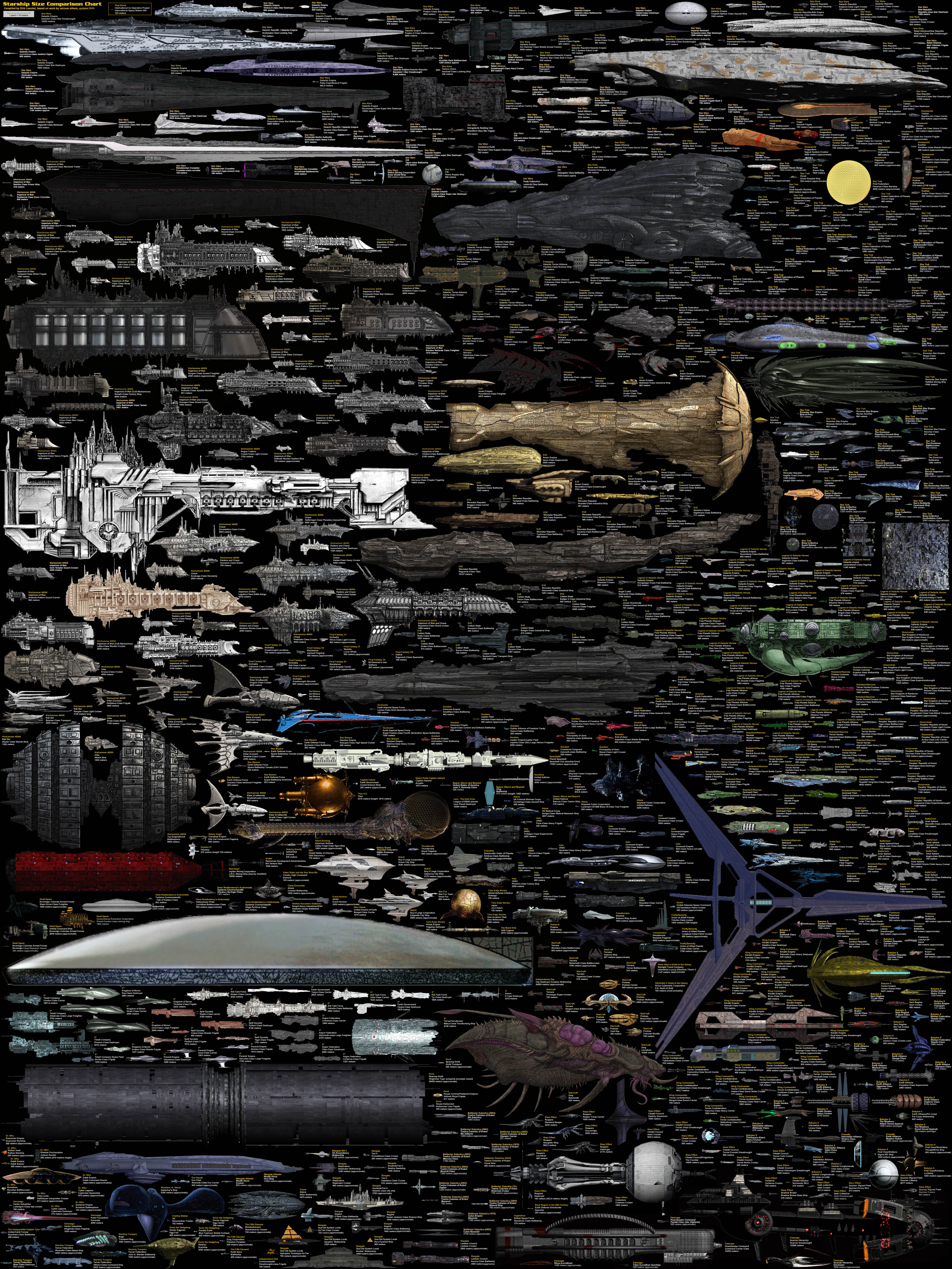
Size Comparison Science Fiction Spaceships by Dirk Loechel — from Deviant Art

(Click on this small partial image to see the full size, high rez original.)

spaceshipslinkimage

I gathered these entries from various sources such as Facebook, Twitter, Goodreads, and specific sites that I follow such as Educating Alice, Pub Peeps, Book Riot, School Library Journal, The Horn Book, We Need Diverse Books, etc.

Leave a comment

Filed under Book Notes, Views, WIWWAK

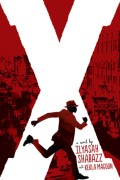
X: A Novel by Ilyasah Shabazz & Kekla Magoon

xX: A Novel by Ilyasah Shabazz & Kekla Magoon

So many of my esteemed colleagues have reviewed this book extremely favorably and some of them told me exactly why they love this book.  They cite the energy in the narrative, the honesty in the young man’s anger, and the eventual growth and redemption of this lost soul.

So I feel like walking on thin ice to say that I didn’t find the novel or the protagonist quite compelling all the way through.  I found the beginning of the narrative strong and powerful.  I was moved by Red’s emotional ties to his mother and siblings; I was convinced that he would find justification of he must steal.  His slow realization of his “place” in the world saddened me.  The refrain of “Just a n****r” is both chilling and makes my blood boil!  And one cannot easily forget his witnessing a lynched body and the connection to the song “Strange Fruit.”

But then… we have 200 pages more of Malcolm engaged in various illegal activities, and continuously excusing himself because of his sorrowful past, family situation, societal reality, etc. I understand that all of these are based on real events, family stories, and Malcolm’s own words. I can only speak for myself as a reader how after a while it felt more tedious than compelling. The pacing went from tight to sloppy.  I got quite impatient and did not feel empathy or sympathy toward him.  Perhaps that’s not the intent of the author but it was difficult for me to want to follow his next missteps since I stopped caring.

The final payoff of X’s enlightenment comes very late and lasts very briefly within the confine of this novel. The book ends before his important life’s work begins.  For many who already know quite a bit about Malcolm X, his personal narrative, his rage, and his complex relationship with the Nation of Islam, the ending is but a beginning — we know what he would become.  And the book includes extensive after matter to detail Malcolm X’s achievements.  I just wonder what impression this “novel” of Malcolm X leaves a younger reader.

I also wonder how the pacing feels and my emotional engagement might have been different if the narrative voice had been a more universal third person, so that I could understand his internal struggle and also observe his external charms and charisma (and not just being told by the protagonist that “people seem to be drawn to me” or “girls like me.”)
Leave a comment

Filed under Book Notes

Sunday Select, September 20, 2015

FCLSSQuote of the Week

American audiences are capable of so much more than some in your industry imagine. And if we can break that down to what I really mean, I mean this: White Americans can care about more than just themselves. They really can. And the rest of us? We are DYING to see ourselves anywhere.

To be clear: I’m not asking for altruism here. I worked in corporate America for 20 years before I put my book out; I know the stakes, the economics. What I am saying makes solid, actual business sense: There is a vast, untapped audience out there. You need to get to us.

— by Mira Jacob,

from “I Gave A Speech About Race To The Publishing Industry And No One Heard Me” via BuzzFeed

Race & Cultural Literacy

Why a White Blog? by Allie Jane Bruce — from Reading While White (This is the inaugural post of the new blog.)

Author Cornelia Funke Launches Own Publishing Company by Wendy Werris — from Publishers Weekly (Her decision was made due to stylistic and also cultural conflicts with Litte, Brown.)

I Gave A Speech About Race To The Publishing Industry And No One Heard Me by Mira Jacob — from BuzzFeed

Awards, Authors & Writing

The National Book Award announcement of the ten titles that made the long list for the Young Readers category — from The New Yorker

Omission: Choosing what to leave out by John McPhee — from The New Yorker

The Walking and Talking series by Steve Sheinkin — from A Fuse8 Production/SLJ

This web comic series features interviews with children’s authors conducted and drawn by Steve Sheinkin, hosted on Fuse8, since September 2014. Here are the six installments so far:

I gathered these entries from various sources such as Facebook, Twitter, Goodreads, and specific sites that I follow such as Educating Alice, Pub Peeps, Book Riot, School Library Journal, The Horn Book, We Need Diverse Books, etc.

Leave a comment

Filed under Book Notes, Views, WIWWAK

Sunday Select, September 13, 2015

FCLSSQuote of the Week

It is long past time for the industry to move past concerns over what–if anything–dominant voices lose when publishers actually choose to publish and promote minority voices over dominant ones. It is long past time to move past that old debate of who-can-write. Moving past that debate means I want to see publishers actually doing what Lasky feared so that more books by minority writers are actually published.

— by Debbie Reese,

from American Indians in Children’s Literature

Cultures – Insiders, Outsiders, Tangled Knots

Deborah Wiles, Debbie Reese, and Choosing a Revolution by Debbie Reese — from American Indians in Children’s Literature

A Tumblr Post about Writing the Other by Maggie Stiefvater — from Content of Maggie Stiefvater’s Brain

A Tumbler Post Response about Maggie Stiefvater’s Tumblr Post  — from La Lune Rousse

A Response to Colten Hibbs and Maggie Stiefvater on Writing the Other by B R Sanders — from Clatter and Clank

The White Poet Who Used an Asian Pseudonym to Get Published Is a Cheater, Not a Crusader by Katy Waldman — from Slate

Sherman Alexie Speaks Out on The Best American Poetry 2015 by Sherman Alexie from The Best American Poetry Blog

News, Awards, Authors

Marvel’s First Native American Hero Is Getting A Standalone Comic Series by James Whitbrook — from io9

Lee & Low Books: New Visions Award (Deadline 10/31/2015) — from Lee & Low Books

First WNDB Short Story Winners  — from We Need Diverse Books

2016 Spring and Summer Favorites? by Nina Lindsay — from Heavy Medal/SLJ

Alex Gino on Debut Novel, “George”, and the Importance of Transgender Voices in the Kid Lit World by Kiera Parrott — from School Library Journal

Goodreads YA Interview – Andrew Smith on Alex Crow

Leave a comment

Filed under Book Notes, Views, WIWWAK

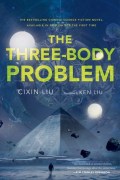
The Three Body Problem by Liu Cixin

threebodyproblem The Three Body Problem (三体)by Liu Cixin(刘慈忻),translated by Ken Liu
This is a rare experience for me since my encounters with Science Fiction tend to be on the “soft sci-fi” end: where the details of the science employed by the authors are often quite flexible to suit the narrative needs of the tale.  This is Hard Science Fiction and I was absolutely fascinated (even while I didn’t quite understand them) by the explanation of the Three-Body physics problem, the unfolding of protons into various dimensional modules, and how radio waves are delivered and received, etc. However, what compelled me to keep on reading was the realistic and unflinching depiction of the story’s backdrop (from Cultural Revolution era to contemporary China,) the underlying multiple and somewhat conflicting philosophies about human nature, the life story and struggles of one of the main female characters, and the kinship I feel with a specific type of online gaming.

The author honestly and boldly laid out the views of his characters (and one can choose to side with or against whichever view) and the translator faithfully captured and presented the analytical and yet deeply emotional landscape of the story.

Let’s celebrate this book’s 2015 Hugo Award win for being a solid hard science fiction and for being the very first Hugo novel winner penned by an Asian author.

2 Comments

Filed under Book Notes

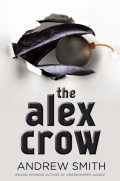
The Alex Crow by Andrew Smith

alexcrowThe Alex Crow by Andrew Smith was a baffling read from the beginning to the very end.  Baffling but fascinating, engaging, engrossing, moving, and thrilling. I didn’t know where the story was heading and in the end, I wasn’t quite sure where I have been: spanning time and space, from the icy pole in the 1800s to the summer heat of an American summer camp now (?) — encountering the Melting Man (literally,) the refugee boy, the eccentric scientists, the Dumpling Man, and many others.  Or even where we eventually arrived — are we to be pleased with Ariel’s final situation, bonded with his adopted brother and their new found friend, no longer being closely monitored?  Are we to continuously be paranoid of how our lives might be closely examined by unknown forces and crazy scientists?  At least I know to unconditionally love Ariel for his intelligence and compassion.
Since earlier this year’s brouhaha about Andrew Smith’s “lacking” in inclusion of positive female characters in his work, I couldn’t help but noticing that in this book the readers only encounter two real life women: one is a completely ineffective mother figure and the other is a terrifying scientist whose goal is to eliminate all males from the human species.  (I’m not counting the two imaginary women in the Melting Man’s schizophrenic head.)

Of course, introducing compassionate and caring characters (male or female) will result in a completely different story: one that simply wouldn’t have been as brutal to such extreme and thus wouldn’t have had the same level of impact.  If the point is to portray a world for Ariel and his buddies to “survive” in without the physical or emotional support of kind souls, Smith succeeded brilliantly.

And I must mention his ability to effortlessly switch into drastically different narrative voices!  A skilled writer, indeed!

Leave a comment

Filed under Book Notes

Sunday Select, September 6, 2015

FCLSSQuote of the Week

Don’t even think about publishing until you’ve actually started writing, and don’t even think about writing until you’ve done a whole lot of reading. And not of websites or how-to guides; that’s just dilly-dallying. Read children’s books. Lots of children’s books. Although my grumpiness is resurfacing to tell you that if you haven’t already read lots of children’s books, for love, I’m probably not going to be interested in what you think you have to contribute. Harshing your buzz? Deal with it and dig out your library card.

— by Roger Sutton,
Editorial of the September/October 2015 Issue of The Horn Book

Books & Book Lists

Goodbye Stranger by Rebecca Stead, reviewed by Elizabeth Bird– from School Library Journal

The Alex Crow by Andrew Smith, reviewed by Jason Reynolds — from The New York Times

George by Alex Gino, author interview by Kiera Parrott — from School Library Journal

Nonfiction Picture Book Wednesday: Recent and New Releases by Alyson Beecher — from Kid Lit Frenzy

3 Filipino Folk Tales That Would Make Great YA Novels by Angel Cruz — from Book Riot

Happenings and Musings

Read Before You Write by Roger Sutton — from The Horn Book

Diversity Survey Deadline Nears by By Jim Milliot — from Publishers Weekly

The Opposite of Colorblind: Why It’s Essential to Talk to Children About Race by Hannah Ehrlich — from Lee & Low Books

Ratcheting Up the Rhetoric by Charles Blow — from The New York Times

Literary and Entertaining

The Bay of the Dead, a Facebook Photo Story by M.T. Anderson — from Facebook

17 Things We Wish Had Happened in Harry Potter by Gwen Glazer — from The New York Times

Where the Magic Happens: Children’s Illustrators Open Up Their Studios – in pictures by Jake Green — from The Guardian

Leave a comment

Filed under Book Notes, Views, WIWWAK

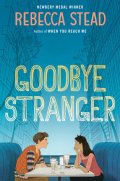
Goodbye Stranger by Rebecca Stead

goodbyestranger Goodbye Stranger by Rebecca Stead

How does an author who already won so many accolades to continue pushing herself for such new heights?

This book has no surprising twist ending: magical or SciFi-esque; it has no flashy mystery elements; it is set in an ordinary school with ordinary middle school students — but yet, one cannot stop reading it because we as readers care so much about the interior lives of the characters (three “main” plus the supporting cast).  It makes one feel compassion and empathy towards all who behave “well” and who might have some questionable motivation.  It also makes readers marvel at the author’s ability to write a “quiet” book that speaks so loudly on the reality of being a young teen who must navigate the treacherous waters of friendship, social dynamics, and power-structure.

Leave a comment

Filed under Book Notes

Sunday Select, August 23, 2015

FCLSSQuote of the Week

Learning the alphabet gave you night terrors, and even now you have a deep seated fear of being mauled by a bear.

— by Bridey Heing,

from “How to Tell If You’re in and Edward Gorey Book”  (referring to The Gashlycrumb Tinies)

Children’s Literature Happenings & Book Lists

How To Tell If You’re In an Edward Gorey Book by Bridey Heing — from The Toast

Kwame Alexander BeatBoxing The Crossover at Singapore American School

ABC Books Beyond Chicka Chicka Boom Boom by Karina Glaser — from Book Riot

Getting Graphic by Julie Danielson — from Kirkus

7-Imp’s 7 Kicks #445: Featuring Matt Phelan by Julie Danielson from Seven Impossible Things Before Breakfast

Good Questions and Great Answers

Where Are All The People of Color in Sci-Fi/Fantasy? by Anthony Vicino — from SF Signal

Bedtime Stories for Young Brains by Perri Klass, MD. — from The New York Times

10 REASONS TO READ DIVERSELY — from Lee & Low Books

I’m Latino. I’m Hispanic. And They Are Different, so I drew a comic to explain. by Terry Blas — from Vox

Leave a comment

Filed under Book Notes, Views, WIWWAK

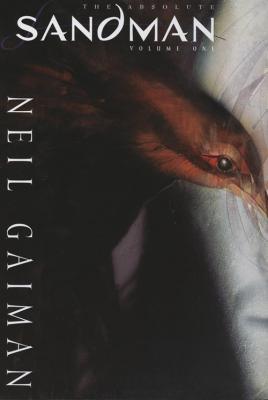
The Absolute Sandman Vol. 1 by Neil Gaiman

absolutesandman1Artwork by Dave McKean, Sam Kieth, Mike Dringenberg, Chris Bachalo, Michael Zulli, Kelley Jones, Charles Vess, Colleen Doran, and more.
I decided to use a large cover image here because this hardcover, full-color, glossy heavy pages tome absolutely deserves this “in your face” treatment.

I read the first twenty installments (24 pages each) of Gaiman’s game changing graphic novel series (from 1989 to 1991) in sequence and absolutely loved every page and moment of it! Dark, haunting, gruesome, poetic, enigmatic and yet lucid all at the same time, wrapped in such a handsome package.

Even if so much within is extremely disturbing, Gaiman’s stories and the art and layout design make reading this volume a blissful experience.

Leave a comment

Filed under Book Notes

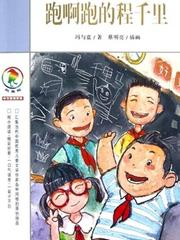
跑啊跑的程千里 (Run Run Cheng Qianli) by 冯与蓝 (Feng Yulan)

跑啊跑的程千里The story about a chubby 5th grade boy who is grappling with being the unathletic one in the class is told with a very light and gentle touch: he’s never so troubled by it to be sad, his best friends (who are all fast runners) are all supportive, his teachers do not put him down, even when they try to help him build up his stamina. And his relationship with his parents is loving, albeit full of little conflicts due to his very active mind that is constantly wondering about the world around him and coming up with out-of-the-box ideas.

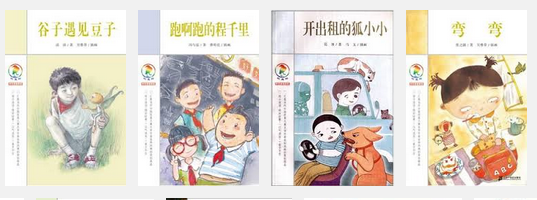
This is the first of the Rainbow Crow set of high quality contemporary children’s books from China (by the 21st Century publishing company) that I have read and I am definitely impressed: by the author’s understanding of young people’s mindset, by the excellence of the production/design value, and by the publisher’s insistence of offering current stories by Chinese authors to young readers.

Colorful Ravens* “Original Stories in Chinese”* series of 20 titles  were published in 2012.  I obtained four copies and will report on all of them as soon as I finish each.  To read the bilingual plot summary that I made for this book please head over to the Goodreads page.

Rainbow Crow titles*My translations for the series names were different from the publisher’s.  Corrected on 8/18/2015.

Leave a comment

Filed under Book Notes, Field Reports

Sunday Select, August 16, 2015

FCLSSQuotes of the Week

What few people understand and some people don’t want to understand is that the chattel slavery inflicted on blacks in America was distinctly different from slavery in Africa, Russia, Ireland, Rome, Greece, or Egypt. The notion that a person and their descendants would be held in generational perpetuity without any hope of liberation was only featured in America… for hundreds of years, affecting millions of people. Slavery is America’s original sin. Many of our fellow citizens continue to suffer horrific injustice and inequality because we haven’t learned our history and we lack the moral courage to deal with what happened then and what is happening now.

— Laurie Halse Anderson (public facebook comment)

Authors must be allowed to focus on the topics and ideas that contain personal meanings, that they feel passionate about examining in their work, and that they can feel proud of creating.  Solely focusing on what an author hasn’t given readers can mean we risk missing an awful lot of what they have.

— Shelly McNerney
from In which I think about gender of authors and characters…

Authors and Reading Lists

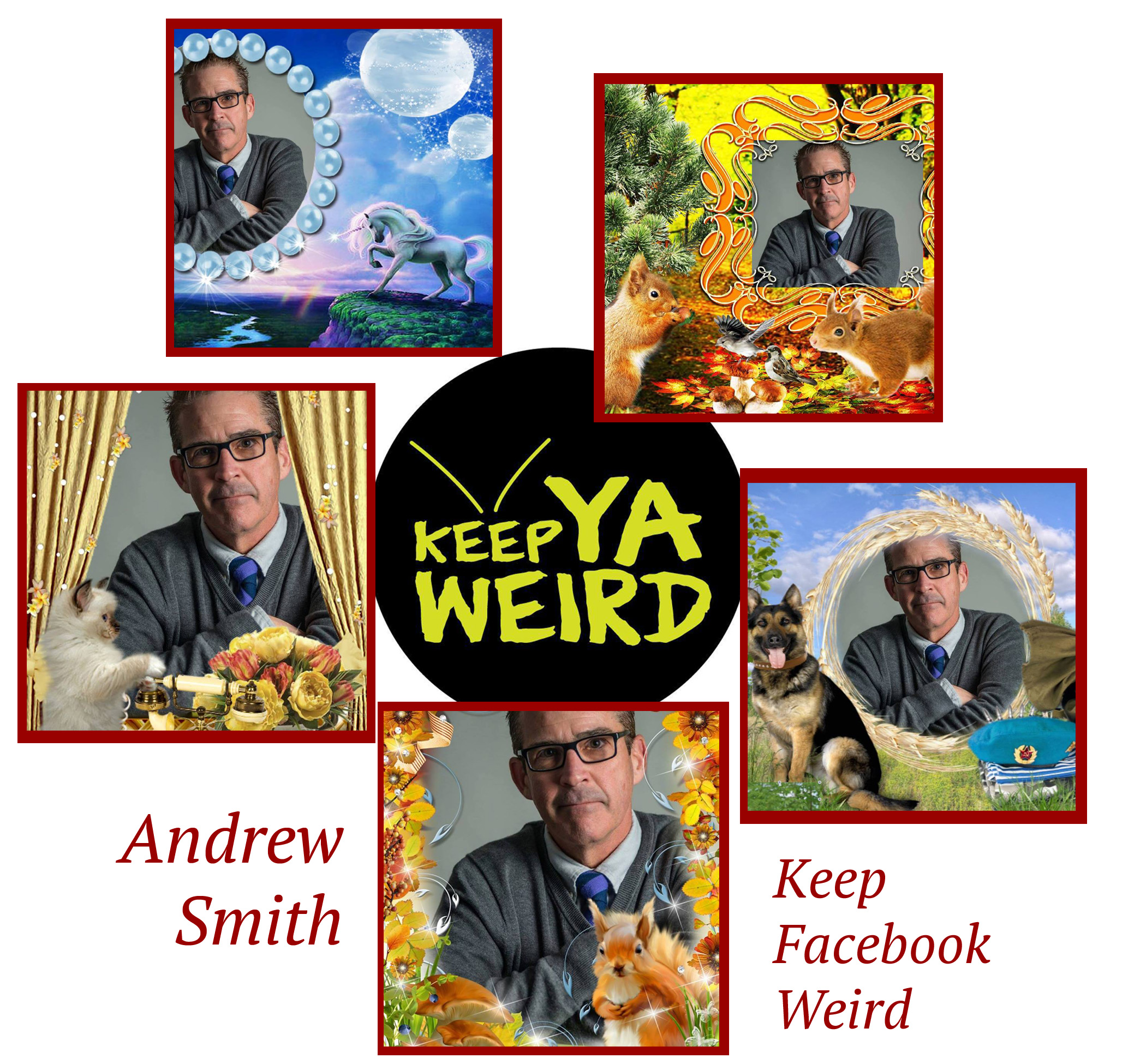
andrewsmithweird
A sampling of YA author Andrew Smith’s Facebook Profile Photos: with two new books out in 2015 (Alex Crow and Stand Off) Smith is not only hard at work keeping his YA novels weird (and they ARE weird, in the best way) but also making sure that Facebook remains equally weird.

How Brian Selznick Created a Delightful Book Trailer for ‘The Marvels’ by Jennifer Maloney — from Speakeasy, Wall Street Journal

How to (Re)Tell a Story in Pictures by Gareth Hinds — from TeachingBooks.net

M.T. Anderson: ‘Seeking Out the Truth’ for Teens — from Shelf Awareness

Italy: Diary of a Wimpy Kid translated into Latin — from BBC News from Elsewhere

Meet Marvel’s newest female superhero in Moon Girl and Devil Dinosaur by Andrea Towers — from Entertainment Weekly

SUMMER READING compiled by Crystal — from Rich In Color

The Best Feminist Books For Younger Readers by Brandi Bailey — From Book Riot

Looking for a Back-to-School Chapter Book Read Aloud? Don’t Miss These! by Daryl Grabarek — from School Library Journal

Important Perspectives

In which I think about gender of authors and characters… by Shelly McNerney — from macstackbooks.com

Kids’ Thoughts on Censorship (Loudness in the Library Year Three, Part 1) by Allie Jane Bruce — from Bank Street College Center for Children’s Literature

Rewriting History: American Indians, Europeans, and an Oak Tree (Loudness in the Library Year Three, Part 3) by Allie Jane Bruce — from Bank Street College Center for Children’s Literature

Allie’s Reflections (Loudness in the Library Year Three, Part 4) by Allie Jane Bruce — from Bank Street College Center for Children’s Literature

Representations (and the Lack Thereof) of Race and Hair (Loudness in the Library Year Three, Part 2) by Allie Jane Bruce — from Bank Street College Center for Children’s Literature

Monticello’s whitewashed version of history by Desiree H. Melton — from The Washington Post

Follow-up discussion on author Laurie Halse Anderson’s public facebook post regarding the above article.

3 Comments

Filed under Book Notes, Views, WIWWAK

Magyk by Angie Sage

magykMagyk by Angie Sage

A gentle story of magic and friendship, full of entertaining tidbits for imaginative young readers. Glad that I finally got to read it since the series has been a favorite of many of my students for a while.

Leave a comment

Filed under Book Notes

Teaching The Graveyard Book in China

graveyardbookFour young readers from Shanghai (ages 13-15) and I spent two weeks together enjoying and analyzing Neil Gaiman’s Newbery winning title The Graveyard Book. The lessons were all conducted in English. We had a lot of fun and here are some of the observations that we made about the book:
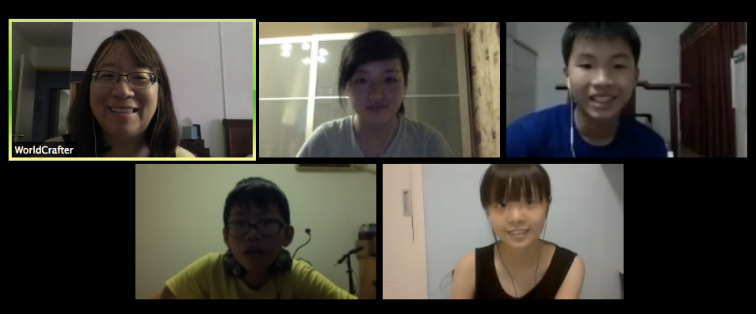

Screen Shot 2015-08-09 at 9.18.08 AM

(silly names we gave ourselves/each other)Screen Shot 2015-07-30 at 7.53.47 AM

  • The author makes it so that the supposedly bad people (the graveyard dead, a witch, a vampire, and a werewolf) turned out to be super nice and caring.  It made us reconsider our assumptions to the people around us.
  • The author effectively uses verbs and action phrases for inanimate objects to create vivid and poetic imageries: tendrils of fog could insinuate themselves into the hall, the graveyard could keep secrets, and the burnt sun could gaze into the world below.
  • We had lots of fun figuring out what Gaiman implies in his text.  Silas’ true being is, of course, the most fun to guess: so many clues about what he is without the word* EVER being present in the book. But there are many other things that the readers need to figure out: the characters’ moods, interior thoughts and motivations, etc.  In other words, this is a great book for inferences. 
  • Paradox is another literary device used often by the author.  We bookended the course with this paradoxical phrase: “Glorious Tragedy” that Gaiman used to describe what it’s like to be a parent and how The Graveyard Book can be read as a book about the bittersweetness of successful parenting.  This phrase could be used especially to frame much of the last part of the book when Nobody Owens grows too old to be contained within the safety of the Graveyard.   Isn’t “growing up” also a kind of glorious tragedy? I asked the four young readers to contemplate in what ways that “growing up” is a glorious tragedy.
  • Each student wrote me a quick feedback on their individual experience with the book.  All were positive and had strong emotional reaction to the events and characters in the book.
    • One wrote how they appreciated the many new vocabulary words (Gaiman definitely did NOT shy away from using precise, perfect, but not easy words.)
    • They all enjoyed the “guess” work whenever I asked them to infer a particular subtly presented idea.
    • One student who never read a single English language book before this class vowed to continue reading books in English!

I had a blast!  The students were diligent and after the first couple of days, were lively and contributed a lot.  It’s especially rewarding to closely re-read The Graveyard Book and confirm how finely crafted this book truly is, in every aspect!

* SPOILER ALERT — Silas’ identity is revealed after the cover image (for those who have yet to read the book.)

graveyardbook

Silas is a vampire.

Leave a comment

Filed under Book Notes, Field Reports

The Truth Commision by Susan Juby

truthcommissionThe Truth Commission

by Susan Juby

Reminiscent of but less cynical than The Year of Secret Assignments (or Finding Cassie Crazy,) The Truth Commission explores the meaning of “truth” and the effects of truth-telling vs lying with a plot that started off deceptively breezy and quirky but progressively gaining weight as the readers realize that the tale is a lot more than presenting some artsy high schoolers’ (and the author’s) mercurial whims.  I definitely got hooked about half way through the story once the successful older sister’s dark secrets start spilling out, and totally appreciated the twists and the examination of unreliable narrative devices.  A memorable read.

Cultural Querries:

  1. I don’t understand why the school’s mission in multiple languages would be printed in both Mandarin and Cantonese, since for the most part Mandarin and Cantonese are the same in written form, unless one (like some publications in Hong Kong) tries to mimic the colloquial usages (like in online discourses and tabloids). Its usage has been limited mostly to Hong Kong and even though has gained some popularity, is still definitely not the practice in official documents. Since one of the main characters is half Korean, it is evident that the author is aware of the existence of other Asian cultures.  So, why not Japanese, Korean, or Hindi? Is this a deliberate choice by the author to show the supreme quirkiness of the school or is it really the practice of that specific Canadian region?  (Is it set in British Columbia?)
  2. I also wonder about the portrayal of Dusk’s half Korean and half Jewish family background.  She is described as rebelling against a family of doctors and her “tiger” parents’ expectations. It did make me cringe a little, even if I am quite aware of how this is the reality of many young people.

Leave a comment

Filed under Book Notes, WIWWAK

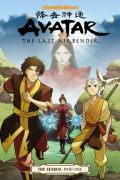
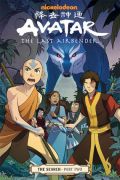
Avatar, The Last Airbender: The Search by Gene Luen Yang

avatarsearch1avatarsearch2Avatar, The Last Airbender: The Search by Gene Luen Yang (Vols 1-3)
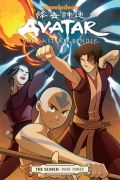
Artwork by Gurihiru
Lettering by Michael Heisler

avatarsearch3My gosh, Gene Yang really is a super fan of the show and the Avatar universe because he totally understands what the fans want. He gives us a satisfying storyline, complete with a cohesive theme of sibling and parent-child relationships, to a long unsolved mystery from the 2005-2008 TV show of one of the beloved characters.  (What am I saying, ALL the main characters are beloved!  The show was that amazing.)  And he gives us new magical beings and great world elements: the Mother of Faces is such a cool creation. Her backstory, tied with Zuko’s mom’s personal history, fits into the Avatar universe seamlessly!
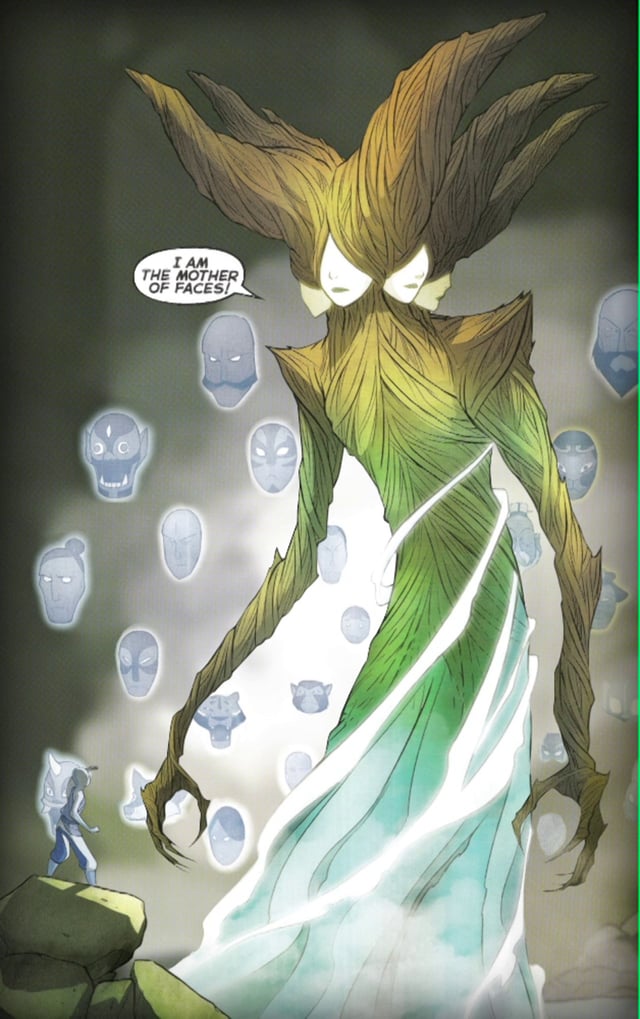
Mother of Faces

Whenever I watch the show, I am always impressed by how well the show creators did their homework.  Every time Chinese writing appears on screen, it is accurate, legible, and usually in perfect and artistic calligraphic form. Dark Horse (the publisher for the GN extensions) did the same: the letter that Zuko’s mom wrote and that we get to read on the background art is in the formal, literary style befitting the imagined time period (China/Asia a few hundred years ago?)  And now I am reading the third extended story: Avatar, the Last Airbender: The Rift.  It’s all about Toph Beifong (my personal favorite character in the show…) and will apparently bridge her story from the 2005 show to the recent Legend of Korra.  Two more volumes to go and another post to follow.

Leave a comment

Filed under Book Notes

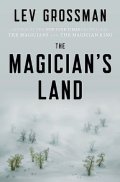
The Magician’s Land by Lev Grossman

magicianslandThe Magician’s Land by Lev Grossman

The third, the final, and my favorite installment of the Magician’s trilogy.  A total love song to traditional children’s fantasy stories for grown-ups who have still yet to grow out of being enchanted completely by those tales (me). Thankfully, Quentin finally stopped being the annoying whinny young man that he was in the first two volumes, so my irknedness level was way down, making the reading experience a complete delight from beginning to end.  Lots of quotable little observations about fantasy story-making and world-building and about being a creative and self-reflective and forgiving (to self and others) human being.

Leave a comment

Filed under Book Notes

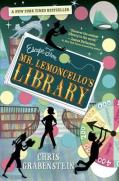
Escape from Mr. Lemoncello’s Library by Chris Grabenstein
lemoncelloEscape from Mr. Lemoncello’s Library by Chris Grabenstein

I can easily understand why my 4th grade students have raved about this one: there’s the thrill of watching a complex puzzle being solved, the excitement of exploring new friendship, the coziness of strengthening old friendship, and the novelty of discovering inventions of a high-tech, but still story-filled, library.  Plus a little bit of safe scare: facing down and defeating villains that really aren’t that threatening from beginning to end. This is old school children’s mystery fun.

Leave a comment

Filed under Book Notes

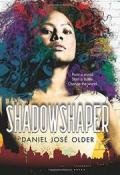
Shadowshaper by Daniel José Older

shadowshaperShadowshaper by Daniel José Older

The young urban teen characters in this novel feel and sound authentic — they are the artsy crowd and use their talents to navigate their lives.  Mural art is highlighted and so is spoken word poetry.  The blend of the real world with the spiritual/ghosty world also feel convincing with much respect paid to the cultural traditions and family ties with some vividly creepy scenes.  This is not a epic fantasy but a story of urban magic, much like a fairy tale where chance meetings and helpful beings are common devices to advance the plot and solve the protagonist’s problems.  And thank goodness we have a wonderful strong young woman, who is not white, whose full face is shown to the readers on the beautifully designed cover!

Leave a comment

Filed under Book Notes