Category Archives: Book Notes

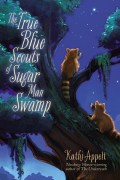
The True Blue Scouts of Sugar Man Swamp

truebluescoutsby Kathi Appelt

(narrated by Lyle Lovett for Audible)

This is what outstanding, distinguished, and thoroughly enjoyable children’s books should be!  And of course, I had the additional pleasure of listening to Appelt’s narrative voice brought to live by Lyle Lovett: folky, hilarious, tender, with just the right amount of controlled drama.  This environmental tall tale set in the swamp land, featuring anthropomorphized critters, caricatured villains, down home, real but also realer than life characters, and mythical beings is perfect for a family and classroom read aloud!  One of my favorite 2013 books for sure!

Leave a comment

Filed under Book Notes

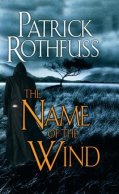
The Kingkiller Chronicle, vol. 1 and vol. 2

nameofthewind
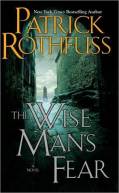
wisemansfearVol. 1 (Day1) : The Name of the Wind and

Vol. 2 (Day 2): The Wise Man’s Fear

by Patrick Rothfuss

Altogether, these two volumes are more than 1,500 pages long and the audio book versions took about 61 hours to finish.  I mostly enjoyed the listening experience: the first volume is definitely tighter and since everything is new and the world is un-encountered before, I had a little more patience in all the details that Rothfuss put into the tale: colors of people’s clothing, the types of foods, some basic societal rules, etc.  And there are definitely a lot of thrilling moments and some good passages.

The Wise Man’s Fear, though, suffered from being too detailed at moments, too many similes thrown into the passages (that really could and should have been edited OUT of the tale,) and just too long.  I am really annoyed by authors who decided to use a particular narrative “device” and could not keep to the simplest or fundamental rules of that device.  Here, each volume is supposed to be tales told to the scribe within the duration of ONE SINGLE DAY (where people do go to sleep, where the current day contains events such as robbery, lunch, fighting, etc.)  So, almost 1000 pages of words (no matter how FAST one might be able to speak or write down the words) simply don’t compute.

One learns in writing classes that in order to create convincing and lifelike characters, one must know all the background stories (what colors they like, who was their first crush, when was their first experiences of fear and when and why and how, etc.) of the major characters.  But so much of these details should remain in the mind of the author.  Once in a while, perhaps, something can be drawn out and fill in a missing piece of a character’s traits.  But, the Wise Man’s Fear is full of such details breaking through the backstage door and cavorting on the main stage.  It just didn’t work for me.

I also got quite bothered by Rothfuss’ insistence of describing every single emotion or experience with a comparison to something else.  It is OK, Patrick R, to sometimes just say that you feel soothed by someone’s voice without having to compare the soothing feeling to a mother’s gentle touch to a child’s cheeks and the voice is just like a lover’s breathy whisper by your ears.  Some figure of speech enhances a narrative, but overindulgence in such narrative tool becomes tedious eventually.

All that said, did I love a LOT of what went into the books?  Absolutely.  I loved the world building, the mystery, the tentative romantic relationships, the exploration of language, means of communication, and how world history can be shaped and reshaped.  And I will definitely read (or listen to) the final installment when it is published next year.  Still a series worth recommending.

Leave a comment

Filed under Book Notes

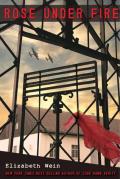
Rose Under Fire

roseunderfireby Elizabeth Wein

I have only read three books by Elizabeth Wein.  Years ago, The Winter Prince, last year, Code Name Verity, and now Rose Under Fire.  But, I now know, unwaveringly, that this is an author who can steal people’s hearts and cleanse their souls with her storytelling wizardry.

Elizabeth Wein, my friends, has a creative mind that goes forever deepr and her stories always take you to unexpected but exciting places — no matter their subject matters.  Her mind is so incredibly nimble that she can organize very complex threads into easily followed paths through intricate mazes she has devised for her readers. And, oh, the hearts and souls of her characters and the epic scale of their sufferings and triumphs! They linger on and sustain you like the LIFT under the wing of an airplane and a soaring kite! Read this book NOW and tell everyone else to read it.

I know that young teen readers will take to Rose’s story more readily than they with Verity and can’t wait to recommend this to them all!

3 Comments

Filed under Book Notes

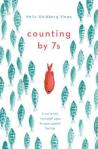
Counting by 7s

countingby7sby Holly Goldberg Sloan

My reactions to this book are quite mixed that I cannot sort them all out coherently.  So, here we go, a list of what I liked and what I had some issues with:

Starting with the positive aspects of the book:

  • I quite enjoyed the protagonist and her many interesting observations and thoughts.  Especially when she was less “normal” and more stubbornly herself the first part of the book.  I know that’s kind of the point of the book, that Willow “learned” how to interact with others and became more accepted and more accepting, but she definitely becomes less interesting a character as the story progresses.
  • I appreciated the author’s effort in pulling together a cast of diverse ethnicities, and featuring mix-raced kids and adults.
  • I definitely was curious and interested enough to know how things would pan out for Willow and the others, especially Dell.
  • I liked how at first one couldn’t quite tell the age and gender of Willow.
  • I thought that this is a thematically significant story.
  • I also thought it totally fine for the author to switch POVs — I’d rather this than having the author trying to keep it all in Willow’s head and thus making the book either too claustrophobic or Willow too wise and and unconvincing in her insights.

Now, onto the things that troubled me or did not satisfy me as much:

  • Vietnamese is presented as a language that one has to learn “verbal conjugations” for — when in reality, like many Asian languages, one uses only a few time stamps/phrases to indicate tenses while the original verbs remain the same.  I know that the author consulted Vietnamese speaking friends so it is even more curious that this oversight is in the book.  (I did read the online galley so don’t know exactly how the finished book handles this aspect exactly.)
  • I cannot wrap my head around how Pattie has SO much money that she could buy the entire building complex from the bank at the end of the book because of Willow and her predicament, and yet would subject her own children to live squalidly in the garage where her teenaged son who obviously is VERY troubled by the fact that their living condition is shameful (and he didn’t even have normal underwear) and was acting out and doing poorly at school.  Would an immigrant mother who suffered quite a bit of humiliation in her own youth, and who is presented as competent and caring for others, hide away all her wealth to this extend?  This just doesn’t compute for me.
  • There is quite a bit of rule and law breaking through the whole book, by almost every character, that I got slightly paranoid about recommending this to young readers.  Dell got by in his job without ever following protocols or performing the minimum requirements.  We hope that he has changed toward the end of the story… but that was not quite clear.  The whole “using Dell’s address” and faking that they’re all living in that apartment works quite well, but from the get go was a giant and elaborate lie, which became a wonderful truth at the end of the tale… seems too convenient and pat and is that what the author tries to convey?  As long as a lie comes from a good place, it will lead to a positive outcome?  Even Mai tells lies to the school in order to go to the custody hearing.  I am usually not one to worry about such things in children’s books, but for some reason, the accumulation of such behaviors as a way to make the story work got under my skin.

Leave a comment

Filed under Book Notes, Views, WIWWAK

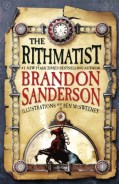
Rithmatist

rithmatistby Brandon Sanderson

with illustration by Ben McSweeney

I have had the best time reading this book: discovering a completely new and fresh world that is a twist of our real world with alternative histories and a wonderfully naive yet sinister kind of magic: two dimensional chalk drawings turned to life battling creatures.  Sanderson once again  proves his skills in creating a compelling magical system completed with intricate and convincing rules that makes the reader wish to encounter such magic in the real world.  The kind that will excite young readers to learn and master: drawing those Rithmatic defense circles and lines and dreaming up potential new designs and patterns.  The kind that will inspire game makers to create a wonderful board or video game based on the world, characters, and strategies found within the story line.  The kind that I am actually pleased to wait for the next installment in the series because I want to venture further with the characters to explore the unknown territories beyond the confine of the magical academy and the town.  I hope the next book comes out soon!  Can’t wait!

Oh, and the two teenaged protagonists are also authentic and their relationship often brings a smile to my face.

I also love the helpful and fun line drawings of the Rithmatic designs and chalklings, and the intriguing map of the United Isles with island names like Coronado, Zona Arida, Maineford, and DaKote.

Leave a comment

Filed under Book Notes

Response to NPR 100 Must Reads for Ages 9 – 14 — Part 2

It turned out that I have more to say and more wish lists to compile:

First off, According to a child_lit member, “In the first 50 books, there are only 8 books published since the turn of the century.  The average age of the first 50 books?  44.  The average publication date is 1969.”

And I noticed that some of the titles/series seem to belong on another, slightly younger recommended list, such as, Sarah Plain and Tall, Romana, the Little House series and Hundred Dresses.  Or perhaps I’m off base here?  I’m also surprised that there is no School Life section — perhaps it should be grouped with Family Life.

Here are the rest of the sections and my Wish Lists!


Family Life (I want School Life to be added here)

Agreeing:

Walk Two Moons (11, 12, 13)

The Watsons Go to Birmingham – 1963 (10, 11, 12)

One Crazy Summer (10, 11, 12)

FAIRROSA’S WISH LIST

Casson Family series (Saffy’s Angel and sequels) (10, 11, 12)

Frindle (if School Life is here) (9, 10)

Al Capone Does My Shirts (9, 10, 11)

Bell Prater’s Boy (9, 10, 11)

A Corner of the Universe (11, 12, 13)


Fantasy Worlds

Agreeing:

The Chronicles of Prydain (10, 11, 12)

Peter Pan (11, 12, 13, 14)

Oz, The Complete Collection (10, 11, 12)

Alice’s Adventures in Wonderland (9, 10, 11)

The City of Ember (shouldn’t this be SciFi?) (9, 10, 12)

A Wizard of Earthsea (12, 13, 14)

The Chronicles of Narnia (10, 11, 12)

The Giver (11, 12, 13, 14)

His Dark Materials (11, 12, 13, 14)

The Hobbit, Or, There And Back Again (9, 10, 11, 12)

FAIRROSA’S WISH LIST

(Fantasy is my favorite genre, so I can probably come up with about 50 Must Reads just here.. haha… )

Gregor the Overlander series (9, 10, 11, 12)

Bartimaeus series (10, 11, 12, 13, 14)

Howl’s Moving Castle (10, 11, 12, 13)

Inkheart (11, 12, 13)

The Neverending Story (11, 12, 13)

Friendships And Finding Your Place (probably school stories can go here, too)

Agreeing:

The Strange Case of Origami Yoda (9, 10, 11)

Are You There, God? (10, 11, 12)

The Secret Garden (9, 10, 11, 12)

Harriet the Spy (9, 10, 11)

Wonder (9, 10, 11, 12)

Bridge to Terabithia (10, 11, 12)

Holes (9, 10, 11, 12)

Maniac Magee (10, 11, 12)

FAIRROSA’S WISH LIST:

Hope Was Here (11, 12, 13)

So B. It (10, 11, 12)

A Mango Shaped Space (10, 11, 12, 13)

Olive’s Ocean (10, 11, 12)

Six Innings (10, 11, 12)

Black and White (13, 14, and older)


Good For A Laugh

Agreeing.. sort of:

Matilda (Not really just funny.. should be in Everyday Magic) (9, 10, 11)

The Phantom Tollbooth (should be in Everyday Magic) (9, 10, 11)

Diary of a Wimpy Kid (9, 10)

Joey Pigza series (9, 10, 11, 12)

The Grand Escape (9, 10, 11)

Jack and the Seven Deadly Giants (9, 10, 11)

Graphic Novels

Bone (9, 10, 11)

The Arrival (9, 10, 11, 12)

American Born Chinese (13, 14, older)

FAIRROSA’S WISH LIST

Rapunzel’s Revenge (9, 10, 11)

Amulet series (9, 10, 11, 12)

Persepolis (I know. this is a memoir… but) (13, 14, older)

Mysteries And Thrillers

Agreeing:

Wolves of Willoughby Chase (9, 10, 11)

The House With a Clock in Its Walls  (9, 10, 11)

From the Mixed-Up Files of Mrs. Basil E. Frankweiler (9, 10, 11)

The Invention of Hugo Cabret (9, 10, 11)

When You Reach Me (9, 10, 11)

FAIRROSA’S WISH LIST:

The Westing Game (9, 10, 11)

The True Confessions of Charlotte Doyle (11, 12, 13)

The Face on the Milk Carton (11, 12, 13)

Killing Mr. Griffin (13, 14, older)

Coraline (10, 11, 12)

And Then There Were None (yup.. I went there!) (12, 13, 14)

Myths And Fairy Tales

Agreeing:

The Dark Is Rising Sequence (11, 12, 13)

D’Aulaires’ Book of Greek Myths (9, 10, 11)

The Little Prince (10, 11, 12, 13)

Ella Enchanted (9, 10, 11, 12)

Where the Mountain Meets the Moon (9, 10, 11)

Percy Jackson and the Olympians series (9, 10, 11, 12)

FAIRROSA’S WISH LIST

A Tale Dark and Grimm (9, 10, 11)

Fairy’s Return (containing 6 stories (9, 10, 11)

Science Fiction (weird to have only 3 titles!)

Agreeing:

Ender’s Game (12, 13, 14)

The House of the Scorpion (11, 12, 13)

A Wrinkle in Time series (10, 11, 12)

FAIRROSA’S WISH LIST

The Hunger Games (12, 13, 14)

The Boy Who Reversed Himself (11, 12, 13)

Epic (11, 12, 13)

Incarceron (12, 13, 14)

Airman (11, 12, 13)

The Dead (series) (12, 13, 14)

Ender’s Shadow (12, 13, 14)

Atherton (11, 12, 13)

Survival And Adventure

Agreeing:

Julie of the Wolves (11, 12, 13)

Island of the Blue Dolphins (11, 12, 13)

Hatchet (11, 12, 13)

The Twenty-one Balloons (9, 10, 11)

FAIRROSA’S WISH LIST

Trash (10, 11, 12)

Peak (11, 12, 13)
2 Comments

Filed under Book Notes, Field Reports, Views

Response to NPR 100 Must Reads for Ages 9 – 14 — Part 1

I don’t know whether I’ll have time to finish this since we’re getting ready to travel and I have too many chores (including shopping.. ugh! my least favorite thing to do.) But, some initial reactions:

1st Reaction: I wish that they had indicated ages for each title — a 9-year-old probably should wait a few years to read An Absolutely True Diary of a Part-Time Indian; and a 14-year-old probably will not be the ideal reader to be introduced to Bunnicula for the first time.

2nd Reaction: WHAT? No, Nonfiction???? Really? Are we saying that there are no worthy, must reads for kids ages 9 to 14? Or are we saying that they do not have to read Nonfiction. Period? Actually.. there is a Biography, Memoir, and History section — just no general knowledge or science. So they go on my short wish list here IF they had included a Nonfiction section:

Swords: An Artist’s Devotion (9-14)

Scientists in the Field series (9-12)

The Race to Save the Lord God Bird (10-14)

Fossil Fish: Found Alive (10-14)

3rd Reaction: WHAT? Only ONE book in POETRY???? And Linda Sue has that amazing Soji poetry collection that’s so worth reading by EVERY school child! So, her book gets on this wish list:

Agreeing:

Inside Out and Back Again (9, 10, 11)

FAIRROSA’S WISH LIST:

Tap Dancing on the Roof: Sijo (Poems): (8-12)

Blue Lipstick (12-14)

Diamond Willow (9-12)

Keeping the Night Watch (11-14)

God Went to Beauty School (11-14)

Peace, Locomotion (10, 11, 12)

4th Reaction: WHERE ARE THE FUNNY BOOKS? Doesn’t it deserve its own category? Oh, well.. probably not — but that’s what the kids constantly ask for by APPEAL TERM. There are enough humor sprinkled throughout the list I guess… (It is pointed out to me that there IS a Good for a Laugh Section. My bad!)

I also went through the first few sections and marked down which ones I strongly agree that they belong on MY list of top 100, tagged them with recommended ages, and added my own WISH LISTS:

American Stories

Agreeing:

The Absolutely True Diary of a Part-Time Indian — (14+)

Caddie Woodlawn — (8, 9, 10)

The House on Mango Street — (12, 13, 14)

The Birchbark House — (11, 12, 13)

To Kill a Mockingbird — (13, 14, +)

The Witch of Blackbird Pond — (10, 11, 12)

Roll of Thunder, Hear My Cry — (11, 12, 13)

FAIRROSA’S WISH LIST:

Weedflower (11, 12, 13)

Out of the Dust (11, 12, 13)

Count Down (11, 12, 13)

Lizzie Bright and the Buckminster Boy (12, 13, 14)


Animal Kingdom

Agreeing:

The One And Only Ivan (8, 9, 10)

Poppy (8, 9, 10)

Because of Winn-dixie (8 , 9, 10)

Redwall (9, 10, 11, 12)

The Complete Tales of Winnie-The-Pooh (10, 11)

Mrs. Frisby and the Rats of NIMH (9, 10, 11, 12 — should be in SciFi)

Charlotte’s Web (8, 9, 10)

FAIRROSA’S WISH LIST:

Little Gentleman (10, 11, 12)

The Tale of Despereaux (9, 10, 11)

Babe, the Gallant Pig (9, 10, 11)

I Was a Rat (9, 10, 11)


Biography, Memoir And History

Agreeing

Anne Frank the Diary of a Young Girl (13, 14)

Eleanor Roosevelt (11, 12, 13)

Bomb (11, 12, 13, 14)

FAIRROSA’S WISH LIST

This Land Was Made for You and Me (12, 13, 14)

Bill Peet (9, 10, 11)

Guts: The True Story Behind Hatchet and the Brian Books (9, 10, 11, 12)

True Notebooks: A Writer’s Year at Juvenile Hall (13, 14, older)

Maus (13, 14, older)

Horrible Histories series (9, 10, 11)

We Are the Ship (11, 12, 13)

Good Masters, Sweet Ladies (10, 11, 12, 13)


Everyday Magic

Agreeing

Tuck Everlasting (10, 11, 12)

James and the Giant Peach (8, 9, 10)

Half Magic (8, 9, 10)

The Graveyard Book (10, 11, 12, 13)

Harry Potter series (9, 10, 11, 12)

A Series of Unfortunate Events books (9, 10, 11, 12)

FAIRROSA’S WISH LIST

The Spiderwick Chronicles (9, 10)

Savvy (9, 10, 11, 12)

Emmy and the Incredible Shrinking Rat (9, 10, 11)

5 Comments

Filed under Book Notes, Field Reports, Views

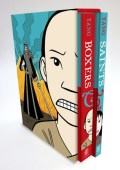
Boxers / Saints (Boxset)

boxersandsaintsby Gene Luen Yang

As I said in my notes earlier, my reactions to this two-book graphic novel set are complex and still unresolved even after several days’ reflection.  Partly because that I found so much of it outstanding, so I did not want to be nitpicking about certain details and I don’t want to color anyone’s reaction to this historical fiction based on my largely emotional reactions as a Chinese American reader who wants everyone to know THE WHOLE STORY!!  I also don’t want anyone to think that I KNOW the WHOLE STORY.  In fact, I had to do some research as I read the book since my textbook history knowledge of this rebellion was also mixed with folklore and stories I saw on tv when I was little.

I am quite aware that Yang did not set out to write a historical treatment of the entire movement, but to personalize individual experiences so that he, and the readers, can explore the impacts of these events.  He couldn’t have been more successful in reaching his goal.  I greatly appreciate how there are never easy answers in Gene Luen Yang’s stories — the readers are left to wonder whether to be angry or sympathetic toward the characters; to admire or abhor what they do; and to be enlightened or perplexed by their reasons for their actions.

I’m glad that Yang included a list of the books he used to create this narrative since the origin of the Boxers and their practices are much debated topics amongst Chinese historians.  The references to the boxers’ being spiritually possessed by powerful deities based on folk beliefs are in agreement with most historians’ findings and there was a real leader of the movement named Red Lantern Chu.  I wish, however, that some sources translated from Chinese scholars were consulted and that the main sources have more balanced views from both sides.

I wish that I could have been convinced of Bao’s ignorance of Qin Shi Huang who is one of the most famous personalities in Chinese history — even if he might not have featured greatly in the opera — but was glad that the First Emperor is portrayed with a complexity of his own.

I wish that I had not cringed so much by Yang’s referencing/highlighting the more exotic but less significant aspect of the rebellion: how some boxers believed that foreign forces’ success was due to their utilizing the “yin power” (usually refers to the female spiritual power) which is evil and undesirable (drinking menstrual blood, flags woven from women’s pubic hair, etc.)  Even if these were documented facts (as Diana Preston claims in her The Boxer Rebellion,) I simply couldn’t help feeling ashamed and hoping fervently that young readers won’t mistake such “foreign” notions as typical of my fellow countrymen in the 21st century. (Does the inclusion of such claims enhance the storytelling and the power of this book?  I am too shaken by it emotionally to see it… perhaps someone else could convince me otherwise!?)

I wish that the slogan on the war banner had been written out in traditional Chinese characters because the events happened way before the simplification of the characters.

The above are all pretty much about Boxers — and I didn’t really get a chance to talk about Saints — which, for some odd reason, I found thoroughly convincing and more intense, although it is only half the length of Boxers.  I found the timeline crisscrossing of the two books very effective and the two pages (282 in Boxers and 158 in Saints) depicting compassionate deities (Guan Yin and Christ) with the same visual design absolutely breathtaking.

These two books can generate so much discussion and are so thought provoking that I have to tag them Highly Recommended even if I had some personal reservations…

5 Comments

Filed under Book Notes

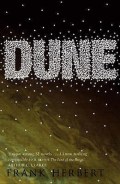
Dune

duneby Frank Herbert

I was much more impressed with the book during the reading of the book than after having finished it — largely due to my expectations of having something transcendent, something heart-felt, something truly world shattering that the journey might have led to than what actually transpires at the end.  I definitely liked the world building, the presentation of technology and training of various warrior/assassin types, and the drawing upon non-Euro-centric traditions in constructing the beliefs and social structures within the world of Dune.  (And the Sand Worms… are such cool Desert Dragons!)

With such a rich and realized world, in the end, the book is just a fairly standard story of a hero that’s born with amazing abilities who cannot escape the paths set up for him and who walks all the way to the end as destined and even though losing a few precious things along the way, there seems to be little to no effect on his person. Much of the plot is propelled and explained away with mysticism and basic political maneuvering. At a certain point, I muttered, “Paul’s better not succeeded in accomplishing this as he has planned…” — but, as always, he did. He managed to achieve all that he set out to do, from outwitting enemies, to changing the ways of a tradition, to earning back trust easily from his old pals. Yes, he did lose a son in the whole process — but his reaction? They would be able to create more heirs and the heirs will inherit the world.

The volume ends as the two generations of concubines having a short exchange where Paul’s mother assures Chani (his true love but not the proper empress) that even though they would never have the title during their lifetime, they will be remembered in history as “Wives”!! Woop-dee-doo! What an achievement!

Granted, it was created in early 1960s and perhaps Herbert was not trying to question science or future worlds as harshly as we might these days — I still couldn’t help but putting a 2013 lens on it.

I know I will not be reading the sequels any time soon.   I searched and read some book summaries of the two sequels — it seems that the question of lineage and political power play are even more centralized in the next two books. Definitely not too exciting for me!

2 Comments

Filed under Book Notes

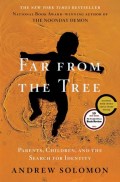
Far from the Tree: Parents, Children, and the Search for Identity

farfromthetreeby Andrew Solomon, read by the author

This book took me 40 days to listen — the audio book version is about 42 hours long.

There were days that I just couldn’t get myself back to listen to the next segment because the emotional exhaustion experienced in a previous segment prevented me from delving back into the book — mostly because some of the personal stories that Solomon reported are incredibly intense and affecting.

My reaction toward the book changed several times through this long journey: at first, I was just in awe and was glad that I got to learn something about situations that I don’t have personal experiences with — that I learned about Deaf Culture and the polarized opinions on whether deafness should be cured; about families with Little People and the historical and medical aspects of Dwarfism — and the perils and blisses of “cures” such as limp lengthening procedures; about children and adults with Down Syndroms, their defeat and success and what researchers are still finding and what life is like for so many of them…

Then, my relationship with the book changed slightly, listening to the chapters on DS, Autism, Schizophrenia, and Disability.  Even though the conditions described differ from chapter to chapter, some recurring themes emerge. Mainly we are shown (and told) by Solomon repeatedly that just because two people or two families have the same “problem” does not mean that they have the same views and reactions on the situation.  Indeed, it’s proven over and over and over (yes, there are a lot of repeating patterns in the book, both in the reporting and the reflecting from the author, although there were always new expressions to say the same thing) that each and every situation is inherently complex: there are the matters of the illness (condition,) the matters of the economics, the matters of the societal views, and definitely matters of the heart: the heart of the parents and the children.  I complained a bit then about how each chapter seems to repeat itself… and was reminded that perhaps very few readers of this tome would have gone through the book the same manner I did.  The way Solomon put together the book allows for essential information and themes to not be lost even if a reader only reads one or two chapters.

I settled down then and became more open minded to the worlds of Prodigies, Rape victims and their children, Criminals and their parents, and Transgender people.  I don’t know whether these chapters were better put together or whether my mind was more willing to appreciate them. Nonetheless, I found myself constantly finding revelations and new information worth learning in these final segments.  They let me consider situations and hardships and joys that I NEVER contemplated.  Yes, I felt like I was made a slightly “better” person by sharing the author’s empathetic and compassionate views and by being more educated about situations that I didn’t really understand before.

The final chapter of Solomon’s personal story of fatherhood (3 families, 5 children, fathered by himself and his partner for others and for themselves) serves as a wonderful and hopeful conclusion to a heavy — in all senses — book.

Since the reports are so thorough and the stories so well told, there might be an illusion that after reading this book, one could feel quite an expert in the ins and outs of these various conditions and their ramifications.  I cautioned myself to not “just take Solomon’s words for it” since even though I found myself agreeing with him a LOT, I don’t really know enough about anything presented here (socio-economic, historical, societal, medical, ethical, etc.) to judge the book’s validity in its entirety.  Did I learn a WHOLE lot about all these conditions?  I sure did.  But to me, there is an even more important added value: Solomon’s book is a great reminder for me to pay attention to wide angles on many issues and to consider the multitude of outcomes that changing of one or few small factors could cause.

I am so glad that I got to experience this book this summer.  I hope some others do too!

There is a full website with rich content that one can explore, too: Here – http://www.farfromthetree.com/

1 Comment

Filed under Book Notes

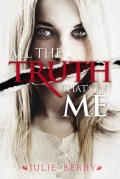
All the Truth That’s In Me

allthetruthby Julie Berry

I couldn’t put the book down, especially toward the end — really wanting to know how everything played out. I don’t want to spoil it for other readers so won’t say how the plot/romance/mystery/fate were handled by the author — suffice it to say that I was quite impressed.

The most impressive aspect of the book, to me, is the author’s ability to maintain the inner voice, authentic and powerful, of Judith.  Every thought and emotion felt raw and genuine.  Did I sometimes wish that she had thought or acted differently because I wished all the best for her at the moment? Definitely.  But did I want her to act completely rationally — definitely not — because then we would not have had this very readable and more importantly, for a school librarian, “sellable” book to my middle school readers.   I already know that those who enjoyed Scarlet Letter and The Crucible would find this a much easier but nonetheless as gripping addition on their reading list!

Leave a comment

Filed under Book Notes

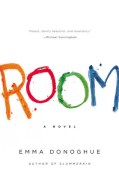
Room

room by Emma Donoghue

I definitely was expecting a slightly different book after hearing about it from many students who were enthralled by the book, describing it as a “psychological thriller” and very creepy.  It turned out to be more about the process of socialization of a semi-feral child and the power of persisting maternal and familial love.  The strength lies in the author’s deft encapsulation of the inner and exterior voices of a five-year-old (super intelligent) child.  I do question the utter success of the escape and the short time it takes for both the boy and the mother to adjust / readjust to the Outside — with the understanding that this is not a psychology textbook but an author’s imagined world.  I listened to the audio book version and the voice actors are simply superb!  

Leave a comment

Filed under Book Notes

Penguin Young Readers Preview

I had a great time at Penguin Young Readers Group fall preview yesterday.  Here are some things that I’m personally excited about:

Robin McKinley has a stand alone new book with magic and dogs called Shadows coming out in September.

Counting by 7s by Holly Sloan has already gathered fans from its galley and will be available in August — about a group of misfits making their own kind of “surrogate family” to face the world together.  I can’t wait to read it!

image

I like the cover of The Twistrose Key by author Tone Almhjell.  The setting is in Norway where she grew up and it’s compared to His Dark Materials!

Nancy Werlin has another book coming out as a sequel/companion to her very popular book Impossible, entitled Unthinkable. It’s a “puzzle” novel with heated romance…

Control by Lydia Kang is set in an interesting sounding futuristic world about genetic harvesting, bonds of outcasts, survivors, a promised page turner.

The Grimm Conclusion by Adam Gidwitz will be out in October where we will actually be meeting the Narrator face to face who will show his own vulnerability and explore how a story can be told and reshaped…  Can’t wait!!!!

Gayle Forman’s follow up to Just One Day is coming put in October called Just One Year.

Andrew Smith’s winter book sounds exactly like the kind of crazy imaginative story that I’d LOVE to read.  It’s called.  Grasshopper Jungle.  

I have to include this summary from Goodreads: ”

It is the end of the world, and nobody knows anything about it. Except for Austin and his best friend Robby. This is a story about bugs, urinal factories, Polish immigrants, the Great Depression, medieval Catholic saints, the war in Afghanistan, the caves of Altamira, President Nixon, an inflatable whale, cigarettes, corn, spawning walleyes, and the Rolling Stones.

And the end of the world. It’s unstoppable. You will get lost and found again on all the roads that keep crossing and crossing in the small town of Ealing, Iowa, at a place called Grasshopper Jungle.”

Mike Lupica’s new book will be about football: QB1: Inspired by the Football royal family of the Mannings, this book shows how a 14 year old high school freshman deals with the burden to be under the huge shadows cast by his father and older brother.

And there is A New Alex Rider? by Anthony Horowitz — Russian Roulette .. An origin story about Yassen and how he was trained and became the cold blooded assassin. I am actually going to read this as soon as my other books are don!!!

Celebrity chef Giada de Laurentiis has penned a series of picture books with travels and food for the younger readers. Sounds exactly right for my school where food is becoming a major curricular component.

Penguin Audio is presenting newly recorded Roald Dahl… With celebrity readers (Kate Winslet, Douglas Hodge, David Walliams, Stephen Fry, Peter Serafinowicz and more.) I am quite excited about this – check out the UK page for all the details.

Humor is always in demand. Hopefully debut author Matthew Ward delivers a lot of it that will resonate with young readers in Fantastic Family Whipple featuring a family that break all sorts of world records that don’t exist in our real world.

The Creature Department by Robert Paul Weston has another great cover that glows in the dark and will be accompanied by animated creatures online upon its fall release.

Intrigued by Meg Rosoff’s new and edgy YA book called Picture Me Gone.

The conclusion to Legend and Prodigy, Champion will be out on November.  We were told that it’s a tear-jerker… wha??

Brotherhood by A.B. Westrick is set in Reconstruction era and about the establishment of the KKK.

Author Julie Berry of All the Truth That’s In Me came and shared with the attendees her creative process of this beautifully written romantic mystery set in a “watercolor-esque) Colonial America. The book started its life as an attempt at a second person narration but the final version is still from a first person point of view. Berry didn’t want to burden the very personal tale with too many historical details, but she still obsessively researched the time period to give it an authentic atmosphere. She hates anachronistic elements in historical fiction and is conscientious to not use words for whichever decade she set her stories in. BRAVO for an author who cares!!!  I started the first few pages of the book on my way home.. and was instantly hooked by its writing!  Can’t wait to finish the book I’m reading now to delve into it soon.

Until It Hurts to Stop by Jennifer R. Hubbard is about the aftermath of bullying: years after the perpetrator has forgotten about the incidents, the victim still remembers and lives its effects.

Leave a comment

Filed under Book Notes

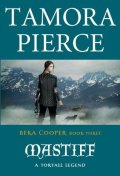
Mastiff

mastiffby Tamora Pierce

I did not read this one when it was first published in 2011 because I kind of “fell” out of love for Beka Cooper and her escapades after Terrier when Bloodhound did not quite deliver the punch that I was hoping for — even though I couldn’t quite put my finger on why.  (I vaguely recall that I didn’t like how she resolved, or didn’t resolve the relationships with the men in her life and also didn’t find the crime or investigation of the crime gripping.)

But, boy, am I glad that I went back to Beka and was not disappointed!!  It’s not that the pacing of this volume is so breathtakingly fast, and it’s not that there is more heart-wrenching romance, somehow, Mastiff just seems more mature and deeper than the previous one, fittingly so, of course, since Beka has matured herself.

This time, the whole kingdom of Tortall is in danger.  The little prince was kidnapped and mistreated.  Evil and powerful mages are setting traps and murdering innocents.  The stakes couldn’t have been higher!

This time, the newly introduced mage, Farmer, also couldn’t have been more entertaining or full of promises — AND he IS so powerful and So very clever!

This time, the mysteries keep me guessing and guessing wrongly a few times!

This time, the conclusion is both sad and satisfying.  Everything works out logically and I enjoyed the Epilogue that brings this story to the very first story I read by Tamora Pierce, Alana.  It brought a content smile to my face.

A most excellent read!

Leave a comment

Filed under Book Notes

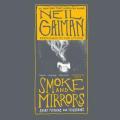
Smoke and Mirror

smokeandmirrors
by Neil Gaiman – read by Neil Gaiman

This is a short stories collection from 1998.  As I love Fragile Things and especially love how Gaiman reads his own tales — he is quite a voice actor, changing his tones, inflections, accents — all dexterously and effortlessly and all quite fitting the characters, the advantage of having the author (who is a good storyteller) reading the stories.

I did not love all the tales — not even most of them.  Of the 31 tales and verses, I think I only really enjoyed about a dozen or so.  Something felt lacking — quite a few seem to be character sketches or exercises in painting imageries and building atmosphere, for something bigger and more complete — but not deep or polished themselves.  I often enjoy Gaiman’s somewhat dark or even brutal (and honest, perhaps?) depictions of sexual acts in his writing for adults.  But, I found myself slightly appalled by certain gratuitous passages, shaking my head, gently whispering in my mind, “Neil, you did not have to resort to this — the story itself is strong and intriguing enough…”  — but, of course, many of these stories were meant to be slightly pornographic (light erotica) — I just didn’t quite prepare myself for so many of them being this way.  Now I’ve listened to it once, I’ll be able to go back and pick out the tales that I want to listen to over and over again (like quite a few of those in Fragile Things) and also figure out why some of the stories did not work for me the first time.  (They might grow on me upon repeat listening.)


1 Comment

Filed under Book Notes

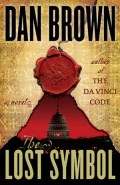
The Lost Symbol

lostsymbolby Dan Brown

I’m so happy that 1. I didn’t spend time reading this book.  Instead, I listened to it on audible.  It was LONG, but at least I was walking, or washing dishes, and didn’t spend my otherwise precious reading time on this.  Paul Michael, the reader, is quite adroit and I enjoyed his voice and inflections — and the subtle but effective switches between characters.  But, I cannot say that I enjoyed the book as much as its reader’s voice.

At first, I was somewhat intrigued by the exploration of Symbology, Free Mason history, and some supposedly high-tech science research on harnessing human consciousness…. but it all turned out to be just like Dan Brown’s other books: inserting very elementary knowledge of all these fields and channelling such knowledge through supposedly learned experts in each field to “explain” away the twisted plot and connections between events.  The bottom line, however, is that many many words are repeated and wasted to tell a potentially intriguing story that simply didn’t not live to that potential.

(For example: why would Langdon be forced to wear a blindfold to go to the “secret” place and experience pages of claustrophobia and doubts when the destination turned out to be somewhere he completely recognized — and should be recognizable by millions?)

Also, perhaps I’m just too jaded a reader for this — I completely predicted and guessed the identity of the villain a couple of hundred pages before it is revealed in the story.

The only bits that I enjoyed were the gruesome descriptions of tortures and deaths!

Leave a comment

Filed under Book Notes

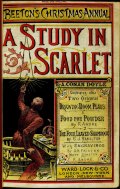
A Study in Scarlet

sherlock-_-a-study-in-scarlet by Arthur Conan Doyle
I never got to read this original story that has inspired so many other renditions. I loved “A Study in Emerald,” a short story by Neil Gaiman in the collection Fragile Things and thoroughly enjoyed the BBC Sherlock episode entitled “A Study in Pink.” So pleased to report that this is indeed a fascinating mystery. Now I think I’ve read all the Sherlock Holmes tales: short and long. Happy about it.

Leave a comment

Filed under Book Notes

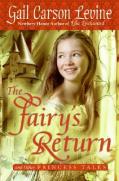
Fairy's Return and Other Princess Tales

fairysreturnby Gail Carson Levine, a collection of six Princess Tales
I enjoyed pretty much every single story in this collection.  Each one is inventive and fresh, with a lot of humor and just the right kind of twists from the original tales to maintain a high level of interest — even from this veteran fractured fairy tale reader.  I only wish that the design and the title are not so incredibly girly because I believe like all Grimm tales, these stories can be equally appreciated by both genders, even if the focus on the tales is the yearning and seeking of that one and perfect match.  The way Levine presents the relationships of the main characters stresses more on personalities and character compatibilities than some external or shallow physical attraction makes these tales solid choices for young readers.

Leave a comment

Filed under Book Notes

Midwinterblood

mindwinterblood15794941by Marcus Sedgwick

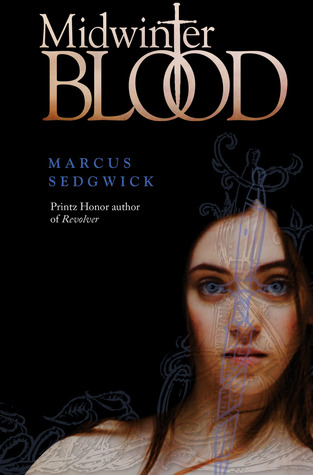
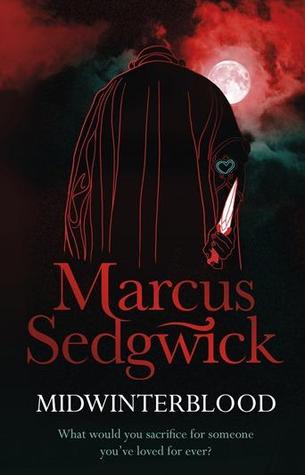
I put up two covers for this book because I found it so strikingly obvious that the UK edition and the US edition attempt to appeal to different readers.  The UK edition has the back of a man in robe holding a gleaming dagger while we are stared at by a beautifully young woman with mysterious patterns overlaying her skin.  Even the type choices are different (not to say that in the UK Sedgwick’s name is the selling point while in the U.S. he has to be “explained” as a Printz honor recipient.

The two design of the title are even different where the UK version Midwinterblood is one word but the US edition the title reads Midwinter Blood.

I have to confess that I was not all that impressed or emotionally invested at the beginning of the book.  It’s that darn high expectations syndrome again: high and enthusiastic praise and push from Monica and the publisher.  Both of them compared the book to other titles I loved — and especially titles that have what I consider “beautiful” writings (such as Laini Taylor’s Lips Touch.)  When I didn’t see the sparkling prose that I was expecting, my eagerness dwindled.  And, the US ARC proclaims that there are Seven Stories of Love and Passion which I interpreted as each story would be an incredibly passionate romance  (again, in the vein of Lips Touch.) Perhaps it’s my close-mindedness, but perhaps this description is indeed misleading.  And from hindsight, I could see how each tale IS a story of passionate love, just not all romantic love.

I am so glad that I stayed with the book.  As it is really clever and original.  The seven stories going back in time, each interconnected in some way, and each containing some unsettling elements (which I adore in short stories,) piece together a whole picture that is powerful and affecting.  Sedgwick even granted my wish by bringing us all back to the first tale, the first characters, and giving us closure.

I’m still left with a couple of questions, though: 1. Are we to interpret the characters ask speaking a Scandinavian language and that everyone of them is from the same linguistic cluster (the Journalist, the Archeologist, and Airman, specifically)  They all seem to have no problem communicating with each other, no matter the time periods and whether the encounter is within the community or with outsiders; and 2. I want to know more about the Orchids and their origins and powers and perhaps stories of greed and desire because of their special qualities.

Leave a comment

Filed under Book Notes

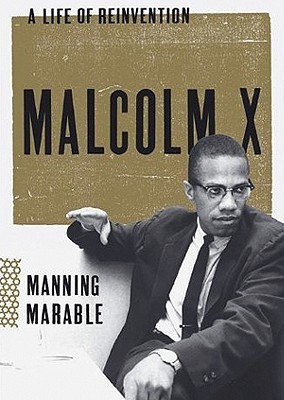
Malcolm X: A Life of Reinvention

malcolmxby Manning Marable
audio book: read by G. Valmont Thomas

I listened to this historically detailed and intimate personal portrait of Malcolm X over a month: while washing dishes and walking to and from subway stations.  I never read the autobiography which has been the prescribed text on school curriculum about Malcolm X, and only encountered him as a historical figure in other nonfiction books, mostly for children, about the Civil Rights Movement.  So it is that this is how I got to know the man and his many phases on the road to becoming the internationally influential personality.  I learned much about the Nation of Islam (NOI,) and much about the inter-plays between him and other leaders of the civil rights movement — especially Bayard Rustin, whose story has just begun to surface as another major thread of the Movement.

The book is full of painstakingly gathered details of Malcolm’s life — from his parents’ struggles before he was born, the family’s roles as Garveyites, Malcolm’s youthhood filled with brushes against the law and his inevitable imprisonment, his extreme attachment and final rebellion against the Nation of Islam and its doctrines, his many international trips to observe first hand the Orthodox Islam’s practices, and to his final days when he adopted Pan-Africanism and evolved into a much more open-minded commentator on social struggles: that the color of one’s skin does not necessarily dictate one’s political or social views and status.

I cannot but wonder, just as the biographer historian did in the epilogue, how more influential Malcolm would have been to the Movement if he had been given the chance to live beyond his 40th birthday…. (he was murdered just 3 months short of it.)  It’s with a heavy heart that I stopped the audio player…

Marable’s words brought Malcolm to life and actor Thomas’ skillful reading of the narrative did the text justice, or perhaps even enhanced it.  I really appreciated both for their art.

Leave a comment

Filed under Book Notes