Category Archives: Book Notes

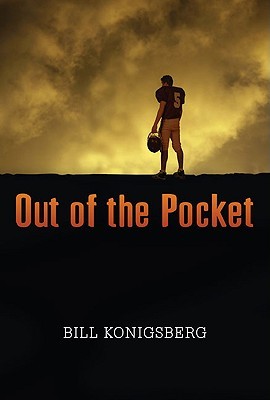
Out of the Pocket

OutofthePocketby Bill Konigsberg

The best adjective I could think of to describe this book is perhaps “earnest.”

The reluctantly outed celebrity quarterback’s story is told with such sincerity and truth that the reader cannot but root for the main character.  Along the way, there is just the right amount of suspense and uncertainty — how everyone might react to the news and accept or disapprove of his sexuality or decision  making — to maintain a high interest level to continue reading.  I read through it quickly because I truly wanted to know what happened next.  The football play-by-play scenes are described with lucidity and are quite exhilarating.  So even this football layman could form clear mental pictures and follow the games with all the thrill a spectator at the games would possess.  That is one of the strengths of this book.

I cannot not quite decide whether Bobby is flesh and blood and completely realized or is a courageous face on the cover of a magazine or national campaign poster, whose story is told to and not quite lived by this reader.  Perhaps he is both — at different times in the telling, depending on whether he is put in the middle of a scenario and reacts, or he is being cool-headedly examined by himself in one of his many his internal monologues.

Leave a comment

Filed under Book Notes

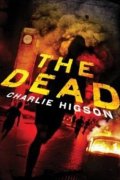
The Dead

thedead

by Charlie Higson

I am not an aficionado of zombie stories.  Yes, I’ve had a few books and movies under my belt: thoroughly enjoyed World War Z and Zombieland.  But I am in no urgent need for yellow pus, green liquidy drippings, splattered red blood, or all sorts of creatively severed  body parts — any time, anywhere.  I did greatly appreciate the first book in Higson’s zombie series, The Enemy.  And finally got around to read the second installment, a prequel, a “history,” of The Enemy. 

I cannot be more pleased by The Dead.  There is everything I love: exploration of loyalty, what makes someone a leader or a follower, what gives people courage, survival strategies — all told in a highly realized, logically plausible setting and string of events.  Tension and surprises keep the reader incredibly involved and the passages describing the mind deterioration of some characters are simply brilliant.

In a few weeks, I know I’ll be ready for book 3 – The Fear. 


2 Comments

Filed under Book Notes

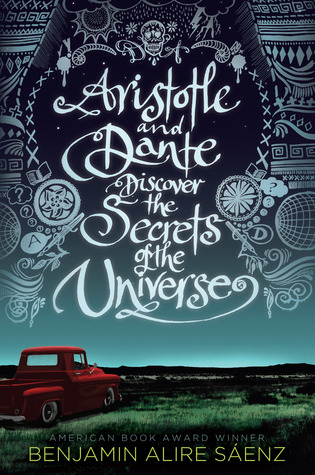
Aristotle and Dante Discover the Secrets of the Universe

Aristotle and DanteThis was high on my “to-read” list after the January 28th Youth Media Award announcement — It won the Stonewall Award, is a Printz honor and is also the Pura Belpré award winner. And the cover had always spoken to me. But, it took me a whole week to finish reading this easy and not very long book. Mostly because I found myself not being drawn back emotionally to the book every time I put it down and I also didn’t feel compelled to continue reading for a long time. I found Aristotle’s narrative too wordy, too self-analytical, too clinical, even, at times. There’s so much crying and laughing: as if those are the only two actions that can express the emotions of the characters. And the descriptions of the crying and laughing were not that varied. The way the father cries is not distinguishable from the way Dante cries. I think this is a message-y book — but the revelation at the very end of Aristotle’s sexuality does nothing to strengthen the book’s power for me. I can appreciate the everyday life style of the storytelling but at the same time, there is definitely plenty of tightening up that could be done. (Is it necessary to feature an aunt who was shunned by relatives because she was a lesbian and a brother who’s serving time for the murder of a transvestie all in one story and all in one person’s life?)

Leave a comment

Filed under Book Notes

Goblin Secrets: Surprise Win?

The news got out tonight — Goblin Secrets by William Alexander has cinched the National Book Award title for Young People’s literature.

Here’s a link to a host of printable (and really really well designed) Masks, inspired by this book:

http://www.goblinsecrets.com/masks.html

Enjoy — and if you have not read the book — perhaps you will now and you will also enjoy the experience discovering the significance of masks in Goblin Secrets.

Leave a comment

Filed under Book Notes

It’s November… and we are all thinking about Graphic Novels

At Heavy Medal and at Born Librarian, Jonathan Hunt and Elizabeth Moreau both offer their views on whether a Graphic Novel can be considered for the Newbery (pretty much, yes, it can be considered but the winning chance is slim) and if so, how does one consider and weigh its merits against its intrinsic weaknesses: namely, lack of expository paragraphs, textual settings, other descriptive languages, since most of the text in a graphic novel is in dialog form.

Jonathan’s opinions are closer to mine — that we must judge and examine the text of a graphic novel as what it is and what it does and not ask it to be something else.  Elizabeth’s method of covering up illustrations in graphic novels or typing up just the text to read serves some purposes, but I would say that does not respect the fact that the text is MEANT to be viewed with the illustrations as a whole.  The authors of graphic novels (usually) are the originators of the stories, whether the books are illustrated by the authors themselves or by other artists.  (Traditionally, few graphic novel writers are illustrators.  But Children’s book world seems to be upsetting that tradition quite a bit!)  I have studied the “behind the scenes” process of Neil Gaiman’s Sandman series (included in the Absolute Sandman volumes.)  Neil Gaiman gives out copious notes of scene directions, settings, “camera angles,” etc. to the illustrators.  I don’t think that’s how all authors work.  But, to think that the graphic novelists only write dialogs and a few text boxes of descriptions of settings is to discount the rich creative palette of the authors.  They have to make the same choices as any prose novelists do: the details of the world the story is set in, the characters that play off of each other: their personalities and voices, the events that unfold to propel the plot and to unveil thematic matters, etc.  In fact, there is so much self-editing and paring down that a graphic novelist must do that some prose novelists can never successfully achieve.

So, I say, do not judge the apple and demand that it should be bursting with citrusy juice and do not demand a lemon to be sweet and crunchy.

When I examine graphic novel texts: I read the whole book as IS.  No covering of any panel illustrations.  No thinking that the text MUST STAND ALONE.  And No demanding that the theme must help the readers to “gain a greater understanding of what it means to be human” (Jonathan’s words).  Let’s just look at how well the text does its job: do the dialogs capture the personalities and voices of different characters?  Does the PLOT engage, move along at the right pace, help the readers grasp the theme and offer clear causal-effect relationships, etc.?  Are the settings clearly defined and serving the story well (yes, we see the pictures, but we also understand that there are “directions” from the creators to direct the artists of the settings): for example, are things always taking place inside a room or events happen all around the story universe: whichever is appropriate to the “story at hand”?

I am reminded of the recent Newbery winner, Good Masters, Sweet Ladies.  The “setting” is done with separate historical nonfiction passages, accompanied by detailed illustrations, while the main body of the text is presented as monologs (or dialogs) that do not even progress with a linear plot line.  The book must have been  examined by that year’s Newbery Committee on its own merits: how effective are the monologs, how accurate and interesting to the intended audience are the nonfiction passages, and how clearly and movingly as a whole the various “voices” bring a medieval manor town to life by the author’s choices of “characters” and their interior struggles and exterior interplays.  I imagine that the members of that Committee found great success in each aspect pertaining to that specific book and not a general notion of “what a good kids’ book should look like.”

I feel that I’ve clarified for myself how I should consider Graphic Novels as a Newbery committee member — but, will the other members (including Elizabeth) consider them the same way?  And will we agree on whether a text is successful even if we do agree on these principles?  Reading is such a subjective experience.  I am more excited than ever to hear other opinions and to convince or to be convinced or to accept that we civilly disagree with each other perpetually!
Leave a comment

Filed under Book Notes

Clockwork Three by Matthew J. Kirby

I always wanted to read this book — and more than one teachers at school urged me to read it. Since I can’t really read it this year – I downloaded the audio book read skillfully by Marc Thompson. Thompson definitely did the story justice with expertly designed and executed voices for the many characters in the tale. The story itself satisfied: a wonderful blend of life-or-death/survival scenarios and the warmth of friendship and inter-generational support. Although there are some really despicable adults in the tale, there are also so many caring ones that eventually made the three children’s lives better.

I anticipated a lot more “magic” due to the title and the cover design and felt slightly disappointed when I realized that it’s mostly a tale of young immigrants and their struggles finding their places in the world and supporting their families. All three protagonists’ stories are definitely compelling. Kirby then introduced some magical elements in the form of the golems and the golem’s “heart” for the clockwork man. Being a picky and sometimes narrow-minded genre-purist, I found this mixture a bit disconcerting — although it was quite satisfying to read those fantasy bits. I don’t think any child reader will be bothered by this mixture of historical/realistic story telling and elements of magic.

Leave a comment

Filed under Book Notes

Considering Sequels for Newbery

One of the hardest thing for a Newbery committee member to consider is how to fairly and effectively evaluate a new book that belongs in a series.  The traditional wisdom passed down unofficially from year to year is: whether the book can “stand on its own (merits).”  Meaning: if a reader coming to this book without prior knowledge of the characters or plot development progression, will he or she be able to fully appreciate the book at hand. If the reader does not need the previous books to be fully immersed in the present title, then, it has a better chance to be considered seriously for the award.  If, on the other hand, one feels somewhat lost or disconnected due to unfamiliarity with the whole series, the book’s chance for being a top contender is slim to none.

This leaves me wonder, though.  In a way, isn’t the success of a sequel sometimes marked by being quite “dependent” on the previous volumes?  The complexity of the characters and character relationships might make a new reader puzzled but it is exactly what an old acquaintance of the series looks for to deepen an already rich experience.  Intense plot lines that were left unresolved at the end of the previous volume should not need a whole chapter of “recalls” to set up the scenes for this current volume.  Such recalling passages, forced on the author who just wants to continue developing a complete story line, can be tedious and obstructs the flow of the tale.  So, in a way, “not standing on its own” should be considered a merit to a book that is a sequel as part of a grand tale.  I am reading a sequel to a story that has been told in previous four volumes.  I find the book deeply satisfying — love to see old characters referenced, love to see new potential conflicts developing based on old relationships and events, love to see the storytelling tone that is unique to the series being picked up again and so consistent with the rest of the series.  At the same time, I keep wondering: how would someone who’s never read a single volume of this series react to the information revealed on these pages?  If I suggested this title, will it be a delight for most of the other 14 members or will it be an unwelcomed burden?  And — do I care either way?

There are fifteen people on the Committee, with vastly different tastes (some love fantasy and sci-fi, others would not touch these without some seriously coercion,) and usually only a few would have read the previous titles of any series.  How should we then proceed with a suggestion  or even nomination of a book that is part of a series and unfamiliar to many?  Should we all read and catch up with the previous books in the series so to judge whether this new volume fits beautifully with the whole picture?  Should we insist on the book’s “making complete sense” to a brand new reader of the series?  Do we trust the few committee members around the table to tell everyone how the book fit with the grand scheme of the series?  Do we ignore them because they are already “biased” and probably are considering the whole series and not simply the book at hand (which is our charge)?

It has been a conundrum for ages and I imagine will be for eternity (in Newbery Land.)  As for me?  I’m going to finish this wonderful sequel that has kept me engrossed the moment I started reading the book and I won’t be able to tell the world whether I suggest it to my committee or not.  Just you know that either way it is going to be a tough decision!

8 Comments

Filed under Book Notes

Bitterblue by Kristin Cashore

Finally finished it… and after 545 pages (in the ARC) I want it to keep going… so the wait begins, again, for the next installment.

How does an author touch one’s heart so profoundly? What did she do that’s just right? The pacing is perfect – without much battle or fight scenes. I knew the general direction that the story must follow and felt rewarded, rather than bored, when the story arc falls neatly where I anticipated — but, also surprised along the way with many little bits and pieces that Cashore masterfully inserted into the story to make it even more intriguing and the world even more realized.

The book is, though, filled with so much sorrow that one can almost not bear reading through. I hope young people (14 and up?) will not be as horrified as us older readers by Leck’s astrocity on his victims and his forced accomplices. I am amazed at the sympathy I felt toward him — the pure evil embodiment through the 3 books — and how damaged a mind and what a torture chamber that mind is for himself.

Glad to see the other beloved characters from Graceling and Fire and can’t wait to see what the next, culminating kind of story Cashore will bring us.

And — Kristin, please don’t worry about publishing the next book right away. We can wait. And if you are having trouble telling the next story, go do something else. Go write something else. Go present your insights on Fantasy world building, on character development, on capturing emotional truths, etc. to the world. Thank you so much for a most affecting story!

Leave a comment

Filed under Book Notes

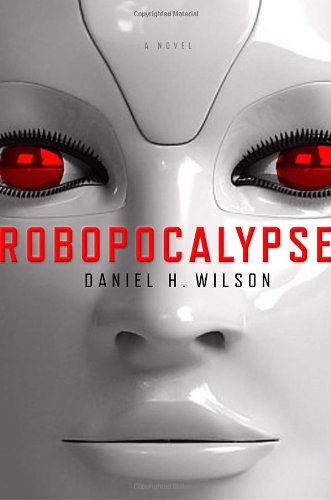
Robopocalypse by Daniel H. Wilson

I absolutely enjoyed the many separate pieces in the book — thinking that each chapter can be treated as a short story since there is always a beginning and an end and not too much set up is needed to comprehend most of them. There are some really intensely gory and cringe-inducing scenes and a couple tales border on horror. Some are heart-warming, too.

One thing that I couldn’t quite get over, though, was the unevenness in keeping to the rules that the author set up for himself: That, supposedly, each piece in the book is a “translation” of something the “narrator” gathered from a massive electronic archive with audio, video, text, etc. — recorded history of various participants in the Robot Uprising and the global warfare afterwards. However, instead of using a 3rd person, observational tone, Wilson chose to tell many of these heroes’ stories from a first person point of view — EVEN if the recordings themselves are from an exterior angle. (And I just noticed that the first few stories are more in keeping with this framework — some stories are from a third person viewpoint while others are supposedly “narrated” by the participants themselves as interviewees or writers, etc. — but that consistency gradually fell apart and at the end there is a lot of “I” and how “I” felt even though the gathered records couldn’t have provided those perspectives.) And some of the voices are not quite in keeping with the characters themselves — or at least, not quite distinctive to be discernibly different from each other, even though some of these characters are drastically different in backgrounds and should probably have different tones. — Although I guess I can accept it because many of them are told from the reporter/archivist’s “voice.” (However, then why are they told from the “I” perspective?)

Still, I can see many readers enjoying the stories and gobbling up the scenes with relish!  And, I am so enamored with the cover design!

Leave a comment

Filed under Book Notes

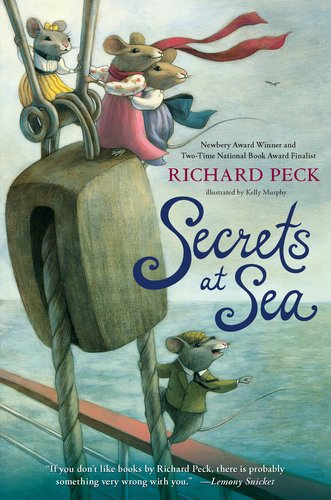
Secrets at Sea by Richard Peck

Who would have thought? Richard Peck: the 21st Century Austen for the 8 to 10 set? But he IS! This little gem of a book has all the good stuff:

A cast of talking mice whose actions and living conditions are completely believable and are in tune with children’s fantasy play; a twisting, surprising, and humorous upstairs/downstairs comedy that involves Royalty and seafaring; the perennial favorite plot progression allowing the lower class main characters go up the social ladder due to good luck and hard work; and clean grown-up romances.

Peck’s deft hand also created a great protagonist in the no-nonsense Helena and made her think and speak properly like one would have from the late 1800s. I was completely charmed!

(And the full-page incidental illustrations add to its charm even more!)

Quick – go and get a copy and treat yourself and your young readers!!

1 Comment

Filed under Book Notes

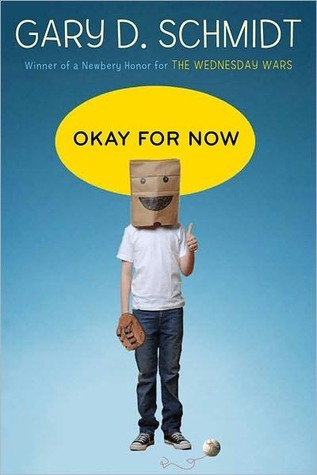
Okay for Now

 by Gary Schmidt

Tenderness.  As a reader, I felt surge after surge of tenderness toward this 14-year-old young man, emotionally and physically abused by a few, supported and understood and nurtured by many.  And, so tenacious, so strong, and so smart, not to mention, so talented.  Yes, Schmidt did create a character that is much larger than life whose story would have been implausible or unbelievable.  In Schmidt’s apt hand, however, with genuine emotions and a large dosage of wit, Doug’s 8th grade year in Marysville feels archetypal and heroic.  Like the Audubon paintings that serve as the scaffolding for the plot, the artistic stitchings and planning for the storytelling are visible every step of the way, and yet the final outcome is a pure force of nature.  How does one explain it except that the story obviously came from both deep within a compassionate heart and a practiced and diligent hand.

Leave a comment

Filed under Book Notes

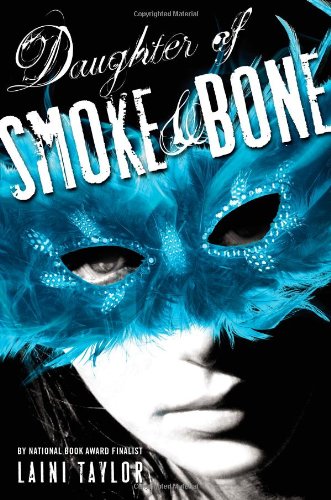
Daughter of Smoke and Bone by Laini Taylor

This is one gorgeously written book. Laini Taylor knows how to create a fresh, inventive fantasy world of dark and unsettling magic and she writes with such relish of words and phrase turns that I felt I was treated to a feast of poetry and imagination. And I loved every bite and sip. And because she knew how to portion her offerings, at the end of the long meal, I felt simply satisfied and not overly stuffed. I fell in love with Karou, the 17-year-old main character who straddles the human and the “monster” worlds. She is artistic, fiercely loyal, and full of mystery. And that love sustains throughout the tale. The Madrigal chapters slow down the pace a bit and I did get a bit impatient to get back to the Karou story (although Madrigal’s IS part of her tale, too, the placement and the length of this part did disrupt the flow of the telling for me) and was a bit annoyed that the story does not end at the conclusion of this volume.

Leave a comment

Filed under Book Notes

Wonder-struck by Brian Selznick

I already wrote about how much I enjoyed Brian’s new book.  It’s finally out in the store!!  Glorious.

In the past week, I had the opportunity to attend two events hosted by Scholastic and, they were as GLORIOUS as the book itself.

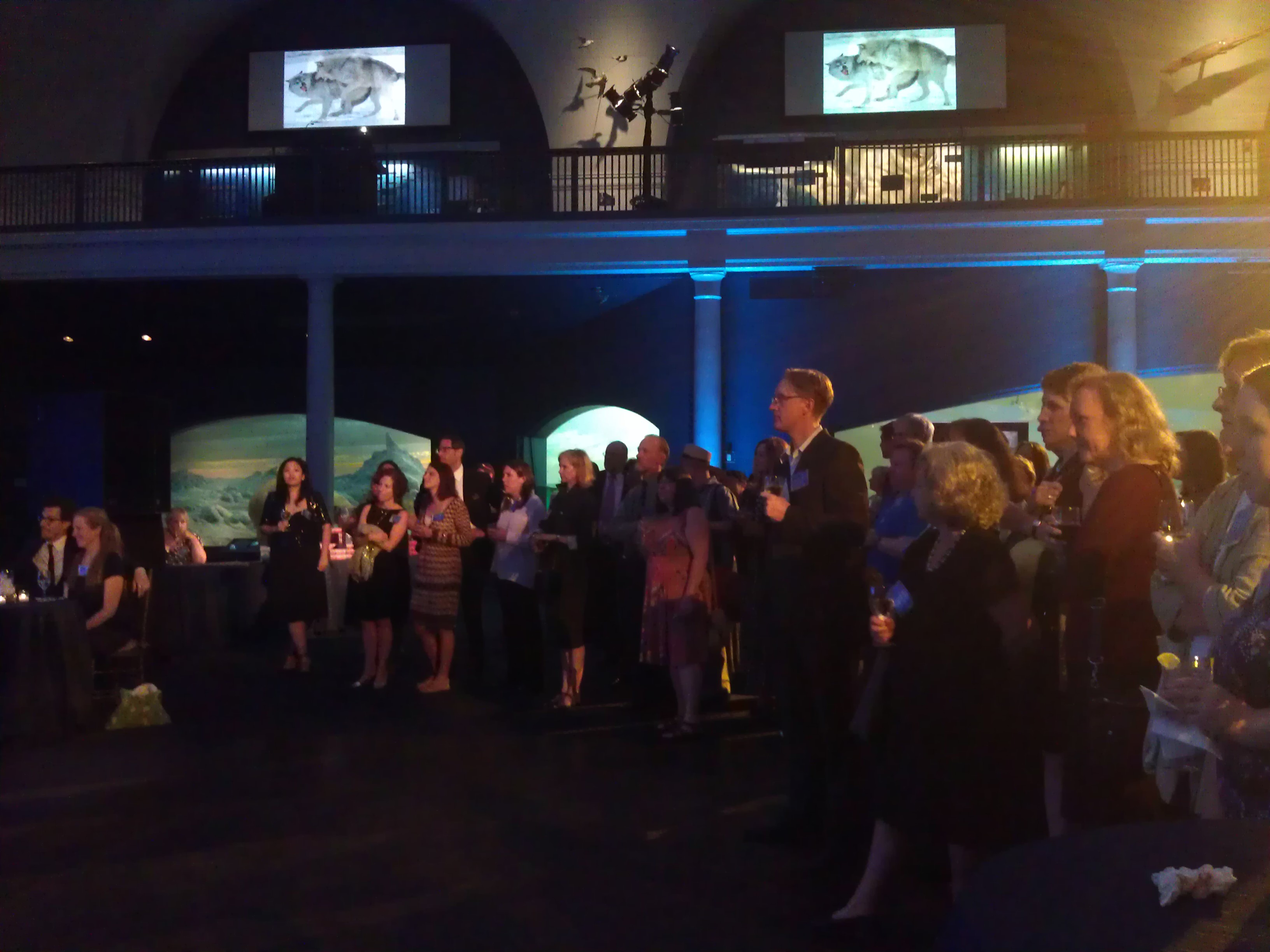
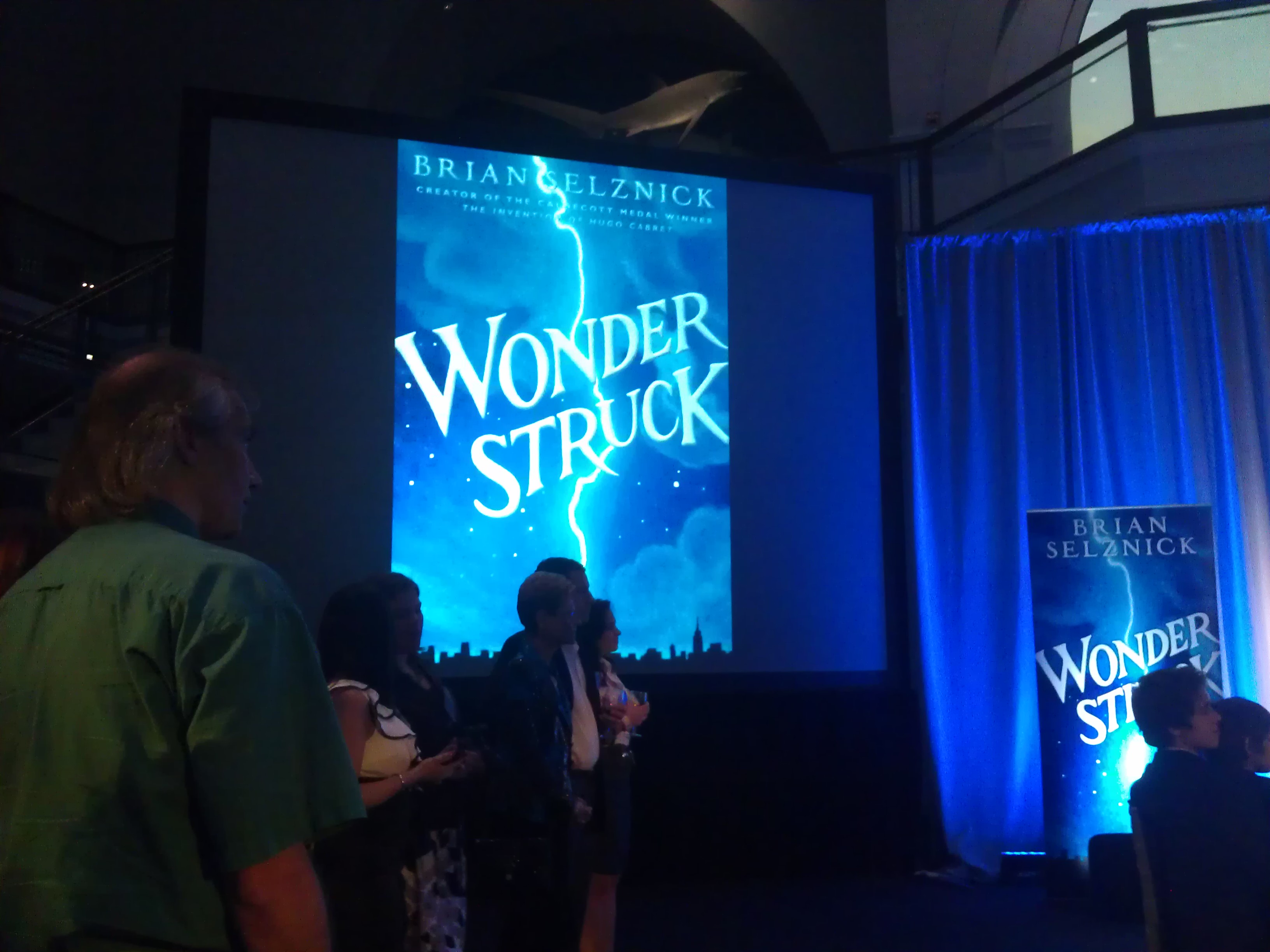
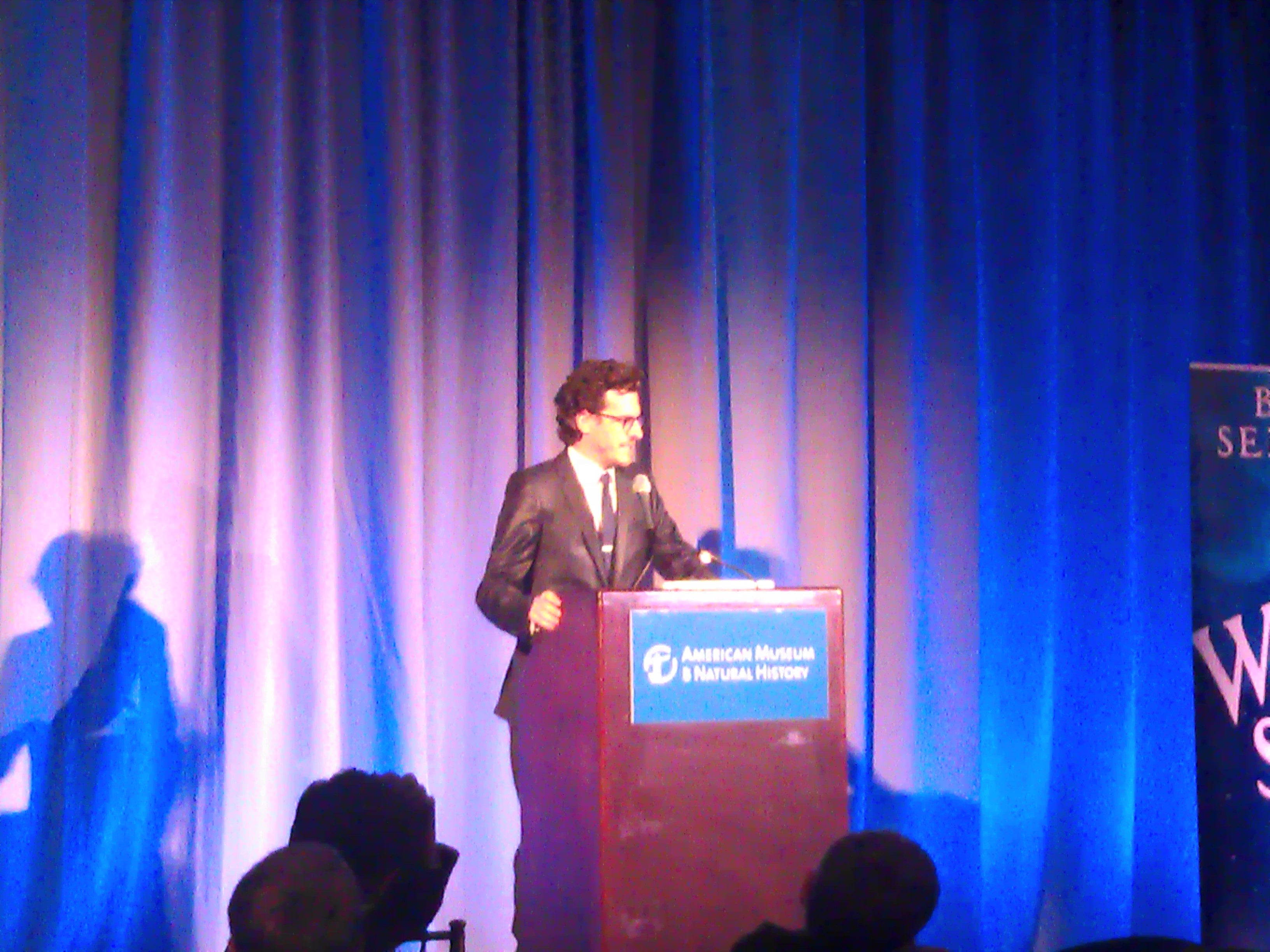
Monday night the book launch party was held against the the magnificent Milstein Hall of Ocean.  It was simply the coolest setting for a book party and Brian couldn’t have been more gracious or more humorous as a speaker, or more passionate about the museum and all that it holds, or more humble about his own work.  Here are some pictures taken on my phone that evening:

On Wednesday evening, Brian spoke about his inspirations, work methods, and the editorial process of the writing of this new book.  This took place in the Scholastic Auditorium and he was brought on stage under strobe lights and the rumblings of thunder sound effects.  We also got to watch the trailer for HUGO (the upcoming movie based on The Invention of Hugo Cabret) and were told that he saw the movie for the first time and was moved by it.

Brian spoke eloquently and answered very thoughtful questions from the audience with candor and humor.  A sign-language interpreter was on stage with him and I spent moer than half of the time watching the dance of the hands and the dramatic postures and facial expressions of the deaf communication system.  It was beautiful to behold and we were all thoroughly wonder-struck!

Leave a comment

Filed under Book Notes

The Knife of Never Letting Go

Author: Patrick Ness
Performer/Reader: Nick Podehl
Publisher: Brilliance Audio
CDs: 10 (12 hours)
Pub Date: 10/28/2010 and 9/13/2011

MY RESPONSE
Fascinated, engrossed, emotionally affected, and admiring are some of the adjectives I associated with the experience of listening to this brilliant book, and its equally brilliant reader performer, Nick Podehl.  Podehl chose a rustic set of tones for all of his characters. With slight variations for each speaking role, he is entirely convincing as the innocent and willful Todd, the mild, intelligent but bewildered Viola, the the crazed cult leader Aaron, the faithful dog Manchee, and a host of other supporting characters.  Of course, the power of the story comes largely from the author: the imagination that created this futuristic and yet backward world, the skilled hand that penned the breathtaking pace which will NOT let go of the reader’s heart, and the thoughtful mind that wove in so many issues and themes for the readers to ponder.I find the device of the “virus” that forcefully and artificially separates men and women and how they share/not share their thoughts with others ingenious, and as a female reader, agreeing with some of the scenarios.  (I wonder how male readers view this aspect.)Manchee the dog is endearing and with such a sorrowful fate which gives the book and Todd one powerful push in the direction it/he needs to move.  I can’t wait to listen to the rest of the trilogy!  (And my apologies to Monica for not heeding her enthusiastic recommendation for the past couple of years to read this series much earlier!)
SOMETHING ABOUT THE BOOK/RECORDING
This is a thrilling dystopian science fiction story with a very Western flavor: the characters carry rifles, farm the land, and have abandoned all modern technologies in a far off planet in an uncertain (but must be very distant) future. Lots of harrowing scenarios, people (and animals) die, and it ends with a gigantic cliff hanger.  It touches on the topics of religion, of organized crimes, of government styles, of how men and women interact, and of the nature of evil.

3 Comments

Filed under Book Notes

Wonderstruck

Wonderstruckby Brian Selznick

I adored The Invention of Hugo Cabret, Brian’s Caldecott winning, form-innovating, ground-breaking novel told in text and pictures. I have been waiting for Wonderstruck with both happy anticipation and a slight dosage of anxiety: what IF it is not as good? What if it feels like the author has set a trap for himself and cannot top his last achievement? Would I be as taken by this story as the mysterious tale of Hugo? Would I feel that it is merely a repeat of what he already did once and since it is such a singular and unique format, it might not bear the weight of a second attempt…

I am so pleased that the book is not at all these What Ifs… Instead, it tells a fascinating and moving story succinctly and attractively with text and pictures. And instead of a novelty, it might start a different kind of storytelling form for others who are similarly minded and have suitable tales to present in this way.

I did so want to SEE Ben’s story, though. I was craving pictures for his part of the tale! That, to me, is a strength of the book: I can see how young people can be compelled to “illustrate” parts of the text. Others might be inspired to curate a personal “Cabinet of Wonder” (a personal museum.) And all of us will learn to appreciate all the connections that we make throughout our lives with others.

The release date of the book is September 13th, a day after the start of the year at my school, and I can’t wait to have it on display to herald a year of reading with a wonderful new book for all my students! Let’s shout HURRAY together for another tour de force by Brian Selznick!

Leave a comment

Filed under Book Notes

Daytripper

Daytripperby Gabriel Ba & Fabio Moon

I really enjoyed the lyrical atmosphere and some of the intense scenes in both the text and the art and am glad that the final chapters tie the whole narrative structure together. Of course, because if this tidy conclusion, the narrative ceases entirely to be original or fresh with the previous segments being but the potentials of a person’s life as experienced in the “land of fate and possibilities.” The magical realism quality becomes but possible, but not true, device. That is mere quibble of an otherwise string of very strong and moving narratives. Highly recommended!

Leave a comment

Filed under Book Notes

Drawing from Memory

Drawing From Memoryby Allen Say (from galley)

I’m not sure that this is “graphic novel” treatment of Say’s personal life as many have categorized it.  It has text and it has graphics but it feels more like a scrapbook with clippings of thoughts and images (both photographs and drawings).  I probably would call this a picture book memoir.  It is brutally honest: I felt pained by the lack of tenderness and affection from family members that Say received as a child and a youth. But it also shows how one can make one’s own family from those who appreciate and spiritually and emotionally adopt one as a child or a sibling. I hope by making this book, Allen Say has made and found peace with his unhappy past.  This is definitely a title worth sharing with many.

One question though: how would a young reader (say, in 2nd or 3rd grade) perceive the Japan-America conflict of War World II by reading these lines:

page 10: Then a war began in 1941. When bombs started to fall on our city, Mother took us and fled to a village named Tabuse between Hiroshima and Iwakuni.

page 12: When the war ended four years later, everything was broken.

page 13: The American forces occupied Japan on my eighth birthday, August 28, 1945. Our house in Yokohama had been destroyed. Father went to the south island of Kyushu and found work in the city of Sasebo.

I must admit that as a Chinese person who grew up in Taiwan (which was a Chinese province colonized and occupied by Japan for 50 or so years until the conclusion of WWII) and whose mother lost her entire family due to the Japanese occupation of North Eastern China, when I read a Japanese author’s personal perspectives on these events or the time period, I had to forcefully remind myself that: this is a person who happened to have grown up in a country that invaded my own country and that Allen Say was not personally responsible for the atrocity (and yes, it IS an atrocity) that his mother land caused in my mother land way before I was born. And yet, I still wonder if there could have been other ways to make those statements that show clearly to any young reader that War did not come to Japan without Japan’s bringing it on to itself AND that instead of using the word “occupied,” although accurate, Say and his editor could have found a different word to describe the American Forces’ presence in Japan post WWII – especially since the young readers encountering this book most likely wouldn’t have had much background knowledge of the whole sequence of events that led to such occupation.

Leave a comment

Filed under Book Notes

More about Mistborn

Just a couple more thoughts of why I like the book so much.  It’s a Heist story.  I always enjoy a good heist and this one is extremely fun: the carefully plans might still fail and yet the failed plans might lead to bigger or unexpected success.  The processes of the planning and the training are both superbly enjoyable.

And there is the whole large-scaled discussion of legend, story, myth, and religion.  Sanderson obviously wanted to cover a huge ground and as far as I can see, he has succeeded in clearly presenting his characters’ beliefs.

The gentle romance does not hurt, either!  Ah, it defintely is a great read!

Leave a comment

Filed under Book Notes

Mistborn: The Final Empire

Mistborn: The Final Empire (Mistborn, #1)by Brandon Sanderson

It’s been a while that I felt surprised, so pleasantly, by freshly designed magic system and layers of intriguing twists in any book. This novel came out more than 5 years ago and I have been hearing about it from a trusted friend for quite some time. I’m so pleased that I finally had the pleasure to experience it. And this pleasure includes both laughter and tears.

Not only does the book have wonderfully fun magic (Allomancy and Feruchemy — both using Metals to enhance human inherent abilities,) contains within are some unforgettable characters: each one is well drawn, distinct, and most of them are so admirable that you don’t want them to leave the scene (but some of them HAVE to.. and it is heart breaking when it happens. Even a character who’s never made a physical appearance in the story becomes endearing in the last chapter.)

I am going to be championing this book from now on!!!

Leave a comment

Filed under Book Notes

Days Gone By: #1 of The Walking Dead

Days Gone Bye (The Walking Dead, #1)by Robert Kirkman

The first installment in the long series focuses mostly on the relationships of the living with the backdrop of extreme hardship of the zombie plague. I imagine that that will be the flavor for the rest of the series. The author does a great job capturing the characters’ traits and presenting the interplays between characters with conflicting interests. The tension is high, the dialog realistic, and the artwork is well executed. Now I have to read the rest of the series!

Leave a comment

Filed under Book Notes