Farewell Child_lit – You’re No One’s Baby

Over at SLJ’s Blogsphere, Betsy Bird (Fuse#8 Production) documented the pending demise of Child_lit Listserv, hosted at the Rutgers Email server and has been “owned” and run by Rutgers Rare Books librarian Michael Joseph for more than 20 years.

I was among the earliest subscribers to child_lit (mid-1990s) and served as its occasional archivist in those days, publishing (with permission) discussion threads on various Children’s Lit topics from “Love You Forever: Funny or Repulsive?” to “Tikki Tikki Tembo and Cultural Accuracy in Folktales” — those were the “good old days” when fewer people found their way to online discussion boards and no pervasive social media platforms like Facebook or Twitter or even many personal websites/blogs.

Children’s Literature lovers, authors, publishing folks, and scholars found each other and we built a communal Home on child_lit.  Michael Joseph took on the responsibility of hosting and running the listserv and as Child_lit neared its end, many many subscribers expressed their gratitude to him in having maintained such a wonderful place for all of us through these many years.  I am among the grateful list members!  Michael and I have known each other through Child_lit (as many others, like Monica Edinger, Cheryl Klein, Patrice Kindl, Jane Yolen, Philip Pullman, Linnea Hendrickson, and Pooja Makhijani, and so on…) for more than two decades and I have so much respect for him as a scholar and friend.  However, as Michael pointed out in his “decision paper” on August 21st to the list members, with conversations about children’s and YA books being all over the internet and Child_lit (in his view) has lost its scholarly/academic luster, Michael decided that it’s time to shutter the windows and lock the doors.
Screen Shot 2017-08-31 at 7.09.11 PM

Screen shot of child_lit About Page

This decision greatly saddened me.  Child_lit is not a collection of lifeless pixels housed on cold and heartless email servers.  It is a community and a place of connection of people who are interested in exploring the world through children’s literature — even if perhaps the style of the discussion has evolved and changed.  I did not want this place to disappear.  So I took action.

In the past week, I contacted various folks at Rutgers, posted a Survey on child_lit to gauge members’ interest (which is high) in maintaining this virtual Home.  Finally, I found a professor at Rutgers who graciously agreed to help maintain the listserv for a while until we can find a new Owner of the listserv.  However, when I brought this solution to Michael, I discovered that Michael’s mind was firmly made up and he will not allow for the transferring of the “virtual deed” (which could be easily accomplished.)

I wrote this on Child_lit today and would continue pondering on “who owns what we collectively build” in the online/virtual world.

Farewell Child_lit – You’re No One’s Baby

A list member said to me that she has no problem with Michael terminating Child_lit because, after all, it is His Baby, and he has every right to do whatever he wishes with it.

Although I am in no way angry at Michael for not wanting to continue “owning” child_lit because it no longer matches his original vision of the discourse, I found this notion of child_lit, which belongs, in my view, to the entire child_lit community and even to the entire children’s literature community because we often take what we learn from here to our daily children’s lit. practices.

The analogy of “the baby” makes me wonder about how we view intellectual products in the age of online engagement and how we treat “virtual real estate” and “virtual ownership.” It also makes me chuckle: I have a real life human daughter who is younger than Child_lit (18) and by now, I no longer think of her as My Baby, and can no longer dictate how she manages and conducts her life. I’m giving advice, yes. I’m helping her out when she needs, yes. But, I will never tell her that I’m pulling every support away from her because she has irked me or not being a replica of myself. (She just started college and is making course choices that surprise me!) So the idea that because we, collectively, have disappointed Michael and he has tired of the ownership of the list, we, collectively, will lose our virtual community (home/real estate) still does not sit squarely with me.

That said, if this is indeed the FINAL DAY OF CHILD_LIT — farewell, friends old and new. We shall meet and find each other somewhere else :)
3 Comments

Filed under Child_lit Archive

Book Critic AND Book Champion

There was a discussion last year about how some of us are “book champions” and others are “book critics.” The implied conceit is that somehow, these two roles or temperaments are mutually exclusive.  A great summary with her views and links was published on Monica Edinger’s “Educating Alice” blog: The Championship Season.

After much self-examination, I know that, I too, would like to maintain both traits – not as if they’re the two ends on a continuum: if I move toward one end, I’m leaving the other end behind.  I’d rather imagine them as baking ingredients which must work together well with just the right amount of each.  I hold that it is imperative to examine all aspects of any book I encounter and critically evaluate them: pointing out what works really well and what has perhaps fallen short when engaging in discussion of a book: whether in person with a friend, online on a blog, in print for a magazine, or as a member of an award selection committee.  However, it is equally important to have a lot of passion and love and express such support vocally and often, especially when working with the target readership.  I often joke with my students that I’m just a paid book pusher: starry-eyed and eager when recommending titles.  I will never shy away from praising a good book and champion for great themes, outstanding literary styles, convincing world-building, and layered character development.

That’s why I point out inaccurate racial representations; that’s why I discuss whether the use of certain narrative devices supports the plot or the theme; that’s why I talk and write about books I’m crazy in love with but also about books that raise questions and concerns.  I’m not going to choose between the two:

I consider myself a Critical Book Champion!

Leave a comment

Filed under Field Reports, Views

My Appreciation for Emperor’s Riddle by Kat Zhang

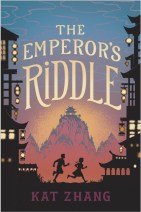
emperor's riddleThis is a brief note to say that Emperor’s Riddle by Kat Zhang (Aladdin, May 2017) fits the bill of my continuing search for fun stories set in contemporary China that features Asian American children and authentically captures both the modern day life familiar to western readers and the cultural flavor unique to China.  Definitely a book that I will introduce to the Chinese American mother and child who came seeking books featuring characters that “look more like her.”
1 Comment

Filed under Book Notes

Musing While (Off)White

Readers of this blog and friends & colleagues might have known that I am originally from Taiwan, growing up as a racial majority, upper socio-(but-not-economical) class, and never having to figure out my racial identity as a marginalized child, teen, or young adult.

When you grow up occupying only a small slice of the population pie (less than 1/16 for Asian Americans of varied country origins,) your self-image and self-worth must rely not only on your family’s heritage and conviction, but also on your school environment, your neighborhood, and media representation.

For the last few years, I have identified myself as a Person of Color so I could unite with my Asian American, Brown American, and Black American brothers and sisters to raise awareness of the institutionalized racism they (we) must confront and rectify together. However, I must confess the hesitation, the discomfort, and the sense of being an “imposter” in many of such groups that I insert myself in at work, at professional settings, and social gatherings.  I attend the monthly Faculty of Color meetings to discuss and strategize how to make my school a more inclusive and just environment for everyone.  I go to the annual People of Color Conference for educators to glean and share new knowledge and lesson plans.  I read books and articles and discuss about all sorts of sub-topics related to the systemic oppression so many of my colleagues, friends, and students have to contend with on a daily basis.

Every so often, I say to myself, “But you have never personally experienced any of these, except for perhaps once in a while someone jokingly (or seriously) thinks that you can do math a little better or that you are probably quite docile.”  The last point could be exasperating since I am so far from being docile or gentle but the misconception or stereotype never gives me an iota of emotional stress.  My racial identity could be easily just part of my whole being: like that I’m short or I am near-sighted and that I am a mother and a librarian.  I am more and more aware of how much a luxury it is that I can go about my day, moving in all sorts of spaces to not be keenly aware of my racial identity.

This is the kind of luxury (privilege?) that I imagine many of my white friends, colleagues, and students have.  And I also imagine that this is why so many of them are still struggling to figure out why their brown/black/Asian counterparts cannot simply “let this racial identity thing” go, or cannot simply train themselves to not allow racial identity to dominate one’s self-image or as the main influence of one’s notion of self-worth.

The more I think about my own identity, the more I know that I cannot claim to be a Person of Color in 2017 America. Instead, I feel like I need a different category — a different label, perhaps. My socio-economic status, my immigration status (naturalized citizen by marriage,) my work stability, and my lack of external threats from law enforcement, etc., makes me, if not 100% equal to most upper-middle class white Americans, close enough to Being White.  This explains why I often do not have the “ouch” reaction that many people of color have when encountering media misrepresentations, lack of representations, or grossly inaccurate stereotypical expectations — all because I have not experienced years of being misunderstood or being reduced to a “type” and not being seen and valued as a unique individual.  If there is some sort of continuum of Racial Identities — then I would drop my pin (when it comes to how privileged and how socially resourced I am) somewhere in the “White” section. Since I cannot claim to be actually White, I will from now on think of myself as Off-White and hopefully can use this identity to help my White colleagues, friends, and students to figure out how we can help advance the anti-racist and social justice causes.

I welcome comments and thoughts — am I being completely off here?  Am I usurping anyone’s identity to claim myself as Off White or is it somehow accurate and perhaps even rings a bell for other Asian Americans?

IMG_20170710_083405


2 Comments

Filed under Views

“Read a book about a character who doesn’t look like me” as viewed by an East Asian parent

For the second year in a row, I posted Children’s Literature Ambassador Gene Yang’s Reading Challenges (Reading Without Walls) as a preamble to the Summer Recommended Reading Lists for my students.  The three main points are:

  • Read a book about a character who doesn’t look like me or live like me.
  • Read a book about a topic I don’t know much about.
  • Read a book in a format (or genre) that I don’t normally read for fun.

Last Wednesday, a parent brought her 4th grade daughter to the library to check out summer books and her first question to me was, “Who decided on the summer reading challenges?”  Seeing her and her daughter, both of East Asian descent, it suddenly dawned on me that the first challenge was not a “challenge” at all, but a re-enforcement of what has been the norm in the child’s reading experiences: almost always reading about someone who doesn’t look like her.  The mother confirmed my realization by saying that there are pretty much no books with characters that look like her! So I grasped at the straw of the second part of the same challenge: live like me and said that this could mean someone living in a rural area, from a different era, or different country.

The next ten minutes saw me scouring the library collection, trying to offer SOME titles with characters that might mirror her daughter’s appearances or experiences, written by authors of a similar background — to very little success.  She already read all the books by Grace Lin multiple times.  Linda Sue Park’s books do not seem to speak to her (even though I thought Project Mulberry might work just fine…) Cynthia Kadohata’s books tend to cover more somber topics that the child does not want to read over the summer (and The Thing About Luck was already checked out!) Marie Lu’s books do not feature East Asian main characters and Kiki Strike’s girl pal Oona Wong has a father who is a major criminal.  The books by Ying Chang Compestine are either too serious or too scary or do not feature a girl main character. I was hoping she would probably take out Millicent Min, Girl Genius but she took one look and didn’t like the idea of reading about a girl who’s super smart.  Eventually, they took out some other books and left not unhappy but definitely not entirely satisfied.

And I was left pondering: Why did I not see how the first part of the challenge might read/feel to child readers who have not seen themselves reflected in books all along? Why?  Because I defaulted readily into the “white audience” mode and only realized the imbalance when confronted with this real-life scenario that offers me a broader view.   I also realized how lacking of knowledge I am to fun books (fantasy, mystery, school humor, graphic novels, etc.) that feature East Asian characters prominently for tweens! Suggestions welcome!

Lesson learned and hopefully will be able to apply in the future.


15 Comments

Filed under Field Reports, Views

Candied Plums in New York!

The Chinese bilingual picture books published by Candied Plums are now widely available through various book wholesalers and retailers: including Baker & Taylor, Ingram, Amazon, and Barnes & Noble online.

The editor and rights manager Lisa Lee attended BEA in New York and met many librarians and booksellers who all marveled at how well made, original, and beautiful these bilingual (and some English only) books are.  As a consultant to the company, I definitely feel a sense of accomplishment and pride.  It has been a joy to work with Candied Plums and especially Lisa and a privilege to provide a service to a much needed corner of the children’s literature field.

candiedplumslogo


2 Comments

Filed under Book Notes

Chinese Government to Restrict Foreign Picture Books – News from China

According to these two articles, one by the Guardian, Peppa Pig pulled: China cracks down on foreign children’s books and one on South China Morning Post, What does China have against Peppa Pig?, the Chinese Government has started to limit the number of picture books originally published overseas in order to both foster local children’s book publication and have a firmer control over the kind of ideology conveyed through the local picture books. (Thanks, Jeff Gottesfeld, for posting these links on Facebook!)

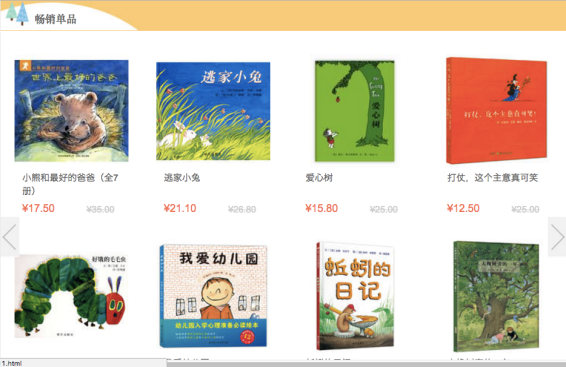
I am monitoring this progress and will report back for those interested in following this topic.  But, right out of the bag, I’d like to point out that the number of translated books for children in China has always been huge and overpowering.  Look at this screenshot of the top paperback picture book bestsellers on their largest online children’s bookstore: 2 from the Netherland, 4 from the United States, and 2 from France.  Not a single title is by Chinese authors or illustrators.

Screen Shot 2017-03-14 at 10.26.33 AM

Compare this to the top selling picture books on Amazon in the U.S. (There is no such category, only best selling children’s books.)  There are eight picture books in the first twenty titles which are mostly Harry Potter books: First 100 Words by Roger Priddy, The Going-To-Bed Book by Sandra Boynton, The Wonderful Things… by Emily Winfield Martin, Giraffes Can’t Dance by Giles Andreae, The Giving Tree by Shel Silverstein, Oh, The Places You’ll Go! by Dr. Seuss, Richard Scarry’s The Gingerbread Man (Little Golden Book) by Nancy Nolte (Author), Richard Scarry (Illustrator), and Goodnight Moon by Margaret Wise Brown.  All of them are published in the U.S., by U.S. authors and illustrators.  In fact, it has always been rare for foreign, translated work for children to thrive in the U.S. marketplace.

So, I imagine that the need for #OWNVOICE is real and urgent in China.

There is a reason I used this hashtag since I saw that someone invented this other hashtag on Facebook to stress that China Need Diverse Books: #CNDB (modeling after the #WNDB, We Need Diverse Books hashtag) as if the Chinese market is flushed with nothing BUT Chinese creators’ works.  The reality is quite the opposite.

Let’s truly examine the full ranges of the issues of picture book fields in these two countries before making judgements regarding the nature and influence of this potential “government mandate.”

The fact is: the U.S. has no government mandate, but a free market, that dictates what gets published and sold.  And what we have is usually an extremely U.S. or Western centric slate of titles year in and year out.  Any publisher is BRAVE enough to bring a couple of culturally unfamiliar, translated books into the U.S. market is praised, patted on the back, but rarely sees monetary success because of such courageous move.  (And why isn’t the Betchelder Award ever cites the Translator along with the Publisher.  Or for that matter, why aren’t translators’ names always prominently placed on the cover or title pages? That’s another whole blog post to come.)

As some of you know already, I am working with Candied Plums, a new children’s book imprint, to bring contemporary Chinese books to the U.S. There is no mandate from anyone or anywhere, except for the publisher’s and my desire to bring more cultural understanding and accessibility to the U.S. readers.  These picture books, in my opinion, do not promote the “Chinese/Communist Dogma,” nor do they convey any specific ideology except for displaying all ways that we can be human.  These books should be as popular in China as all the imported books.  So, perhaps, just perhaps, the publishers who have been working hard at publishing their #OWNVOICES would have a better chance at reaching their #OWNREADERS with this new, drastic mandate from the Government?


3 Comments

Filed under Field Reports, Views

Chinese/English Bilingual Books from Candied Plums

It’s FINALLY happening!!  So excited to report that the first group of books (20 titles) from Candied Plums, an imprint of Paper Republic, located in Seattle and Beijing, are finally available in the U.S. marketplace.

You can purchase the titles through Amazon or Baker and Taylor (and hopefully more venues in the immediate future.)

I have proudly served as Candied Plums consultant for the last year and a half and am impressed by the diligence and vision of those who venture into this new territory with me.  Manager Richard Li (Li Yun), editorial and rights coordinator Lisa Li (Li Xiaocui,) and editor Nancy Zhang (Zhang Tong) have poured their heart and soul into bringing the best contemporary children’s picture books to American readers: both Mandarin Learners and non-Chinese readers.  Some titles are available in both English and Bilingual Chinese (with English translation at the back of each book) versions while some are only available in Bilingual Chinese version.

Kirkus has reviewed some of titles and it seems that the reviewers all adore the stories and illustrations but worry about the fact that the English translation of the bilingual version does not appear along side the Chinese text.  This is a deliberate choice by the editorial team.  We want to present the books as close to their original version as possible while still giving the English readers a completely clear sense of what each page conveys.  It is a bold and risky choice — but perhaps it is also a chance for readers of all ages to get excited about something new and groundbreaking.  The company’s budding website will include companion audio recordings of each title.  I can see a fun library program where the librarian can play the audio version, stopping to translate each page with the provided English text, and give the young audience the pleasure of the storyline, the illustrations, and hearing an unfamiliar but widely used language in the world.

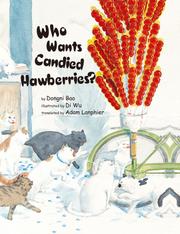
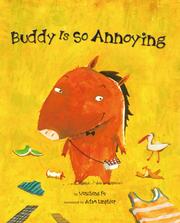
To give a bit of a taste of what the books are like, here are two titles and links to their reviews by Kirkus.

candiedhawberries

Who Wants Candied Hawberries?

buddyannoying

Buddy is So Annoying

Candied Plums’ Winter 2016/2017 Catalog also offers detailed information, description, and language learning levels.

Please also visit the Candied Plums’ Website.  Spread the word and give us feedback so we can continue bringing the best of Chinese children’s books to American young readers, schools, libraries, and families.

4 Comments

Filed under Book Notes

The Book of Dust Trilogy – Philip Pullman. I’m freaking out!

I kind of knew about this upcoming fantasy for a while but didn’t realize that it’s not just ONE book, but a TRILOGY.  Woot!

Can’t wait to have new words, new phrases, new characters, new magical experiences and new emotional responses to Pullman’s creation.  The world is a richer place because it contains His Dark Materials and the wisdom of Philip Pullman!

Read the Guardian article here:

Philip Pullman unveils epic fantasy trilogy The Book of Dust

willandlyraschair

2 Comments

Filed under Book Notes

Nameless City by Hicks – RWW Review

I’d like to draw attention to this thoughtful review of Erin Hicks’ graphic novel Nameless City over at Reading While White blog, I could not bring myself to reading most of the book, because of my own strong emotional (mostly adverse) reaction the raised concerns explored by Angie Manfredi in her review.  I did not speak up about this title because I strongly believe that one cannot critique a book without reading the book in its entirety and closely examining its many components.  (I felt the same about Ryan Gaudin’s The Walled City and Richelle Mead’s Soundless, both “inspired” and “loosely based” on an exoticized old China without the authors’ true understanding of the very real, and very much “living” culture or paying tribute to the long established literary tradition in this particular country.)


Leave a comment

Filed under Book Notes, Field Reports, Views

Extreme Vetting

I woke this morning and looked out the window.  I saw three flying cars and two tooth fairies. I closed the blinds and SHRIEKED!  Suddenly one of the tooth fairies busted through my window and grabbed one of my teeth.  She pulled it straight out of my mouth, blood gushing, and then my house turned into a cat.

At least I made 10 bucks!

I used the money to buy another cat.  It was green and I named it Bob.  Then, with my leftover money, I bought a unicorn. The cars were still coming at one of my cats (my house!) Suddenly, my cat (the house) collapsed and it fell on me!

My unicorn bought ice cream and pizza for us so we can come back to life.  (Cause it’s yummy.)  When we were revived, we started to pass gas, used the bathroom, and barfed everywhere.  Then the ice cream and pizza came to life and said, “What’s your favorite color?”  Then we ate the cat and the unicorn.  

Next, we had a funeral for the cat and the unicorn.  It was a very sad and depressing ceremony.

Can you guess what my name is?  (Hint: DJT)

(This is an extremely silly story made up by 4th grade students as part of a “Search Engine” experiment.)

Leave a comment

Filed under Book Notes

An Average Day

This morning I woke up and looked out the window. It was snowing like crazy! Mayor Miranda decided that it would be a snow day. All the kids who attend schools were excited that it was a snow day. Then all of a sudden, a giant monster ate Mayor Miranda!!! The monster stomped around causing fear and destruction.

Everyone stayed inside all day because of the monster. Some kids could see the monster stomping around the city. The monster burped and destroyed most of the houses. Then, Bob the Builder the Assassin killed the monster with a bomb. Even though he killed the monster, he also destroyed the city with the bomb.

Then, a mutant underwear ate the bomb. But there was another assassin and the two assassins tried to kill the mutant underwear. Bob the Builder called the Pink Fluffy Unicorn to help. But Dumbledore was so mad that he started shouting the elder curse but without saying all the “beeeeeeeeeps.”

A new assassin, the Poop Assassin, came and killed the Pink Fluffy Unicorn and it called for all the mutant fingernails to kill every other underwear and toxic poop. The wizard guy trapped the people into the Underworld and killed all the people and then killed himself.

But then, since the monster that ate Mayor Miranda didn’t chew her but only swallowed her, so when the monster died, Mayor Miranda survived.

That was a Nasty Dream!

(This is a 4th grade class exercise for Search Engine efficiency, strategy, and reliability.)

Leave a comment

Filed under Book Notes

The Odyssey Experience!

This past year, I had the extreme pleasure of serving on the Odyssey Award Committee for the best audiobook produced for children and/or young adults.

The following are actual numbers of time spent by me on this Listening Odyssey – including unfinished listening and also re-listening, not including note-taking or review writing and posting on the private conversation online bulletin board.

Minutes Listened: 40000
Hours Listened: 667
Days (24 hours) Listened: 27.8
Weeks (24 hours/7 days) Listened: 4
Months (24 hours/7 days) Listened: 0.9
Work Days (8 hours) Listened: 83.4
Work Weeks (8 hours/5 days) Listened: 17
Work Months (8 hours/5 days) Listened: 4

So it is with great pleasure and relief that we unveiled our selection on January 23rd. For more detailed information, please check out the official website.  I love every single one of these titles TO PIECES!  Each does something magical to enhance the already wonderful original text.  All four deserve to be listened to and be read.  I also love how we have different age brackets represented — and an outstanding Graphic Novel adaptation in the midst!

Anna and the Swallow Man written by Gavriel Savit, narrated by Allan Corduner, from Listening Library, won the Gold medal.

The three honored titles are:

Ghost written by Jason Reynolds, narrated by Guy Lockard and produced by Simon and Schuster Audio.

Dream On, Amber written by Emma Shevah, narrated by Laura Kirman and produced by Recorded Books.

Nimona written by Noelle Stevenson, narrated by Rebecca Soler, Jonathan Davis, Marc Thompson, January LaVoy, Natalie Gold, Peter Bradbury, and David Pittu, and produced by HarperAudio.


Leave a comment

Filed under Field Reports

Jesus and the Passed Gas

This morning, I woke up and looked out the window. It was pouring rain.  My neighbor was practically swimming.  My eyes wandered around my backyard when they landed on something shiny.

I put my raincoat on and went outside to check it out.  It was this weird piece of rock.  I picked it up and something strange happened.  Jake Paul came by, surfing somehow in the air.  Then magically, Madeleine G. flew in the air and dabbed, whipped, and nae-nae’ed. She fell and got run over by a car.

She ran!  Something dropped out of her pocket: A POTION!  I ran to it and picked it up. It wasn’t marked poison, so I took a sip.  Two things happened: first, my eyesight got really good, and then I fell through a trapdoor!  I woke up and Jake Paul said to me, “I am Jesus in disguise.”  Then he disappeared and a cross took his place.  

I passed gas and a bomb fell from the sky to blow me up.  At the last second of my life, I thought, “How could this happen to me?”

THE END

(A story composed as part of an internet/information literacy unit by my 4th grade students.)

2 Comments

Filed under Book Notes

Savage Meme Bird

This morning, I woke up and looked out my window.  I saw a bird that flew into my window.  There was a big crash and it slipped down the window pane slowly. The bird yelled at me, “You’re NOT MY DAD!”  I was shocked that the bird could speak!

Then the bird said to me, “Hey, I’m hungry; can you get me a block of cheese?”  I replied, “But you said I’m not your dad so why should I get you a block of cheese?”  The bird said, “You’re mean,” and started making an annoying wailing sound that broke the window!

The next thing I saw was that he called a giant gorilla named Harambe.

The next morning, I woke up my mom and I walked into the window and told my mom that I want a block of cheese. But she made me pancakes instead.  I walked down to the kitchen but the bird was following me asking for a block of cheese for a second time!  The gorilla Harambe was following the bird even though Harambe was 150 times larger than the bird.  The bird stole the cheese and said, “Cash me ousside, how ‘bout dat?”

I was confused from what the bird said.  My mom was confused THE WHOLE TIME!  Both of us almost fainted.

Suddenly I realized that the bird was totally an illuminati and I gave him some fresh-avocado.

(Made up story in a ROUND during Library Class by my 4th grade students.)


Leave a comment

Filed under Book Notes

A Commitment to Social Justices and Compassion

“When the going gets tough, the tough gets going!” This is the time when all of us working with children, children’s books, and education must toughen up and keep on going!

It is heartening to see that hundreds of signatures by children’s book creators have been collected at The Brown Book Shelf for A Declaration in Support of Children, and that a live version of this document that allows for more signatures and support can be found on their Facebook page.

Today, I publicly echo my support for all the sentiments expressed in this document, adding here my continuing commitment as an educator, a school librarian, and a children’s literature advocate that:

I will read widely works created by a diverse group of writers and illustrators that both reflect authentic lived experiences of today’s children and offer genuine opportunities to understand and empathize with experiences unfamiliar to their own.

I will constantly highlight and promote these titles directly to my students and their families and also on social media in an effort to strengthen the innate capability of hope, courage, and compassion to bring about true social justices via the power of literature.

I will create curricula and take advantage of teachable moments both in the classroom, during casual interactions, and on social media to combat the ever-growing threat of Untruth-Telling in the digital and mass media sphere.

I will model my commitment to social justices and compassion by addressing injustices intentionally, openly, and truthfully in the classroom, during casual interactions, and on social media.

Fellow librarians, educators, and children’s literature champions, join me in our work together for a better and brighter future!

5 Comments

Filed under Book Notes

Doctor Strange, Whitewashing, and Missed Opportunities

Whitewashing has been understood to mean film/tv producers casting white actors to portray minority characters — especially Asian American roles.

Doctor Strange, a highly entertaining and well reviewed new movie in the Marvel Cinematic Universe, stirred up heated discussion earlier this year over its casting of Tilda Swinton, a white actress to play The Ancient One, an “Asian” character from the comic books series.  Given the exaggerated, stereotypical, and exoticized portrayal of the original The Ancient One, it is important that the character undergoes modification and updating to reflect more contemporary and progressed mindset.

However, Marvel definitely did not hit the mark this time.

doctorstrangeposterThe Marvel Studio, a superpower in the entertainment business these days, could have easily corrected the issues from the original comics (like they did with Wong’s character) to create a respectable, mysterious, powerful, and also flawed character.  The Stuio would have then become a strong leader in providing Asian American actors better opportunities. Instead, they went with a casting choice that, after viewing the movie, I found completely unnecessary.  The Ancient One stands mostly still to deliver lines in slightly archaic language and manners.  I do believe that most working actors would have been able to give a solid performance given the script.  Having one line stating, “Oh, she’s Celtic” and yet still set most of the movie in Asia (Kathmandu and Hong Kong) with much of the “training” in some composite Asian Martial Arts style is completely inadequate in their attempts to combat the original stereotypical rendition (as a statement defending the casting choice from the movie’s creative team) of The Ancient One.
I believe that most of the people (I imagined a mix of White and no-White folks) working on this movie did not mean to actively marginalize Asian American actors with any sort of ill intent. However, in their decision (casual or deliberate) to not cast an Asian American actor or actress in this role, they perpetuate the systemic oppressive practice of taking away opportunities from working Asian/Asian American actors and thus effectively further the marginalization of such group.

What a shame! What a missed opportunity!

Here are some other articles circulating online that just came out after the movie’s release:

‘Doctor Strange’ is a really fun, whitewashed ride! by Gene Park, from The Washington Post.

Doctor Strange ‘whitewashing’ row resurfaces with new criticism of Swinton casting by Alan Evans, from The Guardian.

‘Doctor Strange’ Director Owns Up to Whitewashing Controversy by Jen Yamato, from The Daily Beast. 


Leave a comment

Filed under Views

16th Day of Asian Pacific American Heritage Month

This post, meant to be published on May 16th, never got posted on the 16th Day of APA Heritage Month.  I have since read (listened to) the book and edited slightly my responses to Shliesman’s review.  Since this is a book eligible for Odyssey Award and I am currently serving on the committee, I am not going to discuss the quality of the writing, nor the technical merits/flaws, etc. of the recording.

This post is about a bigger issue, with the review as a springboard.

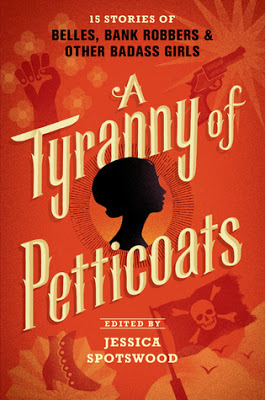
tyranny of petticoatsMegan Schliesman, in her Reviewing While White: A Tyranny of Petticoats, points out that there are fifteen stories in this short story collection and eight of the stories feature characters of color and one of them is about a Chinese American.

The more than a dozen contributors include four women of color: three of them are of Asian Pacific heritage. Marie Lu wrote a story about an Inuit girl in Alaska. Caroline Tung Richmond and Y.S. Lee both wrote stories about white protagonists and the one story about a Chinese American girl is written by a white author.

This is not surprising since Asian American children’s and YA authors have not been known to write only about Asian American experiences. Marie Lu’s Legend and the Young Elites trilogies all feature predominantly non-Asian characters. And both Y.S. Lee and Caroline Tung Richmond write about European girls.

Schliesman also pointed out that the one story featuring a Chinese American character portrays a girl who can see ghosts and commune with spirits.  (And several other stories featuring POC characters also include ghosts or spirits.)  She wrote,

Surely there are plenty of “badass girls” who can be imagined throughout and across U.S. history and authentically grounded in a variety of cultures without resorting to the fantastic. What am I to make of these stories? Are they grounded in any authentic cultural beliefs, or simply spun from their authors’ imaginations?

I’d like to think that this is a true question and that perhaps either the authors or cultural experts might be able to offer a satisfactory answer.  However, this could also be an accusation: perhaps Schliesman already decided that the authors have not grounded their stories in authentic cultural beliefs and by “resorting to the fantastic,” they have either exoticized the cultures or rendered them “backwards.”

The only thing I can offer here is based on my own singular experience as a Chinese girl growing up in Taiwan.  And from there, perhaps readers of A Tyranny of Petticoats can make up their own minds about whether this Chinese American story’s allusion to ghosts/spirits seems authentic.

Re-reading part of Maxine Hong Kingston’s wonderful memoir The Woman Warrior: Memoirs of a Girlhood Among Ghosts, I was reminded how my own girlhood in Taiwan was tightly woven with the beliefs in the spiritual world: my mother had lucid dreams and could tell us about immediate future events with quite a bit of accuracy; my father’s soul was raised to Heaven by 49 days of continuous Buddhist monks’ chanting in our house; fortune-tellers are consulted by most people to find the best day to open a business, to have a wedding, and the best match for one’s daughter or son; the many offerings at various temples from parents to secure their children’s high marks on the college entrance exam… these are things we routinely did (and most likely still do.)  As recently as just a couple of years ago, after a really frightening nightmare when we stayed in a hotel in central Taiwan, I asked my older sister, who sometimes serves as an exorcist to “clean houses (eject ghosts)” for her friends and clients, to perform a ritual involving clean water and a bowl of beans.  I slept soundly after that ritual. I definitely have a strong sense of pre-destined fate and still clench my fists in a particular pattern to ward off evil elements when passing a cemetery or encountering a funeral procession.  (Actually, an upcoming book written by a debut Taiwanese American author will explore Taiwan “ghost culture” deeply, and authentically.)

Will I take offense if someone out of my culture takes these elements and insert them clumsily and stridently into a tale without truly understanding where all these beliefs and sensibilities came from? Probably.  I imagine that it is not easy for an “outsider” to grasp or present accurately my strong fear of ghosts or my sense of comfort when smelling incense – both have roots in my own self and also my connection to the tradition passed down through many thousands of years.  This probably explains my inability to finish a well received book such as The Walled City by Ryan Graudin — I simply couldn’t get past her descriptions of the Chinese Constellations and how they are used in her tale and found her supposedly in-depth research, from afar without actually living through or experiencing the culture, lacking. This is also perhaps why I have yet to be able to read past the first segment of The Nameless City by Faith Erin Hicks — when the location in this Graphic Novel is so glaringly a superficial copy of a Chinese traditional city.

That said, is including ghosts/spirits in a story about a Chinese American girl automatically the mark of “exoticism” or “keeping the culture in the backwater days”?  I’d say no — not automatically at all.  It all depends on how the tale is told and the world is built and whether there is a true understanding of from where such elements came.  Just because I, a 50 something Chinese/Taiwanese woman feels a certain way about a text featuring “my culture” does not mean that mine is THE way or THE ONLY way that such text would be or should be viewed by other Chinese/Taiwanese or Chinese/Taiwanese American readers.

I hope that we can all accept that, since People are complex and Cultures and Histories are complex, Books about People and Cultures the Discussions about such Books are also unavoidably complex. We do have to keep digging and thinking and sometimes even changing our minds.

4 Comments

Filed under Views

Salla Simukka, Finnish Author

At a small event hosted by the Consul General from Finland, introducing best-selling author Salla Simukka from Finland, I learned a little about Nordic Noir and Finnish Weird.

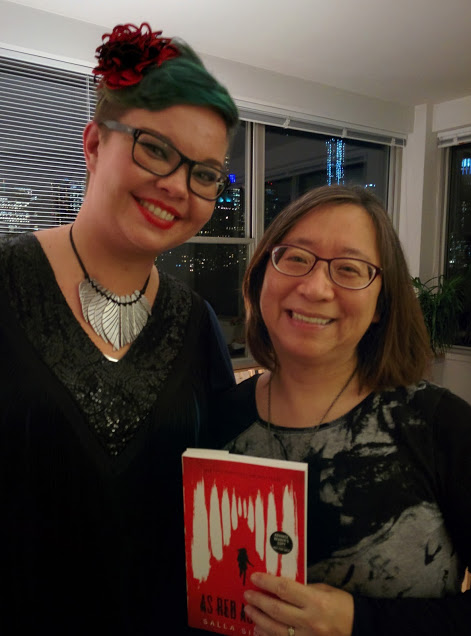
Simukka’s takes the lines from Snow White as the three titles of the trilogy: As Red as Blood, As White as Snow, and As Black as Ebony, but this is not a fairytale retelling or fantasy.  Rather they are gritty, dark, and intense crime novels for teens.

I also learned that in Finnish, the third person pronoun has no gender differentiation, so a reader of the Finnish original would have little clue as to the gender of the love interest of the main character.  (And in book 2, the full identity is revealed and it is probably going to be a surprise for most readers!)

These books’ English editions have been available in the States since 2013 but now are getting a re-release (probably some editorial revision as well) starting January 2017 by Random House/Crown Books for Young Readers.

Salla had a conversation with her U.S. editor Phoebe Yeh (WNDB) discussing her writing style and views. She’s eloquent and full of energy.

Hopefully we will see more and more translated contemporary work from other countries to enrich young people’s understanding of the world and empower them to be true global citizens.

img_20161101_205125

Leave a comment

Filed under Field Reports

Make Not The Past Rosy, Nor The Present Bleak

On September 30th, I had the honor to present, with my fellow judges Joanna Rudge Long and Besty Bird, the 2016 Boston-Globe Horn Book Awards to children’s book creators. Unlike many other awards, we were not given a set of criteria to base our reading and evaluation on.   It was simply, look for excellent books in Picture Books, Fiction and Poetry, and Nonfiction category.

One award title for each category and up to two honored titles.  The author and illustrator both receive the award in cases of an illustrated title.  This year’s titles were announced in late May.  You can see the program description and watch the May announcement on the Horn Book site.

On October 1st, I attended the Horn Book Colloquium at Simmons College focusing on a theme inspired by the titles we chose, with talks and panel discussions based by the winning creators.  This year’s theme was Out of the Box — because, boy, did we have a hard time figuring out where to place some of our favorite books of the year!

So, the picture book winner, Jazz Day, is also poetry, and can arguably be Nonfiction, and one of the Nonfiction honored titles, Voice of Freedom, is a picture book of verses, too.   There are also other out of the box endeavors by the creators.

As part of the program for the day, I had the honor to interview Ekua Holmes and Carole Boston Weatherford, illustrator and author, of Voice of Freedom: Fannie Lou Hamer: The Spirit of the Civil Rights Movement.

We discussed many topics about the book and about their craft and when I asked both of them what they would like to see published more for children, these are their answers – and I paraphrase grossly here:

Weatherford: I’d like to see more lesser known people of color movers and shakers profiled for children.  We probably don’t need one more book on Martin Luther King Junior or Harriet Tubman; but we definitely need to tell stories of others who paved the roads and blazed the trails for us through extremely difficult times and against all odds.

Holmes: I’d like to see more books about just the daily miracles of any child of color — their lived experiences and they can be quite bright and fulfilling, full of art, music, beauty, and happiness.  We need to tell these stories!

I agree with both of them.  Let’s have a fuller exploration of the past; don’t make it rosy, and don’t hide the ugly spots.  But let’s also fully represent the present.  There are definitely struggles and dark moments, but we must also celebrate and acknowledge the love and support that many children experience in their own families and communities.

And let’s make sure that multiple and differed perspectives and voices from the seemingly homogeneous marginalized communities are heard and honored.  There is room for the representation from the entire spectrum of experiences and values.

Leave a comment

Filed under Views