Thinking About (and Defending) SLJ’s Battle of the Kids’ Books, Part 2 of 3

Part 2: Privacy vs. Transparency

“Committee discussions are done privately, and there is a reason for that: it allows committee members to be open and honest in their opinions. The fact that BoB is done in an open forum suggests to me that this is more about “the show” and less about the books.” and “BoB strikes me as a completely rigged process from the beginning, since the initial group of finalists is pre-selected by a few people, and then each leg of the selection process is the decision on ONE person, who can’t exactly claim to… have no conflict of interest.” — quoted from facebook comment with permission

This is actually an age-old debate: what is better – privacy or transparency? I say that either one is fine. Each serves a different purpose. Each potentially have its strengths and weaknesses. Taking my own experiences as examples again: I served on the 2002 Newbery and I served on the 2007-2008 Notables Committee. The former follows the jury model where all discussion and decisions and process are kept as top secrets. This, on the one hand, allows for everyone to openly express their opinions and on the other hand, also allows for those who are less scrupulous to be less well-prepared. My personal experience is that EVERYONE on my committee worked hard and read closely and prepared extremely well and were all courteous and professional at the Newbery discussion table. However, this does not mean that some Committees or some Committee members, since they are not on public view, might not feel more relaxed and less mindful of their opinions or how they express their opinions.

The transparent process of our judging decisions, on the other hand, is much like my experience on the Notables. We sat around tables, with microphones, and discussed books for an open audience. People came and went, and once in a while, we even received rebuttals from the editors themselves. I, for one, did not hold back my opinions, but I made damn sure that I had my evidences lined up and chose my phrasing carefully, either to praise or to criticize a book at hand. I believe each book from the BoB bracket deserves this kind of transparent and thoughtful analysis and lucky for us, all our 30 judges in the last two years (and the 15 more who are helping us out this year) do show their respect for every book on hand and do make sure that it’s not just about “the show” but really about the quality of these amazing books! (Of course, being writers themselves, it is not easy to just give a bland write-up and we savor the insightful, sometimes humorous, and always creative ways these judgments are delivered to us.)

And since there is really no prize that anyone gets at the end of the Battle and that author judges make clear whether they are friends with the authors of books they are judging in their write-ups, I simply don’t worry about the “conflict of interest” issue.
‎

Leave a comment

Filed under Field Reports, Views

Thinking About (and Defending) SLJ’s Battle of the Kids’ Books – Part 3 of 3

Author Judges vs. Librarian/Teacher/Child Judges

“I have never, ever served on an award committee that ends up with two books I had no role in selecting from the beginning being pitted against each other, so that one is the winner and one is the loser.” – “There’s something about idea of asking the authors themselves to engage in this sort of contest makes me cringe. I think it’s bad enough that they are asked to serve on the National Book Award committee, but at least their discussions there are confidential. And there is a reason for that.” — quoted from facebook comment with permission

Now I think further on this point, I disagree strongly with the sentiment that it is somehow distasteful to ask authors as judges of books, as if it is a cannibalistic act. Authors, hopefully, do understand the process of writing and the editorial process better than some of the librarians/teachers/others who serve on award committees. I believe that they also understand the difference between judging a book and judging an author. A book is an object of art — once it is published, no matter how much it is a labor of love and spirit, it is out of the hand of the author. To think and write about the book is not to think and write about the author. We are not asking our author judges to defame or praise their colleagues and friends in the field. So, I don’t see why authors cannot be asked to examine books critically. Aren’t they also avid readers and thoughtful thinkers of children’s and YA books?

Indeed, many awards are juried and given out by industry insiders, such as the Golden Kite Awards (Society of Children’s Book Writers and Illustrators), The Oscars, and the TONY. BoB, of course, differs from these three awards since it is not decided by votes but by one person’s opinions each step of the way. And I do see how it can be viewed as brutal and arbitrary, and how some people might find this an unfair process. I don’t really have words or thoughts to defend this point.

IT IS unfair, I agree — but I want to ask and maybe some of you can shed light on this: what IS fair, then?

1 Comment

Filed under Uncategorized

Walls Within Walls

Walls Within Wallsby Maureen Sherry

This fun mystery, full of riddles and puzzles, is a perfect fit for my students who go to school in New York City’s upper east side (where the children in the book do) and who are familiar with most of the landmarks referenced in the book and yet will be intrigued to know more about the hidden history of them. Do I wish that the sentence-level writing a bit stronger and some of the more far-fetched scenarios handled more skillfully, yes. However, I thoroughly enjoyed following the clues and finally to see the big payback!

It also is refreshing to have a book where three school-aged children are collaborating with a grown up (the over-70 Eloise) who has much to offer, such as her own living knowledge of NYC history.

The major “gripe” I have about this book is in Sherry’s decision of featuring racially homogeneous main and supporting characters – Brid (the 9-year-old sister) is described as a “willowy, wiry blond” (with Patrick, the 6-year-old brother, having electric-blue eyes). Their next-door neighbor, Lukas Williamson talks to the main characters while “brushing back his blond hair”… and then, a very minor, but only school-friend character of CJ (the 12-year-old brother,) is described as having “thick blond hair that shrouded his blue eyes.” Or, perhaps my issue is the “mindlessness” or laziness of using stock and cliched phrases when one creates and describes any character. I work in a pretty high-profiled NYC upper east side private school, and I KNOW for a fact that well-to-do families in 2011 come in all colors and shades and children do not confine themselves in interacting with same-color/race peers any more. After listening to and reading her article Straight Talk on Race: Challenging the Stereotypes in Kids’ Books, I am hyper aware of such details.

Leave a comment

Filed under Uncategorized

Start Reading for the SLJ BoB Now!!!

Hey, world — for those who are passionate about children’s books, here is another chance to read, think, talk, debate, and speculate about the top 2011 books for young readers.  Congratulations to the sixteen contenders of School Library Journal’s Battle of the Kids’ Books, 2011 — which will take place in mid- to late- March.

  • AS EASY AS FALLING OFF THE FACE OF THE EARTH by Lynn Rae Perkins
  • THE CARDTURNER by Louis Sachar
  • A CONSPIRACY OF KINGS by Megan Whalen Turner
  • COUNTDOWN by Deborah Wiles
  • THE DREAMER by Pam Munoz Ryan
  • THE GOOD, THE BAD, AND THE BARBIE by Tanya Lee Stone
  • HEREVILLE: HOW MIRKA GOT HER SWORD by Barry Deutsch
  • KEEPER by Kathi Appelt
  • THE ODYSSEY by Gareth Hinds
  • ONE CRAZY SUMMER by Rita Williams-Garcia
  • THE RING OF SOLOMON by Jonathan Stroud
  • SUGAR CHANGED THE WORLD by Marc Aronson and Marina Budhos
  • A TALE DARK AND GRIMM by Adam Gidwitz
  • THEY CALLED THEMSELVES THE K.K.K. by Susan Campbell Bartoletti
  • TRASH by Andy Mulligan
  • WILL GRAYSON, WILL GRAYSON by John Green and David Levithan

Leave a comment

Filed under Field Reports

Never Let Me Go

Never Let Me Goby Kazuo Ishiguro

This Science Fiction reads like a lulling memoir, from a young woman’s view point, who had an almost idyllic boarding school / well-run orphanage experience growing up. The book is full of anecdotes about her friendships with two classmates and their somewhat odd and entwined past. Since I knew that the book is SciFi and there are enough hints and clues embedded in the incidents, I was never surprised by the way the story progresses.

Yes, like many readers, I was questioning “how is this possible?” and “how can they just take it and take it and no one rebels?” For me, that is what differentiates this alternative history/scifi from many other of genre that treats this topic: the young people who are inculcated since birth of their “uses” in the world would not question the system and would not want to organize anything remotely like a movement to gain rights for themselves. They donate, they care, and then they “complete.” For this, I greatly respect and admire the author.

Did I absolutely love the book? Not exactly, since it is perhaps too quiet and introspective, and the too minute examination of characters and their motivations is too “well done” (and thus dry and tough, not quite juicy and supple) to my taste. I wonder if this is told from Tommy’s point of view and how he might have acted if he had different encounters and friends at the “school.” That said, I believe this is definitely a great conversation starter and a worthwhile read.

2 Comments

Filed under Uncategorized

The Cardturner: A Novel about a King, a Queen, and a Joker

The Cardturner: A Novel about a King, a Queen, and a JokerBy Louis Sachar

I was extremely pleased with the first 3/4 of the book — liking the main characters, and especially the rich uncle who’s blind, extremely intelligent, and passionate about Bridge. Whose story is really the one to follow. I thought to myself: this is indeed a master storyteller at work. Then, there is a shift in the voice, the pacing, and the “genre” of the telling: from a highly believable and touching tale of inter-generational relationship, to the slightly draggy tale with a supernatural tint. The characters suddenly become less vivid, pawns of a not very satisfying conclusion of an otherwise very very strong book. I think this is due to the fact that the best part of the book is the interaction and the growing closeness of Alton and his blind uncle and once the uncle is no longer physically present, the story loses part of its glittering charm. I DID enjoy all the Bridge talks and strategies.

Leave a comment

Filed under Book Notes

Waiting for SLJ’s Battle of the Kids’ Books…

As my friend Monica blogged yesterday at Educating Alice, we are waiting for the official announcements of the 2011 Battle of the Kids’ Books. (Last year’s matches and decisions are still available for interested readers.)  The 16 contenders from 2010 have been sitting behind the curtain for more than a month now and the judges are all confirmed.  The books are being delivered to the judges.  They will be read, and considered carefully. And very soon, the decisions will come into our inboxes.  The excitement mounts on our end, eagerly waiting to share all these with you eventually!

Even though we’ve had to leave many many beloved 2010 books off of the finalists list, Monica (Edinger,) Jonathan (Hunt,) and I (Roxanne Feldman) also had the pleasure and freedom of considering a wide range of titles: genre-wise and age-wise, especially.  You will see graphic novels, speculative fictions, nonfiction titles, and realistic fictions, for both younger and older readers and originally published in America and overseas.  In our minds, they were and are all winners already, even though many of them did not make it on the recent Youth Literature Awards slate.

Hope you will seek out, buy, borrow, and read all of them and join in on the action by voting and by posting your comments, and by encouraging your young readers to do the same!

4 Comments

Filed under Field Reports

Pathfinder

Pathfinder (Serpent World, #1)by Orson Scott Card

I really can’t decide whether I enjoyed this book or totally couldn’t stand it. On the one hand, I LOVE the ideas and the weird (but almost plausible the way Card presents them) time/space travel ideas; on the other hand, the story moves at a snail’s pace and so much information gets repeated so many times after I already “GOT” the ideas and just wanted to see some action or some emotional exchanges.

Some reviewers claim that Pathfinder is like Ender’s Game. I cannot disagree more. I think, at most, it is like Xenocide and Children of the Mind: in their focusing on Card’s leaping scientific (but fantastic) complexities and strong political/social maneuvering discourses and also in that Card did not place as strong an emphasis on the impeccable pacing and climax-building as he did for both Ender’s Game and Ender’s Shadow.

1 Comment

Filed under Book Notes

Good Omens

Good Omensby Terry Pratchett and Neil Gaiman

This is just a total delight to read. I marked pages and wanted to record all the humorous metaphors and turn of phrases. Two ingenious literary minds worked seamlessly together to create something that I’d like to just flip to any random page in the future and get either a chuckle or be amazed again. This book makes me want to memorize quotes!

Leave a comment

Filed under Book Notes

A Long Walk to Water

A Long Walk to Water: Based on a True Storyby Linda Sue Park

This is a quiet book; it is also an explosive and extremely powerful book. For such a short book, it really packs a huge punch — one that lingers in my mind and makes me want to know more, find out more, and help out if I can!

It is a quiet book because Park reports and does not sensationalize. At times, in the beginning of Salva’s journey, I felt a slight disconnect: I did not feel that his forced exile from his village or even the loss of his new friend are scenes that moved me emotionally. As I kept reading, my mind and my heart mingled: the words that are matter-of-facts also became matter-of-heart and matter-of-wisdom. The portion of the journey involving Salva’s uncle, his guidance, and his death, is the center piece of the tale. I even feel that I’ve learned a precious lesson from his mantra of taking one step at a time, solving one problem at a time — to conquer seemingly insurmountable obstacles or to achieve seemingly impossible goals.

It is a powerful book because Park manages to tell a harrowing tale to a young audience that will surely stimulate empathy and activism.

2 Comments

Filed under Book Notes

The Lost Hero

The Lost Hero (The Heroes of Olympus, #1)by Rick Riordan

Of course, my view on this book is heavily influenced by my students’ reactions: a LOT of enthusiasm from the 4th – 7th grade crowd. Many of them have been waiting impatiently for the launching of this series for a LONG time. (Yes, it’s only a year and a half — but to the current sixth graders, the Last Olympian came out when they were mere babies: in 4th grade!) (And, for my 9th grade students, they read the last of the Percy Jackson when they were, *gasp,* still in 7th grade!)

Like these young readers, I really enjoyed the book. Many of them think that it is the strongest first book by Riordan; and although some of them are a bit sad that the book is not as humorous (what, no funny chapter headings?) as The Lightning Thief, they feel that the sheer inventiveness and the coolness of the heroes and the battle scenes more than made up for the slight lack of levity.

We all agree that Leo is the most interesting and cool character to read about and can’t wait to see their next adventures: where traditional and Riordan-made story lines, characters old and new, and the worlds of Gods and Humans will all converge.

Are there some flaws in this book? Sure. It would have been great to me if Riordan does not repeat the same information more than once in several places and did a bit self-editing to tighten up the pacing a bit. (So instead of more than 550 pages, perhaps a 400+ pages would have made the book better… for me.) However, for the eager young readers who wanted so badly to read more adventures inspired by Greek and Roman Myths, I imagine, the MORE stuff the better! So, in the end, I say, Bravo, Mr. Riordan, for staying true to what you set out to do: writing fun and gripping adventurous stories for young readers and making the publication and reading of your books a huge excitement in their life.

Leave a comment

Filed under Book Notes

As Easy as Falling Off the Face of the Earth

As Easy as Falling Off the Face of the EarthI will write more about this book later — just want to mark the space for it here. It’s a REALLY unusual book. I kept wavering between LOVING it and WONDERING if it is actually a children’s book. Also wavering between WANTING more (because of the incredibly cool ways Perkins writes and tells the story) and DREADING more (because there are simply TOO many things that go wrong… too many Uh-Oh moments that it sometimes grated on me…)

Must think MORE about this one. But, finally finishing it, I found the ending satisfying and the book so so wise! My current thought is that this book deserves to be shared and many young readers deserve to be aware of this book!

Leave a comment

Filed under Book Notes

Clockwork Angel

Clockwork Angel (The Infernal Devices, Book 1)by Cassandra Clare

I really really enjoyed the book. What’s not to like? An entertaining combination of Angel/Demon/Warlock/Vampire/Automaton/Romance (torturous)/Action/Gore! And I’m so into Steampunk right now so this feeds into my current passion beautifully.   I didn’t read the trilogy that came out in the past few years by Clare so couldn’t compare to see if this prequel is better or worse. I also don’t know whether the author, as some critics of this book have pointed out, keeps recycling the same plot pattern, characters, and relationships. For me, it feels fresh and full of earnest energy. I couldn’t put it down. Now, I have to wait for the next installments!

1 Comment

Filed under Book Notes

Hereville: How Mirka Got Her Sword

Hereville: How Mirka Got Her Swordby Barry Deutsch

There is so much to like about this book: the humorous and very realistic treatment of the family dynamics between stepmother and children, between siblings, and between neighbors; the expressiveness of the faces and the bodies; the magical realistic setting and all the references of Orthodox Jewish traditions; and the pure energy and joy of knowing a new and plucky girl character. And yet, since I liked it so much from page 1, and built up such high expectations of wanting a truly enlightening ending, the last portion of the book became a bit of a let down because of a somewhat rushed and unsatisfying wrap up.

Leave a comment

Filed under Book Notes

Yummy: The Last Days of a Southside Shorty

Yummy: The Last Days of a Southside Shortyby G. Neri

The topic and the actual event are so much more powerful than the book itself. I find the narrative voice (supposedly a fairy young child’s) unconvincing and slips into mere reporting for the majority of the tale. It does not really move me.

As to the graphic/art part of the book: I thought to myself, “Oh, the graphics quality will be improved, touched up, and finessed, and the face of the same character will be more consistently drawn so the readers won’t be confused… in the final book… ” … but then realized that I WAS reading the published book, not an ARC.  Slightly puzzled by my own less than lukewarm reception since it has received a starred review and high praises from several reviewers.  Someone, convince me!

1 Comment

Filed under Book Notes

The Ring of Solomon: A Bartimaeus Novel

The Ring of Solomon: A Bartimaeus Novelby Jonathan Stroud

I am giving it Five Stars because:

A. It gave me so much pleasure to re-acquaint with an old favorite, namely, the witty, boastful, and oftentimes powerful, but also self-deprecating and silly Bartimaeus. (A bit like Bruce Willies in Fifth Element.)
B. Stroud manages to present several different angles of the plot line and bring everything together in thrilling culminating sequences.
C. The three main characters: Barti, King Solomon, and Asmira, the young royal guard of the Queen of Sheba, each is layered and real and inspire admiration in very different ways.
D. And I believe that it is a book that many many young readers will find enjoyable….
… among many other reasons — cool magic, interesting twists in the plot, a tinge of melancholy that only a couple-of-thousand-year-old Djinni could experience, etc.

3 Comments

Filed under Book Notes

Nightshade

Nightshade (Nightshade, #1)by Andrea Cremer

The cover is pretty. Many people really like this but I simply found myself disconnected and aloof the entire time reading the story. It’s inventive at moments — the history and the societal structure of the “werewolves” clan are quite refreshing, and I can definitely see it being enjoyed by teens or even pre-teens. It’s just not a ground shifting kind of experience for me.

1 Comment

Filed under Book Notes

Sapphique

Sapphique (Incarceron, #2)by Catherine Fisher

Although I still file this title under sci-fi, there is little scientific explanation of what’s going on in this convoluted sequel to the highly compelling Incarceron. Instead, the Art Magicke seems to be the predominant force that moves the events forward in the story. The belief in Magic is understandable for those in the Prison, not that convincing when it leaks into the Realm, and feels almost lazy when used as plot solutions. Of course, I can make the leap in assumptions to explain how the mind can be transported by the Portal into an object inside the Prison, but I would rather prefer that such rationales are offered by the author.

Perhaps this is not a sci-fi series at all. I need to adjust my expectations.

Leave a comment

Filed under Uncategorized

Mockingjay Delivers!

Mockingjayby Suzanne Collins

The story of my obtaining the book first:

I was distraught when I realized that I would be vacationing on a cruise in Bermuda on the release day of Mockingjay. I searched the Internet and found a bookstore (The Bermuda Bookstore). I emailed them an order for the book. A week ago, they emailed me back and informed me that the book was already available in the store. But, of course, I couldn’t get the book until this past Wednesday when we docked. We docked in Hamilton. The bookstore is 3 blocks away and lovely! Due to the no-tax Bermudian law, I paid $18.00 for the book! (No surcharges for pre-order or overseas order.)

Since the moment I got the book, I carried it everywhere and tried to read as much as I could: at the beach, on the boat taking the family to dive and to the coral studded ocean floor, in the dining area when everyone else was lounging or eating their meals…. (And the book took a little dip in the wading pool when I slipped and fell into the shallow water – but banging my head against the hard tiled floor…)

Finally, before coming home, in the middle of the Atlantic Ocean, hundreds of miles south east of New York City, I finished the book last night. Here are just a brief summary of my reactions:

I truly appreciated how Collins carefully planned and fluidly executed this emotionally authentic conclusion of the trilogy. Loved the surprises and the turns of events. (Although, I definitely predicted the final event from quite a while back, I wonder if young readers who are less jaded would have seen it coming… I hope this comes to them as a true surprise and satisfyingly so!)

I was really afraid of a heightened romantic element hyped by the Team-Peeta/Team-Gale promotion that could potentially spoil the story, which, to me, is much more about how humans and humans with powers function in our society, and much less about just whom Katniss would wind up with! Collins weaves the love-triangle side-tale and the relationships into the thematic structure of narrative beautifully and I am completely pleased with how the events of these three characters unfold and end.

I only wish that there had been more interesting and inventive technologies and strategies that were so prominent and make for a more exciting SciFi read. But that is only a slight dissatisfaction from a SciFi junky.

Here are some other things I really loved about the book:

Those little word plays and allusions in the book: Like Coin’s name. She is the “other side of the same coin” as Snow. Or Katniss’s squadron is 451 and things BURN and she burns…

I thought the “real/not real” game is a very clever symbol for the whole trilogy: the dichotomy of what real life is and what is captured on screen and of what the leaders of District 13 says they are working toward and the reality of how they carry out their goals. And of course, it works so beautifully at the end when Katniss and Peeta chatted about their lives and life together.

This book, as many have stated, feels different than book 1 and 2, because it is a book of revelations, especially Katniss’s revelations about herself and her world. I like her as a character so much more in this installment. I’d say that Mockingjay delivers!

4 Comments

Filed under Book Notes

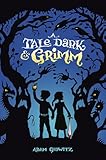
A Tale Dark and Grimm

A Tale Dark and Grimmby Adam Gidwitz

I really really enjoyed the journey into and out of the dark dark woods that is this book by a new comer of the Children’s books scene. To be honest, because I love and respect traditional fairy tales (mostly Grimms, Jacobs, with some Norse, Arabian Nights, and Russian tales thrown in) to such a degree, I get very suspicious and highly critical when it comes to authors playing with and retelling these tales.

I especially resent the ones that make light of these grim and dark and powerful tales and turn them into cutesy products.

That is not the case with Gidwitz’s offering. It is slated to be published in November and I simply can’t wait to report on it! The frame story, using Hansel and Greta, substituting them as protagonists in several Grimms fairy tales, works brilliantly. As the story progresses, the resemblance to the original versions of the tales is reduced: they are more and more fractured and eventually, you are offered a few original short tales by the current author — but the Faerie, unsettling, and dark tone of the fairy tales tradition remains. As the story follows less and less the constrain of the original tales, the readers who know these tales sense the strength of the two children, rebelling against a cage that tries to tie them down.

For readers who are not familiar with the original tales, they can still vividly experience the growth, physically, emotionally, and worldly of these two characters.

This is not a simple construct, stringing a bunch of fairy tales together, but a successful novel that has a lot to offer to its young readers.

I can’t wait to share the tales — the new and the old — with my students in the fall!

1 Comment

Filed under Book Notes