Paradoxes and His Dark Materials

I’ve been listening to The Golden Compass (audio book) and are reminded of one of the many reasons why I adored this trilogy: the brilliantly placed and worded paradoxes by Pullman.  As a quick example: (paraphrased here): “She’s afraid of him… and the thing she fears most is his kindness.”  (Lyra and John Farr). One of my students (now 17) wrote me upon reading my thought on this topic:

Let’s face it, that trilogy is in a very small league of “stories of the century.” Having not read them in years (I think I’d cry again if I did), I will venture to say that such paradox is what makes the three so arresting and breathtaking – a stunning universe that is both new and our own, with religious elements that are both familiar and yet twisted, and in the middle a people just like us but with souls on the outside. So his paradoxical writing is something of a window, a…what’s the word…lens, tunnel, mirror…(it’s late to be thinking)…through which the paradoxes shine even more brightly. And, since conflict is what readers read for, people absolutely love it, because the very writing is in conflict with itself and what it portrays.

Leave a comment

Filed under Views

Neil Gaiman and Co. in NYC

Neil Gaiman and six other authors who contributed to the STORIES: ALL NEW TALES spoke at a lively, humorous, and thoughtful panel discussion at Teachers College and I, along with a few high school students from the Science Fiction/Fantasy Cllub (SciFan as we call ourselves) had the pleasure of being entertained and at the same time gaining some insights into these interesting authors’ minds and their creative processes.

It was well worth the 2-hour wait (playing with my new laptop and new iPad with good WiFi connection in the building) and the two hour readings and Q&As.

The authors present were: Walter Mosley, Joe Hill, Kurt Andersen, Jeffrey Ford, Lawrence Block, Kat Howard, and Neil Gaiman.  Joe Hill acted as the moderator and did a fantastic job with his wit and deadpan humor.  Each of them read a few minutes from their stories and they all sounded quite intriguing — seems like this anthology collects quite a few different genre stories: sci-fi, fantasy, and horror were the ones we heard.  The authors discussed the state of the book world in light of “main stream” literature (those we’re MADE to read in schools?) and popular, genre fictions which, in some way, are leading the field in their popularity and success.

Gaiman stressed the importance of “page turning” writing — that you’re so hooked by a story well told, it doesn’t matter which genre it is; Mosley cautioned the audience to not generalize a generation’s or a perceived group’s experience by saying “we all….” because he believes that each individual has a dramatic struggle in life that does not have to have a War or an exterior pressure (such as racial discrimination) to lend itself to create and read great stories with dramatic arcs.

Kurt Andersen explained why the apocalyptic stories are in fashion by saying that the Baby Boomers generation is getting old and dying and if they are DYING, the world, of course, in their ego-centric mind, is DYING.. What else?  That got quite a hearty collective laugh from the audience.

I have not read the collection and only imagine that the tales are not meant for a child audience but some of the short stories might lend themselves to be shared in our Club come fall.

Leave a comment

Filed under Field Reports

Children’s Literature Circle (CLC)

I’ve been running a Faculty Children’s Literature Circle for, I guess, about 10 years here at Dalton.  The purpose of the Circle is simple: to enjoy books published for children and young adults, without a curricular agenda.  We meet once a month (give or take) during the school year and have read picture books, poetry, graphic novels, fiction and nonfiction.

Once in a while, an author or an editor would drop by and talk to us.  Last spring Wendy Lamb (editor for the Newbery winning title When You Reach Me) came and listened to our discussions and met with a few students about the book and this spring Rita William-Garcia and Rosemary Brosnan (author-editor duo for One Crazy Summer) visited with us and answered some of our queries and shared with us some of their insights and process.  Two other authors came to Dalton and spoke to the students and we also prepared ourselves by reading one book from each author: Katherine Paterson and Jacqueline Wilson.

There are about twenty of us who hold quite a mixture of roles: administrators, middle school classroom and English teachers, math teachers, preceptorial faculty, theater teachers, technology department staff, and librarians from lower and middle school.  We have lively discussion and really enjoy each other’s company.

I always wanted to keep a record of what we read and what we talk about during the meetings and now I am actually going to start simply by listing what we read this past academic year in the Circle.  We met six times this year and read novels of various genres.

The Day of the Pelican by Katherine Paterson

Kiki Strike: Inside the Shadow City by Kirsten Miller

Staying Fat for Sarah Byrnes by Chris Crutcher

A Wizard of Earthsea by Ursula le Guin

The Illustrated Mum by Jacqueline Wilson

One Crazy Summer by Rita William-Garcia

Leave a comment

Filed under Field Reports

Will Grayson, Will Grayson

by John Green and David Levithan

Both John Green and David Levithan are known for their witticism, and both also have created stories where things get out of hand, and the reality just seems larger than life/real — I often think of it as “ultra realism.”  And in Will Grayson, Will Grayson, you get a double dose of this over-the-top tone: Their nerds are just nerdier, their gay characters gayer, their jokes funnier, their sorrows more desperate, and their big finale of a High School Musical is so improbable that readers just have to suspend ALL disbelief (WILLINGLY) and simply enjoy the ride.

I enjoyed it for sure.  I laughed out loud many times — both are so good at coming up with amazingly intelligent and painfully truthful funny one-liners (or one-paragraphers.)

What intrigued me the whole way was how these two YA superstar authors collaborated.  Did they challenge each other with surprising scenarios or was it all planned out?  Am I right in assuming that one wrote the Gay Will Grayson part and the other the Straight Will Grayson part?  Who wrote which?  (I thought I got it down from the beginning but now I’m not so entirely sure!)

One of my high school students read the book (a big Levithan fan, didn’t know John Green and now became a fan, too) and did not love love it because it reminds this student too much of the REAL life drama that goes on around the group of friends.  It probably is painful.

No matter how ultra realistic this novel is, so much truth is dragged up from the bottom of a teenager’s heart that one cannot but admire the authors’ deep connection with their own inner teens and their abilities to capture all those feelings in words.

Leave a comment

Filed under Book Notes

Fairy Tales On My Mind

Starting yesterday, I am teaching an 8-week course for the Youth Literature (online) Certificate program on Fairy Tales. The course is called: Does the Shoe Fit: Fairy Tales as Children’s Literature. After just a couple of days, I can see that my students are well versed in this genre and can’t wait to start the meaty discussion with them once we start reading critically the tales and the theories.

If anyone has particularly great resources on line, please drop me a line in the comments area!

2 Comments

Filed under Uncategorized

Save New York Public Libraries

Petition to Save New York Public Libraries

This is reposted from a former student of mine who attends Stanford right now.  She would like me to spread the word and hopefully get enough people to sign the petition so that we can really SAVE the New York Public Library Systems from facing another budget cut:
New York City is facing (more) budget cuts. The city government is considering cutting funding for the public library system. Considering the state of education in New York (and in the country at large), squeezing public libraries is not the best way to save money — the societal cost is just too great.

Please sign this e-petition to reject budget cuts for, and closure of, public libraries in New York (even if you’re not a New Yorker):

http://dontclosethebook.nypl.org/action?hpfeature=1

Spread the word.

Leave a comment

Filed under Field Reports

Incarceron (Chapter 32 – Gasp and Tears)

by Catherine Fisher

This is indeed a book worthy of note, worthy of passion, and worthy of thought. It amazed me how I could only guess at the truth about Incarceron as I read and when ALL the truth is unveiled, there are still many many things I want to know and now am eager to read the next installment.

I really want to know more about each major character and really need to know how things are going to turn out for both the INside and the Outside. I even feel sorry for the Prison — the synthetic se…more This is indeed a book worthy of note, worthy of passion, and worthy of thought. It amazed me how I could only guess at the truth about Incarceron as I read and when ALL the truth is unveiled, there are still many many things I want to know and now am eager to read the next installment.

I really want to know more about each major character and really need to know how things are going to turn out for both the INside and the Outside. I even feel sorry for the Prison — the synthetic sentient being that can never escape itself. SOOOO good :) *sigh* *content*

The title of this post records my reaction to the revelation that’s hidden from the readers (although a lot of clues that made me think of this possibility and that Jared and Claudia already discovered some shocking evidence by then) for most of the book (34 chapters in all.)  Reading these passages (on pages 411 and 412 in the 2010 Dial HD edition) made me shudder and brought involuntary tears to my eyes.  Brilliant and horrifying and unfathomable… but so believable once you’ve lived through the book as its faithful reader.

Leave a comment

Filed under Book Notes

Alex Day Reads Twilight

A student of mine gave me the link to Alex Day (a 20-year-old Brit) reading and commenting on S. Meyer’s Twilight. I have become a fan (not of the book, but of Alex.)

Here’s the first video and you can find others (he’s read 14 chapters to date) on youtube. (Warning: curse words abound)

Leave a comment

Filed under Field Reports

Dystopia: Definition

When The Hunger Games first came out, I argued with friends that it is NOT a dystobian story. In my mind, a Dystopian society must start with the government or the people in the story believe that they are creating or living in a Utopian society. Then, something went wrong to make the society an unlivable one. The Giver is definitely a dystopian novel: enforced conformity to eliminate unfairness and yet eventually those whose differences cannot be suppressed suffer great injustice. The Hunger Games, on the other hand, seems to merely feature a really poor political structure and governing principle without first anyone believing that their society was created to give them superior life styles (a Utopia.)

Since then, I heard and read about varied definitions of Dystopia. Some are strict (like mine) but many are quite loose — claiming that a Dys (bad) Topia (place) simply is where the majority of people suffer from the rules set up by the ruling class, whether there is a pretense of social benevolence or not. Most theorists at least agree that this is a sub-genre of Science Fiction — so a historical fiction portraying common people being oppressed is not dystopian.

A dystopia purest at heart, it is still hard for me to accept that The Hunger Games is not just a story of a totalitarian government — unless in the third book, some historical accounts of how the districts came to be inform the readers that the “social experiment” was set up to do something good for the citizens ruled by The Capitol.

I’m reading Incarceron and it fits the dystopian profile much better: Everyone believes that it is Paradise inside of Incarceron and that to live In Era will keep everyone content. Hopefully in a couple of days, I’ll be able to finish the book and note down some of my thoughts regarding this fascinating story.

Leave a comment

Filed under Uncategorized

Team What?

As you can see, I am quoted at the Scholastic’s official blog site as someone who does not quite care whether Katniss ends up with Peeta or Gale. Actually, when Ivy first asked me if I was “Team Peeta” or “Team Gale,” I thought — but this is not TwiSaga where the story is all about Bella’s decision between a cold vampire and a hot werewolf. So I chose a different route: I’m Team Capitol.

No no no, I didn’t mean that I want Katniss to marry The Capitol or side with it or become its minion. I mean that what matters to me is the exploration of the societal structure and Katniss’ (and others’) realization of what’s wrong with the government and how they might be able to rebel against it. I can think of The Capitol as a character and it is the most compelling antagonist and really is the force that moves the plot along and the bedrock that underlies the theme of the story.

So, um, yeah, I’d rather read more about how Katniss deals with The Capitol than whether she’s going to choose Peeta or Gale. I was also asked to make a wild prediction on what I think might happen in Mockingjay. And this is definitely a random answer on the spot: I believe Peeta will be dead, sacrificing himself for Katniss or for the cause, by the end of the story. So, we shall see.

6 Comments

Filed under Field Reports, Views

Counting Down to Mockingjay

Scholastic hosted a lovely cocktail party yesterday for Mockingjay, the third and final book in Suzanne Collins’ The Hunger Games trilogy. Suzanne was there, reading the final pages from Catching Fire, asking (to a roomful of avid fans) us to cover our ears if we had not read the book. We all laughed at this little jest.

She then took out a few printed pages — exclaiming how they looked so much like the pages from galleys.  And sure enough, it was the first chapter of Mockingjay.  Suzanne read it.  We were all excited and appreciated the emotional beginning of the new book.  But, alas, no advance readers copies and no reviewers copies for this much anticipated title.  We ALL have to wait until August 24th to read the book.

I think I am going to suggest to my Science Fiction/Fantasy book club to host an August 24th reading party in the Library.  It will be a worthy activity not too long before the start of the year.

Leave a comment

Filed under Field Reports

Recommending Series Books

Updated the Recommended Series Books for my students (4th grade – 8th grade).

The list has grown and is now quite long and there are still titles missing but I’m going to stop here — for this summer, any way.

Leave a comment

Filed under Field Reports

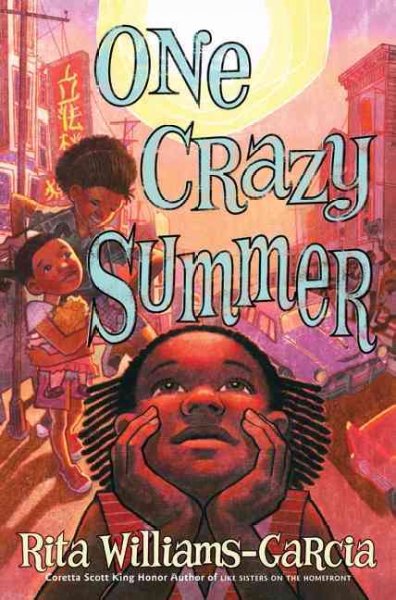
One Crazy Summer

by Rita Williams-Garcia

The quiet power of the book builds and builds and builds until at the end, my heart is squeezed and my eyes are wet. I feel for these characters as if they are my closest friends and Delphine’s resilience and vulnerability and her final “triumph” made me want to hug her and tell her how incredibly proud she should feel about herself and also to “be eleven” and to perhaps now relax just a smidgen and to be loved and cuddled once in a while.

My huge appreciation also goes to the author and editor.  What a hard thing to achieve portraying a young woman whose sole focus is on herself and her craft as a poet, who comes off as uncaring and abusive, but the entire time, this reader senses an admirable dedication and stoicism and does not view her as a monster mama. The final explanation of her hard life comes at the right time and gives just the right amount of information to let me know that she is just coming out of her own protective shell and there will be some softening and relationship building in the future. (But, no false hope of her suddenly and irrationally becoming a pampering, snuggling kind of mother.)

Leave a comment

Filed under Book Notes

The Red Pyramid

by Rick Riordan

What a romp! Riordan kept all his success formula from the Percy Jackson series: likable and realistic teens who support each other even if they bicker, a lot of cool magic and magical battle scenes (a bit MORE than a single Percy Jackson book and a bit more than I care to read in such details but I imagine many young readers lap them up like pots of chocolate,) quite a few powerful and caring adult figures, and a sprinkle of romantic interests. And he sets up the sequel wonderfully without short changing the current readers. The resolution for the quest is thoroughly satisfying. Now I can’t wait to read the next volume — it sounds so promising… and yet must remain patient for another year… *sigh*

1 Comment

Filed under Book Notes

Where the Mountain Meets the Moon: An Elegantly Written Book?

I started reading Where the Mountain Meets the Moon, by Grace Lin, while it was still in galley form and had never been able to finish the book.  Friends in my Children’s Literature circle have heard from me for almost a year now how baffled I have been regarding the success of the book (a Newbery Honor) and the adoration of the book from so many reviewers, teachers, and librarians.

And today, I read this blog post from Story Sleuths in which the bloggers praise and analyze the strengths of the writing by Lin.  (This is only Part 1, and posted 4 days ago.  I imagine more posts will follow.)

Finally, I feel compelled and brave enough to share some counter points regarding this book.

I am going to focus on my reaction to the usage of words and phrases by the author and demonstrate how I am not convinced that this is an elegantly crafted volume.  (Although, as a woman who grew up in Taiwan and was exposed to countless Chinese folk tales in book, opera, TV forms, I have a lot of discomfort with Grace Lin’s appropriation of the stories she read as an American girl of Taiwanese descent — even if she made it clear that these are NOT simple retellings of the original stories but based on her views on how these stories COULD have been told.)

Now, I was already a bit annoyed by page 4 because of a personal pet peeve.

  • The book is set against a nondescript mystical China, by the way the village is described and the people are portrayed.  Yet, in this fantasy land, in “Ancient” China, Minli’s father replies to her request for a story with “Okay” — an unfortunate word choice that carries strong western and contemporary flavors.  (p. 4)  This is a strong personal pet peeve, as explained in my About Fantasy — Is it OK to say “Okay”? post.

Grace Lin really loves using the word “seemed” in delivering her descriptive sentences.  It occurs with such frequency that it becomes monotonous and because “seem” is such an uncertain word, it often weakens the impact of the imagery.  (p. 110 “… the silence of the room seemed to ache with loneliness.” p. 111 “She seemed to glow like a pearl…” p. 117 “light of the moon seemed to bind the magistrate still.” p. 140, “The king’s words seemed to hang in the air.”  p. 141, “The moon seemed to tremble…” and on and on… and in this one page, the narrative contains three “seemed” in three short paragraphs.

  • . . . Minli’s footsteps seemed to hush the night as she made her way toward the Jade River.  (This one works all right for me because her footsteps could not have hushed the night but could have created the sense of hushing the night.)
  • . . . The moon shone above so even in the darkness of the night, the fish seemed to burn a bright orange.  (This one puzzles me.  I know that the fish did not burn but was it bright orange?  If the sentence were “the fish seemed to burn with an orange flame” or “the fish seemed to burn, glowing bright orange”  it would have delivered a clearer imagery.)
  • . . . For the moment the fish seemed shocked and was still, like a flickering flame on a match.  (It would have worked if the fish was simply socked or in shock.  And we wouldn’t have had three consecutive “seemed’s” on one page.)

Now, that last sentence kind of “shocked” me when I first encountered it.  How could a fish that is shocked into “stillness” be also “flickering” like a flame on a match that does not stop moving?  (After considering this several times, I could have explained that perhaps the water has been moving moments before so that the water makes the brightly lit orange fish scales sparkle and flicker.  But this figure of  speech did not make the imagery clear.  It does not illustrate or illuminate.)

Here are two more examples of odd similes:

  • On page 42 … “only barely could he see the faint footprints on the ground — it was like searching for a wrinkle in a flower petal.”  I did a triple-take and quite a bit of head scratching when I read this sentence: Many flowers have petals that are full of wrinkles.  Did the author mean that it is extremely EASY to make out the faint footprints on the ground? If so, does not it contradict the “barely” sentiment proposed in the first portion of the sentence?
  • On page 61 … “Under his gaze, Ma and Pa suddenly felt like freshly peeled oranges, and their words fell away from them.”  To this day, after re-reading this sentence countless times, I still could not quite figure out how a “freshly peeled orange” might feel.  I guess that it addresses the notion of their “words falling away” from them.   Does that make them feel naked?  Does it have something to do with the speed of the peeling (which does not happen instantly but can be pretty fast, unlike peeling an apple)?  This figure of speech confounds this reader and conceals the full meaning from view.

Of course, plenty of readers disagree with my reaction and I am eager to hear from others who can shed some light on these and other passages from the book that, to me, seem to be on the “Composition 101/Figure of Speech Exercise 5” level and do not always flow organically to tell a vivid story.

I probably will post more musings on how metaphors and similes should only appear to illustrate, interpret, and illuminate the scenes and emotions and should be avoided at all cost when they contradict, confound, or conceal the underlying, true meanings of the passages.  (My 3-Is and 3-Cs rule!)
3 Comments

Filed under Book Notes, Views, WIWWAK

Half-Minute Horrors: A Librarian’s New Best Friend!

I’ve been scaring, confounding, disgusting and delighting my 4th and 5th graders (and some older kids, even high schoolers) with the short short stories (we timed them — the way I read, many of them are more than half-a-minute long but seldom more than 2.5 minutes long) crammed into this slim volume for several weeks now.  It’s not Halloween Season, but we all still welcome a spine-chilling experience in the Library’s Reading Room.  We love M.T. Anderson’s EWWWWWW-inducing “An Easy Gig” where an innocent baby-sitting job turned menacingly tragic and we collectively are repulsed by Dean Lorey’s “Hank” where a beloved pet turns out to be.. um… not so endearing at all.  Sarah Weeks isn’t all that sweet penning “One of a Kind” and Jack Gantos’ half-page “Up to My Elbow” makes us think twice and come to the “OMG” revelation on our own.  With 72 stories in words and pictures, this proves to be the “best buy” of the school year for my library.

My students and I owe so many hours (minutes?) of reading and sharing pleasure to this cleverly conceived and brilliantly executed volume and HarperCollins and Susan Rich for putting the book together.

Leave a comment

Filed under Book Notes

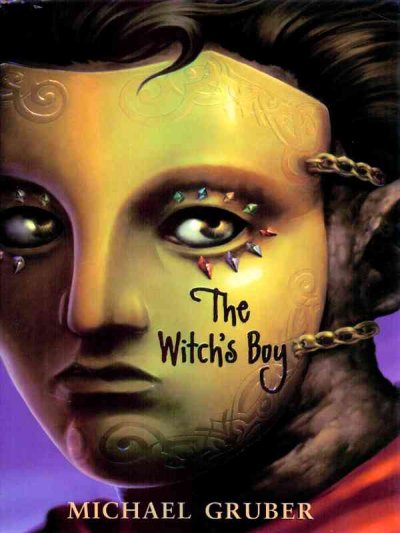
The Witch’s Boy

by Michael Gruber

This is a highly nuanced book, although toward the end the “message” is a bit too spelled-out for my taste. I kept feeling that this is not a book for children, but a cautionary tale for adults who plan to raise children of their own: the do’s and the don’t’s, through fantastic settings, vividly portrayed magical characters, and fairy tale re-envisionings. I’m not sure how well received this tale might be to a young reader who had not already loved the high fantasy genre or had not been familiar with the original stories. To me — it is entirely satisfying, being a mother, a fairy tale lover, and a fantasy fan.

What’s so remarkable of the book is Michael Gruber’s finely honed, poetic and yet not at all sappy tone. I thoroughly appreciate the talent and craftsmanship of his writing!


Leave a comment

Filed under Book Notes

Uglies

by Scott Westerfeld

I’m so glad that I finally got around to read Uglies — a popular book amongst many of my students, mostly girls. Now that I have read it, I have to adjust my perception of it 180 degrees — it is NOT a book for just girls; it is NOT really a YA-only book; it has a LOT of adventurous actions; it has QUITE A BIT of complexities. A gripping read and I will promote it to both boys and girls, to SciFi readers, and to those who want to think hard and dig deep into a world of dystopia.

Leave a comment

Filed under Book Notes

The Illustrated Mum

by Jacqueline Wilson

Being my second time reading the book, I had the opportunity to pay more attention to Wilson’s incredible talent in portraying her characters without being shocked or distracted by the harrowing experiences that Dolphin must suffer through, growing up and living with a mother who is mentally unstable.  It amazes me how the reader can just “listen” to a couple of sentences and “see” a few gestures or facial expressions from a character and become totally aware of this character’s personality, even predicting his/her future behaviors.

There are definitely some flaws in Wilson’s plotting: the finding of Dolpin’s father is not only far-fetched, it also seems unnecessary from a plot-construction aspect.  It also does not necessarily serve an emotional relief for the character.  The foster mother and the return of Star, combined with Marigold’s treatment, might do the trick to reassure both Dolphin and the young readers that hope and a brighter future is on the horizon.

This is the April 2010 Children’s Literature Circle selection.

(Children’s Literature Circle is a monthly Faculty book group that I run at my school.)

Leave a comment

Filed under Book Notes

Buried Alive

Buried Alive! by Jacqueline Wilson

A short read about Tim and Biscuits, two best friends who have quite an adventurous little vacation by a Welsh seashore. Although the main characters are boys, Tim, the narrator, shares a lot of traits with many of Wilson’s girl main characters: outcast, somewhat of a cowardly weakling with no self-confidence, but eventually finds inner strengths and come out on top. Plenty of funny scenes and slightly unsettling personality traits of the “best friend” of the main character.

Leave a comment

Filed under Book Notes