Tag Archives: fantasy

The Dark City

The Dark City (Relic Master, #1)by Catherine Risher

I found myself thoroughly engrossed in this tale of fantasy/scifi blend. Usually, I get annoyed by authors who mix magical elements in otherwise supposedly a science fiction world. It always seems to be a cop-out: when something cannot be sufficiently explained with scientific theories or technical knowledge, we just throw in some magical powers and voila, the story can move on. Fisher did something different here: she created a world of magical elements with a few technological gadgets thrown in here and there. The little guessing games of what each object is (an easy one is a pair of binoculars made with the “unfamiliar” materials – plastic? -) entertains and intrigues the reader.

I would have liked to see the Dark City developed a bit more — the city is too vaguely described and I simply couldn’t figure out why there are still people in this place since the readers are not shown how the commerce works to support such a place and its inhabitants.

Still, can’t wait for the book to be released (May) so I can promote it to my young readers and can’t wait to read the 3 sequels which will come out in quick succession: June, July, and August!

(Based on the Advanced Readers Copy)

Leave a comment

Filed under Book Notes

Good Omens

Good Omensby Terry Pratchett and Neil Gaiman

This is just a total delight to read. I marked pages and wanted to record all the humorous metaphors and turn of phrases. Two ingenious literary minds worked seamlessly together to create something that I’d like to just flip to any random page in the future and get either a chuckle or be amazed again. This book makes me want to memorize quotes!

Leave a comment

Filed under Book Notes

The Lost Hero

The Lost Hero (The Heroes of Olympus, #1)by Rick Riordan

Of course, my view on this book is heavily influenced by my students’ reactions: a LOT of enthusiasm from the 4th – 7th grade crowd. Many of them have been waiting impatiently for the launching of this series for a LONG time. (Yes, it’s only a year and a half — but to the current sixth graders, the Last Olympian came out when they were mere babies: in 4th grade!) (And, for my 9th grade students, they read the last of the Percy Jackson when they were, *gasp,* still in 7th grade!)

Like these young readers, I really enjoyed the book. Many of them think that it is the strongest first book by Riordan; and although some of them are a bit sad that the book is not as humorous (what, no funny chapter headings?) as The Lightning Thief, they feel that the sheer inventiveness and the coolness of the heroes and the battle scenes more than made up for the slight lack of levity.

We all agree that Leo is the most interesting and cool character to read about and can’t wait to see their next adventures: where traditional and Riordan-made story lines, characters old and new, and the worlds of Gods and Humans will all converge.

Are there some flaws in this book? Sure. It would have been great to me if Riordan does not repeat the same information more than once in several places and did a bit self-editing to tighten up the pacing a bit. (So instead of more than 550 pages, perhaps a 400+ pages would have made the book better… for me.) However, for the eager young readers who wanted so badly to read more adventures inspired by Greek and Roman Myths, I imagine, the MORE stuff the better! So, in the end, I say, Bravo, Mr. Riordan, for staying true to what you set out to do: writing fun and gripping adventurous stories for young readers and making the publication and reading of your books a huge excitement in their life.

Leave a comment

Filed under Book Notes

Clockwork Angel

Clockwork Angel (The Infernal Devices, Book 1)by Cassandra Clare

I really really enjoyed the book. What’s not to like? An entertaining combination of Angel/Demon/Warlock/Vampire/Automaton/Romance (torturous)/Action/Gore! And I’m so into Steampunk right now so this feeds into my current passion beautifully.   I didn’t read the trilogy that came out in the past few years by Clare so couldn’t compare to see if this prequel is better or worse. I also don’t know whether the author, as some critics of this book have pointed out, keeps recycling the same plot pattern, characters, and relationships. For me, it feels fresh and full of earnest energy. I couldn’t put it down. Now, I have to wait for the next installments!

1 Comment

Filed under Book Notes

Hereville: How Mirka Got Her Sword

Hereville: How Mirka Got Her Swordby Barry Deutsch

There is so much to like about this book: the humorous and very realistic treatment of the family dynamics between stepmother and children, between siblings, and between neighbors; the expressiveness of the faces and the bodies; the magical realistic setting and all the references of Orthodox Jewish traditions; and the pure energy and joy of knowing a new and plucky girl character. And yet, since I liked it so much from page 1, and built up such high expectations of wanting a truly enlightening ending, the last portion of the book became a bit of a let down because of a somewhat rushed and unsatisfying wrap up.

Leave a comment

Filed under Book Notes

The Ring of Solomon: A Bartimaeus Novel

The Ring of Solomon: A Bartimaeus Novelby Jonathan Stroud

I am giving it Five Stars because:

A. It gave me so much pleasure to re-acquaint with an old favorite, namely, the witty, boastful, and oftentimes powerful, but also self-deprecating and silly Bartimaeus. (A bit like Bruce Willies in Fifth Element.)
B. Stroud manages to present several different angles of the plot line and bring everything together in thrilling culminating sequences.
C. The three main characters: Barti, King Solomon, and Asmira, the young royal guard of the Queen of Sheba, each is layered and real and inspire admiration in very different ways.
D. And I believe that it is a book that many many young readers will find enjoyable….
… among many other reasons — cool magic, interesting twists in the plot, a tinge of melancholy that only a couple-of-thousand-year-old Djinni could experience, etc.

3 Comments

Filed under Book Notes

Nightshade

Nightshade (Nightshade, #1)by Andrea Cremer

The cover is pretty. Many people really like this but I simply found myself disconnected and aloof the entire time reading the story. It’s inventive at moments — the history and the societal structure of the “werewolves” clan are quite refreshing, and I can definitely see it being enjoyed by teens or even pre-teens. It’s just not a ground shifting kind of experience for me.

1 Comment

Filed under Book Notes

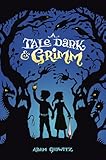
A Tale Dark and Grimm

A Tale Dark and Grimmby Adam Gidwitz

I really really enjoyed the journey into and out of the dark dark woods that is this book by a new comer of the Children’s books scene. To be honest, because I love and respect traditional fairy tales (mostly Grimms, Jacobs, with some Norse, Arabian Nights, and Russian tales thrown in) to such a degree, I get very suspicious and highly critical when it comes to authors playing with and retelling these tales.

I especially resent the ones that make light of these grim and dark and powerful tales and turn them into cutesy products.

That is not the case with Gidwitz’s offering. It is slated to be published in November and I simply can’t wait to report on it! The frame story, using Hansel and Greta, substituting them as protagonists in several Grimms fairy tales, works brilliantly. As the story progresses, the resemblance to the original versions of the tales is reduced: they are more and more fractured and eventually, you are offered a few original short tales by the current author — but the Faerie, unsettling, and dark tone of the fairy tales tradition remains. As the story follows less and less the constrain of the original tales, the readers who know these tales sense the strength of the two children, rebelling against a cage that tries to tie them down.

For readers who are not familiar with the original tales, they can still vividly experience the growth, physically, emotionally, and worldly of these two characters.

This is not a simple construct, stringing a bunch of fairy tales together, but a successful novel that has a lot to offer to its young readers.

I can’t wait to share the tales — the new and the old — with my students in the fall!

1 Comment

Filed under Book Notes

Alex Day Reads Twilight

A student of mine gave me the link to Alex Day (a 20-year-old Brit) reading and commenting on S. Meyer’s Twilight. I have become a fan (not of the book, but of Alex.)

Here’s the first video and you can find others (he’s read 14 chapters to date) on youtube. (Warning: curse words abound)

Leave a comment

Filed under Field Reports

The Red Pyramid

by Rick Riordan

What a romp! Riordan kept all his success formula from the Percy Jackson series: likable and realistic teens who support each other even if they bicker, a lot of cool magic and magical battle scenes (a bit MORE than a single Percy Jackson book and a bit more than I care to read in such details but I imagine many young readers lap them up like pots of chocolate,) quite a few powerful and caring adult figures, and a sprinkle of romantic interests. And he sets up the sequel wonderfully without short changing the current readers. The resolution for the quest is thoroughly satisfying. Now I can’t wait to read the next volume — it sounds so promising… and yet must remain patient for another year… *sigh*

1 Comment

Filed under Book Notes

Where the Mountain Meets the Moon: An Elegantly Written Book?

I started reading Where the Mountain Meets the Moon, by Grace Lin, while it was still in galley form and had never been able to finish the book.  Friends in my Children’s Literature circle have heard from me for almost a year now how baffled I have been regarding the success of the book (a Newbery Honor) and the adoration of the book from so many reviewers, teachers, and librarians.

And today, I read this blog post from Story Sleuths in which the bloggers praise and analyze the strengths of the writing by Lin.  (This is only Part 1, and posted 4 days ago.  I imagine more posts will follow.)

Finally, I feel compelled and brave enough to share some counter points regarding this book.

I am going to focus on my reaction to the usage of words and phrases by the author and demonstrate how I am not convinced that this is an elegantly crafted volume.  (Although, as a woman who grew up in Taiwan and was exposed to countless Chinese folk tales in book, opera, TV forms, I have a lot of discomfort with Grace Lin’s appropriation of the stories she read as an American girl of Taiwanese descent — even if she made it clear that these are NOT simple retellings of the original stories but based on her views on how these stories COULD have been told.)

Now, I was already a bit annoyed by page 4 because of a personal pet peeve.

  • The book is set against a nondescript mystical China, by the way the village is described and the people are portrayed.  Yet, in this fantasy land, in “Ancient” China, Minli’s father replies to her request for a story with “Okay” — an unfortunate word choice that carries strong western and contemporary flavors.  (p. 4)  This is a strong personal pet peeve, as explained in my About Fantasy — Is it OK to say “Okay”? post.

Grace Lin really loves using the word “seemed” in delivering her descriptive sentences.  It occurs with such frequency that it becomes monotonous and because “seem” is such an uncertain word, it often weakens the impact of the imagery.  (p. 110 “… the silence of the room seemed to ache with loneliness.” p. 111 “She seemed to glow like a pearl…” p. 117 “light of the moon seemed to bind the magistrate still.” p. 140, “The king’s words seemed to hang in the air.”  p. 141, “The moon seemed to tremble…” and on and on… and in this one page, the narrative contains three “seemed” in three short paragraphs.

  • . . . Minli’s footsteps seemed to hush the night as she made her way toward the Jade River.  (This one works all right for me because her footsteps could not have hushed the night but could have created the sense of hushing the night.)
  • . . . The moon shone above so even in the darkness of the night, the fish seemed to burn a bright orange.  (This one puzzles me.  I know that the fish did not burn but was it bright orange?  If the sentence were “the fish seemed to burn with an orange flame” or “the fish seemed to burn, glowing bright orange”  it would have delivered a clearer imagery.)
  • . . . For the moment the fish seemed shocked and was still, like a flickering flame on a match.  (It would have worked if the fish was simply socked or in shock.  And we wouldn’t have had three consecutive “seemed’s” on one page.)

Now, that last sentence kind of “shocked” me when I first encountered it.  How could a fish that is shocked into “stillness” be also “flickering” like a flame on a match that does not stop moving?  (After considering this several times, I could have explained that perhaps the water has been moving moments before so that the water makes the brightly lit orange fish scales sparkle and flicker.  But this figure of  speech did not make the imagery clear.  It does not illustrate or illuminate.)

Here are two more examples of odd similes:

  • On page 42 … “only barely could he see the faint footprints on the ground — it was like searching for a wrinkle in a flower petal.”  I did a triple-take and quite a bit of head scratching when I read this sentence: Many flowers have petals that are full of wrinkles.  Did the author mean that it is extremely EASY to make out the faint footprints on the ground? If so, does not it contradict the “barely” sentiment proposed in the first portion of the sentence?
  • On page 61 … “Under his gaze, Ma and Pa suddenly felt like freshly peeled oranges, and their words fell away from them.”  To this day, after re-reading this sentence countless times, I still could not quite figure out how a “freshly peeled orange” might feel.  I guess that it addresses the notion of their “words falling away” from them.   Does that make them feel naked?  Does it have something to do with the speed of the peeling (which does not happen instantly but can be pretty fast, unlike peeling an apple)?  This figure of speech confounds this reader and conceals the full meaning from view.

Of course, plenty of readers disagree with my reaction and I am eager to hear from others who can shed some light on these and other passages from the book that, to me, seem to be on the “Composition 101/Figure of Speech Exercise 5” level and do not always flow organically to tell a vivid story.

I probably will post more musings on how metaphors and similes should only appear to illustrate, interpret, and illuminate the scenes and emotions and should be avoided at all cost when they contradict, confound, or conceal the underlying, true meanings of the passages.  (My 3-Is and 3-Cs rule!)

3 Comments

Filed under Book Notes, Views, WIWWAK

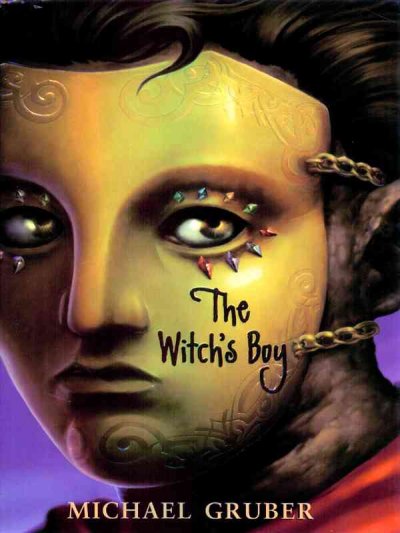
The Witch’s Boy

by Michael Gruber

This is a highly nuanced book, although toward the end the “message” is a bit too spelled-out for my taste. I kept feeling that this is not a book for children, but a cautionary tale for adults who plan to raise children of their own: the do’s and the don’t’s, through fantastic settings, vividly portrayed magical characters, and fairy tale re-envisionings. I’m not sure how well received this tale might be to a young reader who had not already loved the high fantasy genre or had not been familiar with the original stories. To me — it is entirely satisfying, being a mother, a fairy tale lover, and a fantasy fan.

What’s so remarkable of the book is Michael Gruber’s finely honed, poetic and yet not at all sappy tone. I thoroughly appreciate the talent and craftsmanship of his writing!


Leave a comment

Filed under Book Notes

The Last Apprentice: Revenge of the Witch

Revenge of the Witch (The Last Apprentice / Wardstone Chronicles, Book 1) by Joseph Delaney

Thoroughly enjoyable read: loved the tone of narrative, folky and wise, and never condescending. I would say it is highly young reader friendly — as long as the young reader is not squeamish or easily frightened. There are genuinely scary moments which for certain readers will be highly satisfying. Such fun!

Leave a comment

Filed under Book Notes

Queen of Sorcery

Queen of Sorcery (The Belgariad, #2)by David Eddings

Had a lot of fun with this second volume in the Belgariad Series. The large scale battle scenes are so grand and exciting. The characters remain true to their personalities and are often humorously presented. The world becomes more well defined as the series moves on and (Bel)Garion is maturing in a realistic and convincing way. Formulaic? Yes. But, like a good recipe, in different cooks’ hands, even without new inventions or varied spices, the outcomes can all still be very appetizing. (How many times have I had loved and been satisfied by the same hot chocolate?)

Leave a comment

Filed under Uncategorized

Percy Jackson on the Silver Screen

What worked for me and Lily (age 11, and big fan of the series):

We thought that for the most part, the casting worked.  Although we did not LOVE the fact that all the kids are older and some more romantic tension was thrown into the storyline, we accepted it as a necessary choice and it did not totally change how the story plays out.

Uma Thurman as Medusa, with or without her body attached, is quite effective.  And we stayed until after the credit to see the very satisfying scene of Gabe vs. Medusa’s-head-in-the-fridge.

The special effects that show Percy’s command of water are cool to watch and thoroughly enjoyable.  And we appreciated that the humorous tone is still present in the movie, although not as palpable as it is in the book.  (Remember those funny chapter titles?)

We couldn’t quite understand why

1. Percy’s mom has to accompany him to Camp and why she was there when they went to Mount Olympus.

2. That Camp Half-Blood looks so much LESS impressive, LESS fun, LESS like a camp that we would love to spend our summers at.  We both imagined that the Camp, as such an important place for important people, would have been on a much grander scale, the training ground would have looked less like the Disney’s Camp Rock campus, but more like one might find in Ancient Greece or the “real” Mount Olympus with each House resembling a temple with columns, carvings, and statues.  We both decided to re-read the descriptions in the book to see if our recollections are faulty.

Leave a comment

Filed under Uncategorized

Pining for Kiki III, Waiting for Katniss #3, and Excited about Bitterblue!

I (and thousands, if not millions of young readers) need, need, need, to read the NEXT INSTALLMENT in the Kiki Strike series.  The second book was published in 2007.  It’s 2010 and I know the manuscript has not even been submitted for book 3.  Rumor has it that the projected publication date for the third book is 2012 — FIVE — FIVE years after its predecessor.   A child who discovered Kiki Strike and the Shadow City in 2006 at age 9 will be 15 in 2012 and almost too old for it!  We collectively BEG YOU, Kirsten Miller, to finish writing book three and let us have the joy of reading it!  (But, at the same time… we DO understand that you want to make a good book, a good story, and to not disappoint your loyal fans — so, if you are having trouble, we wish you the best at overcoming the problems!)

Mockingjay, as the third (and final?) book in the Hunger Games series is titled, will be out in the stores on August 24th, 2010.  The cover and announcement can be found at the Scholastic’s blog: On Our Minds @ Scholastic.  What do you think of the color?  And isn’t David Levithan hilarious?  (Quote: “Panem is not shaken up when District 9 is nominated for a best picture Oscar.”)

And I can’t be more excited about the prospect of reading Bitterblue by Kristin Cashore — which is some sort of a sequel to Graceling but, as the title indicates, will be about Bitterblue and her Grace.  I want to be surprised,  moved, thrilled, and impressed by it the same way I did for both Graceling and Fire.  And Ms Cashore, keep it up with the one-word titles!  It will be your signature move.

1 Comment

Filed under Book Notes

About Fantasy — Is it OK to say "Okay"?

Reading Kristin Cashore’s article, “Hot Dog, Katsa!” in the Jan/Feb 2010 Horn Book (first issue entirely in color!) reminded me why I admire good fantasy writers so much!  It also made me search online and re-read two fantastic articles that also discuss fantasy world building and what makes Good fantasy stories outstanding (or what makes them less so.)  These two articles are Sam Swope’s review in the New York Times: Moonlighting (partially about fantasy books but the focus is on adult writers writing for children) and Jane Langton’s The Weak Place in the Cloth: A Study of Fantasy for Children from the October 1973 issue of The Horn Book Magazine.

I am not embarrassed to report that tears rushed into my eyes as I was moved by some of these authors’ (all fantasy world building masters themselves) insights.  I won’t repeat everything they say here — please please read their articles.  In essence, all three agree that:

just because a writer can dream up a whole lot of fantastic situations, weird creatures, and unusual characters does not make this writer a good fantasy storyteller.  In fact, without the harnessing power of logic, realism, and careful planning — in short, the self-editing process — the work could turn out to be a huge and unconvincing mess.

In Cashore’s article, she also specifically points out the importance of selecting appropriate words in keeping with the setting of the fantasy world.  As the title indicates, you don’t say, “Hot dog, Katsa!” because it takes the reader out of the world of  vaguely medieval setting (in her book Graceling) and shatters the otherwise solidly constructed illusion of a magical realm that could have actually existed.

I think that is why I felt so jarred when encountering the word “okay” on page 4 in the 2010 Newbery Honor title Where the Mountain Meets the Moon by Grace Lin.  This book is set in a mythical, undetermined, but quite solidly yesteryear China.  There is no usage of electricity or references of modern day conveniences.  Instead, one meets dragons, talking gold fish, the Goddess of Heaven, and many other fanciful characters while the people work the earth and walk long ways on foot and push carts to sell their goods.  So, seeing a highly Americanized and fairly contemporary word like “okay” used in the dialog between the main character and her father made me cringe.

As a lover of fantasy, I have formed certain ideas.  I hold quite tightly a set of internalized rules.  In short, I ask a lot of the storytellers.  I want them to be versed in the fundamental requirements of good fantasy world building as presented in the articles cited above.  Or, at least, as mentioned in Cashore’s article, I want them to let their characters talk in the “right” language, with the “right” tone.  Of course, what is right or what is not right might vary from one reader to the next in certain cases.  But, there is a general sense of the time and place where people talk a certain way which is not so hard to pin down.   In the case of Minli and her father (Ba,) OKAY is simply Not OK.

Of course, this is not the only book where OK or Okay are used casually by authors when their characters should have no inkling of what this word might mean.   (According to the OED, the expression “OK” meaning “all correct, all right” did not appear until early 19th century USA.)

So, I am making a fairly personal and weak plea to  authors of fantasy novels — unless the world you have built is firmed anchored in a post-early-19th century world (like the one in Percy Jackson and the Olympians,) would it be possible to curb your urge to use OK and find another expression more in keeping with the setting of your world?
7 Comments

Filed under Book Notes, WIWWAK

Psyched about Moomins!!!

Finnish author Tove Jansson’s beloved classic series of the Moomintrolls (Moomins) will be reissued this year to celebrate its 65th anniversary by Henry Holt/Macmillan.  All eight of them will have a snazzy and  fresh look.  They are ready to be re-introduced to the next generation of young readers.

Anyone unfamiliar with the Moomins and their sweet but often comically unfortunate adventures might gain a bit of an insight by visiting the official characters site here:

On Moomin Characters Ltd.

Not available in English, here’s the site for the 65th anniversary illustration competition.  It is absolutely joyful to look at and listen to :)

http://www.moomin65.com/

1 Comment

Filed under Book Notes

Pawn of Prophecy

Pawn of Prophecy (The Belgariad, #1) by David Eddings

This is an old fashioned, formulaic quest story and it absolutely made me happy to read. I love how the characters are portrayed — each with such distinct personality and their actions fit those traits. I love the mythology created to underline everything in the storyline. Can’t wait to read the next volume!

1 Comment

Filed under Book Notes

Lips Touch: Three Times

Lips Touchby Laini Taylor

Gorgeous book — in every aspect. The cover is gorgeously attractive, the interior artwork is exquisite, and the writing is simply delicious. The three stories are rich in imagery, imagination, and deep emotion, and I want to collect so many sentences to make found poetry with the text. Totally taken by this book. So far, the young people that I gave the book to have enjoyed it tremendously as well.

View all my goodreads reviews >>

Leave a comment

Filed under Book Notes