Category Archives: Views

ALSC and its newly revised policy on members who serve on the committee

Over at Horn Book, Roger Sutton, the editor in chief, recently published an editorial that sparked a bit of a discussion and controversy over the January 2014 revised Policy for Service on Award Committees. This is a publicly accessible document that governs various aspects of members of such committees such as Sibert (for nonficiton,) Newbery (for text) and Caldecot (for illustrations) awards for American Children’s Books published each year. I posted quite a few comments there but decided also to add some thoughts here. One of my biggest concern as a long-time ALSC member (and former Newbery member twice over and Notable Children’s Books selection committee, among other non-book related committees) is how the Division itself “regards” its member body. The preamble of this document states:

“ALSC affirms its confidence in the integrity of members who are invited to be nominated or appointed to serve on award committees, and in the integrity of the officers or nominating committees responsible for selecting candidates. Because of the nature of the work of such committees, those who serve on them must be especially sensitive to conflict of interest situations and the appearance of impropriety. The purpose of this policy is to clarify the eligibility and responsibility of candidates asked to serve on such committees.”

To me, the first two sentences are antithesis to each other — I mentally translated these two sentences to: Great, the Division states first and foremost that IT trusts implicitly the integrity of ITS members (librarians, classroom teachers, reviewers, professors, etc.) and that they will behave professionally and with civility while they serve on these highly sought after committee posts (paying their own way to attend conferences and donating at least a whole year of their time to read and think and discuss the eligible titles). Oh-but wait wait, the second sentence negate all that was implied in the first sentence. It seems to be saying that “since you, the DIVISION’S members who have the privilege (as pointed out later in the document) to serve on such committees really don’t know how to behave using print or online media, you must be told exactly what you can and cannot do because, um…. we actually don’t trust you at all without spelling everything out and without putting a muzzle on all your opinion outlets (in this newly revised guideline, the outlets include blogs, twitter, official and professional signed reviews, etc.)

In the older version of the document, it was pointed out that one can always express one’s personal opinions over eligible titles even while serving on the committee as long as one makes it amply clear that it’s a personal expression and the process is to be trusted — 15 people with 15 different opinions and affiliations and experiences tend to cancel out all the “personal” stuff and come to a communal decision that serves the public well. The new policy revision seems to me to put huge stock on a few people’s personal’s opinions and place little or no trust in the time-honored, although often seemingly mysterious, process of how Newbery, Caldecott, and other children’s book award winning titles are chosen.

Just want to clarify: you’re still allowed to verbally express your personal opinions with your colleagues or friends or patrons — just never to publish them anywhere.

Leave a comment

Filed under Field Reports, Views

I should not have been surprised but nonetheless…

I should not have been surprised but nonetheless am stunned at how many characters (in the recent YA books I have read) who are portrayed as beautiful/good looking/gorgeous/handsome/pretty whose first and often most prominently described feature is “blue eyes” or “green eyes” or any variations of these two colors (emerald, icy blue, baby blue, deep blue, deep lake, etc.) Enough that when I read about the beauty of a pair of dark brown eyes I let out an audible hoot!

Leave a comment

May 26, 2014 · 10:15 am

Continue interesting discussion over on ccbc net re…

Continue interesting discussion over on ccbc-net re character ethnicities in children’s / YA books. And here’s a little rant I just posted there:

Also re Hunger Games — There’s always the discussion over Katniss’s ethnicity — she’s described as having “olive skin” and dark hair, eyes, etc. while her mother and Prim are fair haired and blue eyed. Does that indicate that she’s mix-raced? Does anyone know how Suzanne Collins envisioned her? What is Olive skin, anyway? Light or dark brown cured in a barrell? Green on the tree? Black in a can? Can we all just agree that this is a useless descriptor and toss it out of the window as of Feb. 2014?

1 Comment

February 4, 2014 · 11:18 am

According to the Cooperative Children’s Book Center CCBC…

According to the Cooperative Children’s Book Center (CCBC), of the 3200 children’s books they received/categorized in the year 2013, the multicultural “picture” looks like this:

(I added the %’s)
BUT — this is presuming that all children’s books are somewhat “ethnicity” based — which, I imagine, is FAR from the truth — there must have been plenty of story books with spiders, frogs, pigs, chickens, etc. as “characters” or “topics” and nonfiction books on neurosciences, soccer techniques, buildings, chemistry 101, etc.

So, I’m going to wait for more detailed numbers from CCBC (if they keep count…to update my percentages and analysis.) — SECOND VERSION of this post.

• 93 books had significant African or African American content <– less than 3%
• 67 books were by Black authors and/or illustrators <– 2%
(While the population of African Americans were around 12.6 % in the 2010 Census — fcl.)
(More books ABOUT African American topics or people than BY African American authors)
(If to reflect the population closely, there should have been about 500 books either about or by…)

• 33 books had American Indian themes, topics, or characters <– 1%
• 18 books were by American Indian authors and/or illustrators <– 0.5%
(While the population of Native Americans were around 0.9% in the 2010 Census — fcl.)
(More books ABOUT American Indian topics or people than BY Native American authors)
(percentage-wise, there are more books about Native American topics than the percentage of the population.)
(If to reflect the population closely, there should have been about 32 books either about or by…)

• 58 books had significant Asian/Pacific or Asian/Pacific American content <– 2%
• 85 books were by authors and/or illustrators of Asian/Pacific heritage <– 2.5%
(While the population of Asian/Pacific Island Americans were around 4.8 %)
(More books BY Asian American authors than ABOUT Asian American topics or people.)
(If to reflect the population closely, there should have been about 150 books either about or by…)

• 57 books had significant Latino content <– 1.8 %
• 48 books were by Latino authors and/or illustrators <– 1.5%
(While the population of Latino Americans were around 16.4 % in the 2010 Census — fcl.)
(More books ABOUT Latino American topics or people than BY Latino American authors.)
(If to reflect the population closely, there should have been about 500 books either about or by…)

Thinking about making an infograph to show the percentages and not just the raw numbers. — FIRST VERSION OF THIS POST

Leave a comment

February 3, 2014 · 9:43 pm

Why I Serve on Selection/Award Lists Commmittees

The reasons are really quite simple: to force myself to read constantly, for a purpose, and reach beyond my own comfort zone.

I’ve been quite lucky in the last 15 years or so, to have the opportunity to serve on various children’s and YA literature selection/award committees.

Each experience pushed me to expose myself to genres or books that I would not have reached for naturally —

For more than five years now, I work with Monica Edinger and Jonathan Hunt annually to prepare for SLJ’s Battle of the Kids’ Books. Both are dear friends who read quickly and have strong opinions — they keep me on my toes and encourage me to seek out worthy contenders and to discuss and argue about them!

Notable Children’s Recordings committee (back in the late 90s’) taught me how to listen for technical excellence, for great voice acting talents, and for content respecting children’s intellect and sensibilities.

Twice on the Newbery (2002 and 2013) propelled me to consider each author’s crafts critically: be they creators of nonfiction, poetry, historical fiction, or humorous realistic stories, etc.

The two years serving on the Notable Children’s Books (2008 and 2009, with about 3000 books submitted each year) committee really impressed on me the breadth and depth of the children’s publishing field and even though I was not working with younger readers/listeners, I got to relive the beauty and joy of picture books that I almost had otherwise forgotten!

Deciding to help with CYBILS first round of Graphic Novels selection panel (2013) was my way of urging myself to know more about this ever trending field for children and YA and it definitely served me well — and of course, I hope that it serves the world at large well, too! I also served as a final round judge for Cybils Fantasy panel in 2006, supporting passionately for our winner Jonathan Stroud, Ptolemy’s Gate.)

Now, embarking on the 2015 Best Fiction for Young Adults (even though my term of service does not start until February) adventure, I can’t even start fathoming the great benefit I’ll reap from this experience: becoming more familiar with the field: the top authors, new and talented creators, trending and/or tired themes, and perhaps even glimpses of future directions.

And every committee also allowed me to admire and take from my fellow committee members the wealth of literary knowledge the enriched my own.

Yes, I definitely feel quite selfish when it comes to “serving” on these committees — but, hopefully it also in turn serves my community: having a well stocked mental library to draw inspirations and information from, I have ready answers and recommendations whenever a child asks for the next book or series to fall in love with, whenever I need to compile a reading list or conduct a literary lesson, and whenever consulted by teachers, administrators, and parents.

Serving on these committees is really the best (and possibly the ONLY) way for me, an extremely slow reader, to continue sharpening my tools of the trade! So, let me continue to be indulgent and selfish… and revel in the excitement and responsibilities of such committees!

Leave a comment

Filed under Field Reports, Views

Defending Ender's Game, the Book

Recently on an online listserv, a member posted some objections re Ender’s Game and I responded with the following. (I will be paraphrasing and truncating the original objections):

Since I have read (and listened to the audio book) multiple times, I hope that potentially I have done the “close reading” that [the listserv member] and her students have done with the book. I am going to address each of the four points:

1. A question on how could Ender repent/whine/moan when he obviously knew he was enlisting in the military for a total war?

We must consider the world that Ender is born into. He did not really have a choice to be on the training path to be chosen or not. His existence as a THIRD is quite literally unbearable, and his living in the house with a monster brother who at any moment might murder him definitely does not make staying home as a desirable option. He went up to Battle School at age 6 — even as brilliant a strategist as he was, he was naive in many many ways of the people — he was NOT given the opportunities to develop those. Just consider his first encounter on the launch shuttle, how he BELIEVES that Graff is his FRIEND and gets his wish shattered into pieces. So, to say that he “signed on to be the killer” because he joined the military and blame him later on for not being able to deal with not just WAR and KILLING but GENOCIDE — seems to me not fully understanding the book’s themes. Ask many service men, how many of them are shocked (in their late teens, early 20s or even later?) when they actually are put in combat? I’d say a LOT of them. So why can’t Ender be repentant? (He never moans or whines — his sorrow is SO much deeper than those emotions.)

2. Orson Scott Card praises children’s intelligence in the foreword but then makes his child character so manipulatable — that’s self-contradicting.

Not at all — In fact, in the end, Graff’s “intelligence” and “manipulation” – although ensured the winning of this ONE total war, makes him and the world leaders look like the worst people possible while Ender comes out as a lot more Humane and Saint-like. We must not forget that they live in a post-Alien attack world where everyone’s brainwashed to a certain extend, and there is a whole entire system of manipulation, lots of secret keeping, etc. For those of us who have read Ender’s Shadow, we would know how Card created another brilliant child who was NOT AT ALL manipulated by the System — and the reason why Ender was so manipulatable was the fact that he’s incredibly trusting and has “a flaw of wanting to form connections with others” — which is EXACTLY why he is a BELOVED leader and Bean is just his second in command whom everyone respects but cannot truly adore. So, no, the author (Orson Scott Card) knows exactly what he’s doing with his child characters.

3. Orson Scott Card romanticized total warfare and the video-game-style warfare, making him socially irresponsible.

I don’t really have much to say about this point except that I do not see how this book or the whole series is romanticizing total warfare where the ending was the strong sentiment AGAINST fighting against another group of people AT ALL — Ender finally understands The Other and spends the rest of his life to make peace and to make others see the peace that is necessary and achievable. And I am totally at a loss as to how “predicting the video-game-style warfare” that we are developing these days is “irresponsible.” Please elaborate.

4. To favor elitism is offensive. The book dismisses anyone who is not a genius.

I think this is definitely where people have to agree to disagree. For me, it is SO great that we have a book that celebrate intelligence and political savvy over brute forces or some sort of magical talents. I cannot understand how that is offensive. Are we saying that if we have characters who are geniuses, we should somehow portrait them as undesirable leaders of the society? We should make fun of them? We should “put them in their places”? and refuse to let them tell others what to do??? I also am not sure that there are ANY “not geniuses” characters in the book — and that’s kind of the point — Battle and Command Schools are for those who have the capacities to fight and to lead — we are not given the rest of the world and Card didn’t set out to write about the rest of the world. That’s the scope of the book’s setting — if Card included other aspects of the world (which he did in Ender’s Shadow and definitely in Speaker for the Dead and other sequels) and botched it, we should definitely discuss the flaws — but as an author, he made a choice: he CHOSE to set the tale within a confined environment. Surely we cannot fault him for that? (That would be like faulting Baum for not giving a good picture of Kansas at the turn of the 20th century when he wrote OZ stories!)

1 Comment

Filed under Views

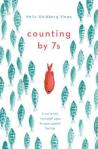
Counting by 7s

countingby7sby Holly Goldberg Sloan

My reactions to this book are quite mixed that I cannot sort them all out coherently.  So, here we go, a list of what I liked and what I had some issues with:

Starting with the positive aspects of the book:

  • I quite enjoyed the protagonist and her many interesting observations and thoughts.  Especially when she was less “normal” and more stubbornly herself the first part of the book.  I know that’s kind of the point of the book, that Willow “learned” how to interact with others and became more accepted and more accepting, but she definitely becomes less interesting a character as the story progresses.
  • I appreciated the author’s effort in pulling together a cast of diverse ethnicities, and featuring mix-raced kids and adults.
  • I definitely was curious and interested enough to know how things would pan out for Willow and the others, especially Dell.
  • I liked how at first one couldn’t quite tell the age and gender of Willow.
  • I thought that this is a thematically significant story.
  • I also thought it totally fine for the author to switch POVs — I’d rather this than having the author trying to keep it all in Willow’s head and thus making the book either too claustrophobic or Willow too wise and and unconvincing in her insights.

Now, onto the things that troubled me or did not satisfy me as much:

  • Vietnamese is presented as a language that one has to learn “verbal conjugations” for — when in reality, like many Asian languages, one uses only a few time stamps/phrases to indicate tenses while the original verbs remain the same.  I know that the author consulted Vietnamese speaking friends so it is even more curious that this oversight is in the book.  (I did read the online galley so don’t know exactly how the finished book handles this aspect exactly.)
  • I cannot wrap my head around how Pattie has SO much money that she could buy the entire building complex from the bank at the end of the book because of Willow and her predicament, and yet would subject her own children to live squalidly in the garage where her teenaged son who obviously is VERY troubled by the fact that their living condition is shameful (and he didn’t even have normal underwear) and was acting out and doing poorly at school.  Would an immigrant mother who suffered quite a bit of humiliation in her own youth, and who is presented as competent and caring for others, hide away all her wealth to this extend?  This just doesn’t compute for me.
  • There is quite a bit of rule and law breaking through the whole book, by almost every character, that I got slightly paranoid about recommending this to young readers.  Dell got by in his job without ever following protocols or performing the minimum requirements.  We hope that he has changed toward the end of the story… but that was not quite clear.  The whole “using Dell’s address” and faking that they’re all living in that apartment works quite well, but from the get go was a giant and elaborate lie, which became a wonderful truth at the end of the tale… seems too convenient and pat and is that what the author tries to convey?  As long as a lie comes from a good place, it will lead to a positive outcome?  Even Mai tells lies to the school in order to go to the custody hearing.  I am usually not one to worry about such things in children’s books, but for some reason, the accumulation of such behaviors as a way to make the story work got under my skin.

Leave a comment

Filed under Book Notes, Views, WIWWAK

Read this great article “Young Dreamers” by Christopher Myers it at Horn Book!

Leave a comment

August 6, 2013 · 5:19 pm

Response to NPR 100 Must Reads for Ages 9 – 14 — Part 2

It turned out that I have more to say and more wish lists to compile:

First off, According to a child_lit member, “In the first 50 books, there are only 8 books published since the turn of the century.  The average age of the first 50 books?  44.  The average publication date is 1969.”

And I noticed that some of the titles/series seem to belong on another, slightly younger recommended list, such as, Sarah Plain and Tall, Romana, the Little House series and Hundred Dresses.  Or perhaps I’m off base here?  I’m also surprised that there is no School Life section — perhaps it should be grouped with Family Life.

Here are the rest of the sections and my Wish Lists!


Family Life (I want School Life to be added here)

Agreeing:

Walk Two Moons (11, 12, 13)

The Watsons Go to Birmingham – 1963 (10, 11, 12)

One Crazy Summer (10, 11, 12)

FAIRROSA’S WISH LIST

Casson Family series (Saffy’s Angel and sequels) (10, 11, 12)

Frindle (if School Life is here) (9, 10)

Al Capone Does My Shirts (9, 10, 11)

Bell Prater’s Boy (9, 10, 11)

A Corner of the Universe (11, 12, 13)


Fantasy Worlds

Agreeing:

The Chronicles of Prydain (10, 11, 12)

Peter Pan (11, 12, 13, 14)

Oz, The Complete Collection (10, 11, 12)

Alice’s Adventures in Wonderland (9, 10, 11)

The City of Ember (shouldn’t this be SciFi?) (9, 10, 12)

A Wizard of Earthsea (12, 13, 14)

The Chronicles of Narnia (10, 11, 12)

The Giver (11, 12, 13, 14)

His Dark Materials (11, 12, 13, 14)

The Hobbit, Or, There And Back Again (9, 10, 11, 12)

FAIRROSA’S WISH LIST

(Fantasy is my favorite genre, so I can probably come up with about 50 Must Reads just here.. haha… )

Gregor the Overlander series (9, 10, 11, 12)

Bartimaeus series (10, 11, 12, 13, 14)

Howl’s Moving Castle (10, 11, 12, 13)

Inkheart (11, 12, 13)

The Neverending Story (11, 12, 13)

Friendships And Finding Your Place (probably school stories can go here, too)

Agreeing:

The Strange Case of Origami Yoda (9, 10, 11)

Are You There, God? (10, 11, 12)

The Secret Garden (9, 10, 11, 12)

Harriet the Spy (9, 10, 11)

Wonder (9, 10, 11, 12)

Bridge to Terabithia (10, 11, 12)

Holes (9, 10, 11, 12)

Maniac Magee (10, 11, 12)

FAIRROSA’S WISH LIST:

Hope Was Here (11, 12, 13)

So B. It (10, 11, 12)

A Mango Shaped Space (10, 11, 12, 13)

Olive’s Ocean (10, 11, 12)

Six Innings (10, 11, 12)

Black and White (13, 14, and older)


Good For A Laugh

Agreeing.. sort of:

Matilda (Not really just funny.. should be in Everyday Magic) (9, 10, 11)

The Phantom Tollbooth (should be in Everyday Magic) (9, 10, 11)

Diary of a Wimpy Kid (9, 10)

Joey Pigza series (9, 10, 11, 12)

The Grand Escape (9, 10, 11)

Jack and the Seven Deadly Giants (9, 10, 11)

Graphic Novels

Bone (9, 10, 11)

The Arrival (9, 10, 11, 12)

American Born Chinese (13, 14, older)

FAIRROSA’S WISH LIST

Rapunzel’s Revenge (9, 10, 11)

Amulet series (9, 10, 11, 12)

Persepolis (I know. this is a memoir… but) (13, 14, older)

Mysteries And Thrillers

Agreeing:

Wolves of Willoughby Chase (9, 10, 11)

The House With a Clock in Its Walls  (9, 10, 11)

From the Mixed-Up Files of Mrs. Basil E. Frankweiler (9, 10, 11)

The Invention of Hugo Cabret (9, 10, 11)

When You Reach Me (9, 10, 11)

FAIRROSA’S WISH LIST:

The Westing Game (9, 10, 11)

The True Confessions of Charlotte Doyle (11, 12, 13)

The Face on the Milk Carton (11, 12, 13)

Killing Mr. Griffin (13, 14, older)

Coraline (10, 11, 12)

And Then There Were None (yup.. I went there!) (12, 13, 14)

Myths And Fairy Tales

Agreeing:

The Dark Is Rising Sequence (11, 12, 13)

D’Aulaires’ Book of Greek Myths (9, 10, 11)

The Little Prince (10, 11, 12, 13)

Ella Enchanted (9, 10, 11, 12)

Where the Mountain Meets the Moon (9, 10, 11)

Percy Jackson and the Olympians series (9, 10, 11, 12)

FAIRROSA’S WISH LIST

A Tale Dark and Grimm (9, 10, 11)

Fairy’s Return (containing 6 stories (9, 10, 11)

Science Fiction (weird to have only 3 titles!)

Agreeing:

Ender’s Game (12, 13, 14)

The House of the Scorpion (11, 12, 13)

A Wrinkle in Time series (10, 11, 12)

FAIRROSA’S WISH LIST

The Hunger Games (12, 13, 14)

The Boy Who Reversed Himself (11, 12, 13)

Epic (11, 12, 13)

Incarceron (12, 13, 14)

Airman (11, 12, 13)

The Dead (series) (12, 13, 14)

Ender’s Shadow (12, 13, 14)

Atherton (11, 12, 13)

Survival And Adventure

Agreeing:

Julie of the Wolves (11, 12, 13)

Island of the Blue Dolphins (11, 12, 13)

Hatchet (11, 12, 13)

The Twenty-one Balloons (9, 10, 11)

FAIRROSA’S WISH LIST

Trash (10, 11, 12)

Peak (11, 12, 13)

2 Comments

Filed under Book Notes, Field Reports, Views

Response to NPR 100 Must Reads for Ages 9 – 14 — Part 1

I don’t know whether I’ll have time to finish this since we’re getting ready to travel and I have too many chores (including shopping.. ugh! my least favorite thing to do.) But, some initial reactions:

1st Reaction: I wish that they had indicated ages for each title — a 9-year-old probably should wait a few years to read An Absolutely True Diary of a Part-Time Indian; and a 14-year-old probably will not be the ideal reader to be introduced to Bunnicula for the first time.

2nd Reaction: WHAT? No, Nonfiction???? Really? Are we saying that there are no worthy, must reads for kids ages 9 to 14? Or are we saying that they do not have to read Nonfiction. Period? Actually.. there is a Biography, Memoir, and History section — just no general knowledge or science. So they go on my short wish list here IF they had included a Nonfiction section:

Swords: An Artist’s Devotion (9-14)

Scientists in the Field series (9-12)

The Race to Save the Lord God Bird (10-14)

Fossil Fish: Found Alive (10-14)

3rd Reaction: WHAT? Only ONE book in POETRY???? And Linda Sue has that amazing Soji poetry collection that’s so worth reading by EVERY school child! So, her book gets on this wish list:

Agreeing:

Inside Out and Back Again (9, 10, 11)

FAIRROSA’S WISH LIST:

Tap Dancing on the Roof: Sijo (Poems): (8-12)

Blue Lipstick (12-14)

Diamond Willow (9-12)

Keeping the Night Watch (11-14)

God Went to Beauty School (11-14)

Peace, Locomotion (10, 11, 12)

4th Reaction: WHERE ARE THE FUNNY BOOKS? Doesn’t it deserve its own category? Oh, well.. probably not — but that’s what the kids constantly ask for by APPEAL TERM. There are enough humor sprinkled throughout the list I guess… (It is pointed out to me that there IS a Good for a Laugh Section. My bad!)

I also went through the first few sections and marked down which ones I strongly agree that they belong on MY list of top 100, tagged them with recommended ages, and added my own WISH LISTS:

American Stories

Agreeing:

The Absolutely True Diary of a Part-Time Indian — (14+)

Caddie Woodlawn — (8, 9, 10)

The House on Mango Street — (12, 13, 14)

The Birchbark House — (11, 12, 13)

To Kill a Mockingbird — (13, 14, +)

The Witch of Blackbird Pond — (10, 11, 12)

Roll of Thunder, Hear My Cry — (11, 12, 13)

FAIRROSA’S WISH LIST:

Weedflower (11, 12, 13)

Out of the Dust (11, 12, 13)

Count Down (11, 12, 13)

Lizzie Bright and the Buckminster Boy (12, 13, 14)


Animal Kingdom

Agreeing:

The One And Only Ivan (8, 9, 10)

Poppy (8, 9, 10)

Because of Winn-dixie (8 , 9, 10)

Redwall (9, 10, 11, 12)

The Complete Tales of Winnie-The-Pooh (10, 11)

Mrs. Frisby and the Rats of NIMH (9, 10, 11, 12 — should be in SciFi)

Charlotte’s Web (8, 9, 10)

FAIRROSA’S WISH LIST:

Little Gentleman (10, 11, 12)

The Tale of Despereaux (9, 10, 11)

Babe, the Gallant Pig (9, 10, 11)

I Was a Rat (9, 10, 11)


Biography, Memoir And History

Agreeing

Anne Frank the Diary of a Young Girl (13, 14)

Eleanor Roosevelt (11, 12, 13)

Bomb (11, 12, 13, 14)

FAIRROSA’S WISH LIST

This Land Was Made for You and Me (12, 13, 14)

Bill Peet (9, 10, 11)

Guts: The True Story Behind Hatchet and the Brian Books (9, 10, 11, 12)

True Notebooks: A Writer’s Year at Juvenile Hall (13, 14, older)

Maus (13, 14, older)

Horrible Histories series (9, 10, 11)

We Are the Ship (11, 12, 13)

Good Masters, Sweet Ladies (10, 11, 12, 13)


Everyday Magic

Agreeing

Tuck Everlasting (10, 11, 12)

James and the Giant Peach (8, 9, 10)

Half Magic (8, 9, 10)

The Graveyard Book (10, 11, 12, 13)

Harry Potter series (9, 10, 11, 12)

A Series of Unfortunate Events books (9, 10, 11, 12)

FAIRROSA’S WISH LIST

The Spiderwick Chronicles (9, 10)

Savvy (9, 10, 11, 12)

Emmy and the Incredible Shrinking Rat (9, 10, 11)

5 Comments

Filed under Book Notes, Field Reports, Views

Today I’m thinking about narrative voice choices again…

Today, I’m thinking about narrative voice choices again. Employing a particular device is like handling fire… Especially when it is an unusual and potent one such as an ignorant, concealing, and unreliable first person narrator. When it is done right, it adds brilliance and life to the tale; but when it is fanned and carelessly left unattended, it will scorch and burn, metaphorically, the pages. The book I am about to finish suffers from just such unskilled fire keeper and, in this reader’s opinion, has been badly and unjustly incinerated. The idea of the tale is a solid and interesting one, but the book is definitely made inferior by the unwise choice of such a narrative device as beyond the talent of the author.

Leave a comment

April 26, 2012 · 9:41 pm

This is about book 20 It’s a major…

This is about book 20. It’s a major disappointment. It came from a reputable publisher, by a very well known author, with beautiful book making… but the book is NOT charming, NOT funny (at least not to most children, I would imagine,) NOT really clever, NOT thrilling, NOT moving, and NOT able to keep me from putting down the book time and time again — indeed a major let down.

And, it has one of my all time pet peeve: a “device” that the author failed to carry out consistently or logically. In this one, there is no way that the narrator would have put certain things down the way they appear in words on the paper. There is a drastic disconnect between what the “proposed” and the actual narrative voice. Instead of being ingenuous and clever, this device became a totally gimmick — a trick that looks funny on the cover but fails to satisfy its promise. *sigh* I know the next book is going to make me happier!

Leave a comment

April 13, 2012 · 3:48 pm

Re-thinking The Hunger Games movie adaptation

I sent this rant to a group of high school students in the Science Fiction/Fantasy Club at my school after some kid (jokingly, she said afterwards) proclaimed to be all TEAM GALE….

A student responded first to the Team Gale comment:

Upon viewing this correspondence, I feel the need to inform everyone that the Hunger Games is not, and will never be, Twilight.

There are no teams like Team Gale or Team Peeta because that is foolish.

This is a book/movie about teenagers brutally murdering each other for the entertainment of a nation. Let’s keep it that way.

I added AND OPPRESSION after “entertainment” in my reply… and then followed it with:

I find the whole Team Peeta and Team Gale thing so irksome. This is NOT a Romantic Trilogy. If you read it or view it that way — you are just one of the Capitol People that the Media successfully has FOOLED!!!

And may I say that the more I think about it, the more I think that the Hunger Games Movie is a SELL-OUT. In order for them to make the movie to be PG-13, they toned down (WAY TOO LOW) the impact of all the deaths. So, to the audience, it has become simply a story that we root for Katniss’ survival and not to contemplate the underlying societal problems that ALLOW for such a thing to happen. The side characters were mostly rendered faceless at their death scenes and the few close-up deaths don’t really speak to the true horror that the book portrayed.

Suzanne Collins created the trilogy to challenge Media and Controlling Governmental Programs — but in the end, all it matters is how much $$ the movie has made and how much it has ENTERTAINED the young and old alike. Folks, we are JUST like the people (sheep??) from the Capitol!!!

Bully, the documentary that presents REAL life children in our REAL life U.S.A. refused to tone down the scenes and language and now went with NR and will only be shown at VERY limited theaters and won’t reach the intended audience.

THIS is the REALITY of your society and our proud Nation….

Sorry for the rant…

Leave a comment

Filed under Field Reports, Views

During the last two weeks I have experienced…

During the last two weeks, I have experienced a tremendous internal “paradigm shift” when it comes to issues regarding racial diversity within my workspace (a k-12 school.) Still forming thoughts and wrangling with what I held true for a long time and what I am starting to realize as inaccurate “read” on some of these issues. Suffice it to say that I was myopic in my view. Isn’t it ironic how I, a Chinese woman who belongs to the LARGEST population in the world, have been thinking of myself as a “minority” race simply because I’ve lived in the U.S.A. for the past 20 years and have taken on, without questioning much, a predominately white perspective? I’ve only seen myself as belonging to the 5% of Asians in the U.S. and not as belonging to the 20% of World population for being Chinese, or to the 50% for being an Asian. (The population of “white” is reported at under 20% worldwide, lower than African/of African descent.) So, when we promote the notion of a Global Perspective to our students, we need to keep using different lenses when interpreting world events, history, cultures, power agents, conflicts, etc. And this HAS everything to do with literature we publish for our young!

2 Comments

March 30, 2012 · 11:53 am

This morning’s ALA Youth Media Awards Press Conference…

This morning’s ALA Youth Media Awards Press Conference was fun and full of great titles to cheer and to explore. See the whole list here: http://ala.org/news/pr?id=9108

Leave a comment

January 23, 2012 · 2:34 pm

Thinking About (and Defending) SLJ’s Battle of the Kids’ Books – Part 1 of 3

As I try to promote and raise awareness of School Library Journal’s 2011 Battle of the Kids’ Books using social network media, I received and followed some facebook negative comments regarding the nature of this “Contest.”  Some reasons why some people think SLJ’s BoB isn’t “good” and why I think actually are some of its strong points.  For the sake of simplicity, we’ll use Newbery (the big award of the year) as a comparing point.

A big disclaimer here: I don’t think Battle of the Kids’ Books is by any means a better way to “judge” books for kids, just a different way.

Selection Process and Criteria

“Book award committees work with terms outline eligibility and criteria, and the selection process starts with a very wide field of… books that committee members read, discuss, and ultimately select from as a group.” – quoted from facebook comment with permission:

BoB starts out our selection process with a wider pool of books to choose from.  Newbery is limited to books published in the U.S. and written by a U.S citizen or resident, while BoB has no such restrictions.  So we can have a book by John Green side by side a book by Jonathan Stroud.  Although on the surface, there are only three people who determine the finalists, we have a host of helpers: we read widely ourselves, we read reviews, we pay attention to online discussions, we look at “best of the year” lists, and we also talk to young readers.

Most award committees have criteria to work off of and BoB is completely wide open for each judge to determine for themselves what constitutes the “winning” aspects of their set of books.  Since I served on the Newbery once and taught graduate school courses addressing the Newbery selection processes and read, re-read, discussed, and re-examined the Newbery Criteria with my fellow committee members and my students, I feel confident to say that, no, there really isn’t a set-in-the-stone group of criteria with which we measure the books against each other.  Each committee has to figure out, based on the group of books in front of them and the fairly subjective views of 15 people at the table, what constitutes the “Most Distinguished” literary contribution of the year.  And, to me, that IS exactly the strength of this flexible, ambiguous, amorphous, and maddeningly unclear set of criteria. It does not PRESCRIBE to authors, editors, and publishers what qualities might “guarantee” them a winner.  Thus, it allows for fluidity and innovation.

BoB merely takes this ambiguity a step further and allows for each judge to make up their own set of criteria.  And, so far, if you read the judgments, it is very clear what each of them looks for and why they make their selections.  And if you have read all 30 judgments from the last two years, it is also clear that we passionate readers are looking for similar things in books for children: whether spelled out in a set of award selection criteria or stored in our own reading minds.

Leave a comment

Filed under Field Reports, Views

Thinking About (and Defending) SLJ’s Battle of the Kids’ Books, Part 2 of 3

Part 2: Privacy vs. Transparency

“Committee discussions are done privately, and there is a reason for that: it allows committee members to be open and honest in their opinions. The fact that BoB is done in an open forum suggests to me that this is more about “the show” and less about the books.” and “BoB strikes me as a completely rigged process from the beginning, since the initial group of finalists is pre-selected by a few people, and then each leg of the selection process is the decision on ONE person, who can’t exactly claim to… have no conflict of interest.” — quoted from facebook comment with permission

This is actually an age-old debate: what is better – privacy or transparency? I say that either one is fine. Each serves a different purpose. Each potentially have its strengths and weaknesses. Taking my own experiences as examples again: I served on the 2002 Newbery and I served on the 2007-2008 Notables Committee. The former follows the jury model where all discussion and decisions and process are kept as top secrets. This, on the one hand, allows for everyone to openly express their opinions and on the other hand, also allows for those who are less scrupulous to be less well-prepared. My personal experience is that EVERYONE on my committee worked hard and read closely and prepared extremely well and were all courteous and professional at the Newbery discussion table. However, this does not mean that some Committees or some Committee members, since they are not on public view, might not feel more relaxed and less mindful of their opinions or how they express their opinions.

The transparent process of our judging decisions, on the other hand, is much like my experience on the Notables. We sat around tables, with microphones, and discussed books for an open audience. People came and went, and once in a while, we even received rebuttals from the editors themselves. I, for one, did not hold back my opinions, but I made damn sure that I had my evidences lined up and chose my phrasing carefully, either to praise or to criticize a book at hand. I believe each book from the BoB bracket deserves this kind of transparent and thoughtful analysis and lucky for us, all our 30 judges in the last two years (and the 15 more who are helping us out this year) do show their respect for every book on hand and do make sure that it’s not just about “the show” but really about the quality of these amazing books! (Of course, being writers themselves, it is not easy to just give a bland write-up and we savor the insightful, sometimes humorous, and always creative ways these judgments are delivered to us.)

And since there is really no prize that anyone gets at the end of the Battle and that author judges make clear whether they are friends with the authors of books they are judging in their write-ups, I simply don’t worry about the “conflict of interest” issue.
‎

Leave a comment

Filed under Field Reports, Views

Paradoxes and His Dark Materials

I’ve been listening to The Golden Compass (audio book) and are reminded of one of the many reasons why I adored this trilogy: the brilliantly placed and worded paradoxes by Pullman.  As a quick example: (paraphrased here): “She’s afraid of him… and the thing she fears most is his kindness.”  (Lyra and John Farr). One of my students (now 17) wrote me upon reading my thought on this topic:

Let’s face it, that trilogy is in a very small league of “stories of the century.” Having not read them in years (I think I’d cry again if I did), I will venture to say that such paradox is what makes the three so arresting and breathtaking – a stunning universe that is both new and our own, with religious elements that are both familiar and yet twisted, and in the middle a people just like us but with souls on the outside. So his paradoxical writing is something of a window, a…what’s the word…lens, tunnel, mirror…(it’s late to be thinking)…through which the paradoxes shine even more brightly. And, since conflict is what readers read for, people absolutely love it, because the very writing is in conflict with itself and what it portrays.

Leave a comment

Filed under Views

Team What?

As you can see, I am quoted at the Scholastic’s official blog site as someone who does not quite care whether Katniss ends up with Peeta or Gale. Actually, when Ivy first asked me if I was “Team Peeta” or “Team Gale,” I thought — but this is not TwiSaga where the story is all about Bella’s decision between a cold vampire and a hot werewolf. So I chose a different route: I’m Team Capitol.

No no no, I didn’t mean that I want Katniss to marry The Capitol or side with it or become its minion. I mean that what matters to me is the exploration of the societal structure and Katniss’ (and others’) realization of what’s wrong with the government and how they might be able to rebel against it. I can think of The Capitol as a character and it is the most compelling antagonist and really is the force that moves the plot along and the bedrock that underlies the theme of the story.

So, um, yeah, I’d rather read more about how Katniss deals with The Capitol than whether she’s going to choose Peeta or Gale. I was also asked to make a wild prediction on what I think might happen in Mockingjay. And this is definitely a random answer on the spot: I believe Peeta will be dead, sacrificing himself for Katniss or for the cause, by the end of the story. So, we shall see.

6 Comments

Filed under Field Reports, Views

Where the Mountain Meets the Moon: An Elegantly Written Book?

I started reading Where the Mountain Meets the Moon, by Grace Lin, while it was still in galley form and had never been able to finish the book.  Friends in my Children’s Literature circle have heard from me for almost a year now how baffled I have been regarding the success of the book (a Newbery Honor) and the adoration of the book from so many reviewers, teachers, and librarians.

And today, I read this blog post from Story Sleuths in which the bloggers praise and analyze the strengths of the writing by Lin.  (This is only Part 1, and posted 4 days ago.  I imagine more posts will follow.)

Finally, I feel compelled and brave enough to share some counter points regarding this book.

I am going to focus on my reaction to the usage of words and phrases by the author and demonstrate how I am not convinced that this is an elegantly crafted volume.  (Although, as a woman who grew up in Taiwan and was exposed to countless Chinese folk tales in book, opera, TV forms, I have a lot of discomfort with Grace Lin’s appropriation of the stories she read as an American girl of Taiwanese descent — even if she made it clear that these are NOT simple retellings of the original stories but based on her views on how these stories COULD have been told.)

Now, I was already a bit annoyed by page 4 because of a personal pet peeve.

  • The book is set against a nondescript mystical China, by the way the village is described and the people are portrayed.  Yet, in this fantasy land, in “Ancient” China, Minli’s father replies to her request for a story with “Okay” — an unfortunate word choice that carries strong western and contemporary flavors.  (p. 4)  This is a strong personal pet peeve, as explained in my About Fantasy — Is it OK to say “Okay”? post.

Grace Lin really loves using the word “seemed” in delivering her descriptive sentences.  It occurs with such frequency that it becomes monotonous and because “seem” is such an uncertain word, it often weakens the impact of the imagery.  (p. 110 “… the silence of the room seemed to ache with loneliness.” p. 111 “She seemed to glow like a pearl…” p. 117 “light of the moon seemed to bind the magistrate still.” p. 140, “The king’s words seemed to hang in the air.”  p. 141, “The moon seemed to tremble…” and on and on… and in this one page, the narrative contains three “seemed” in three short paragraphs.

  • . . . Minli’s footsteps seemed to hush the night as she made her way toward the Jade River.  (This one works all right for me because her footsteps could not have hushed the night but could have created the sense of hushing the night.)
  • . . . The moon shone above so even in the darkness of the night, the fish seemed to burn a bright orange.  (This one puzzles me.  I know that the fish did not burn but was it bright orange?  If the sentence were “the fish seemed to burn with an orange flame” or “the fish seemed to burn, glowing bright orange”  it would have delivered a clearer imagery.)
  • . . . For the moment the fish seemed shocked and was still, like a flickering flame on a match.  (It would have worked if the fish was simply socked or in shock.  And we wouldn’t have had three consecutive “seemed’s” on one page.)

Now, that last sentence kind of “shocked” me when I first encountered it.  How could a fish that is shocked into “stillness” be also “flickering” like a flame on a match that does not stop moving?  (After considering this several times, I could have explained that perhaps the water has been moving moments before so that the water makes the brightly lit orange fish scales sparkle and flicker.  But this figure of  speech did not make the imagery clear.  It does not illustrate or illuminate.)

Here are two more examples of odd similes:

  • On page 42 … “only barely could he see the faint footprints on the ground — it was like searching for a wrinkle in a flower petal.”  I did a triple-take and quite a bit of head scratching when I read this sentence: Many flowers have petals that are full of wrinkles.  Did the author mean that it is extremely EASY to make out the faint footprints on the ground? If so, does not it contradict the “barely” sentiment proposed in the first portion of the sentence?
  • On page 61 … “Under his gaze, Ma and Pa suddenly felt like freshly peeled oranges, and their words fell away from them.”  To this day, after re-reading this sentence countless times, I still could not quite figure out how a “freshly peeled orange” might feel.  I guess that it addresses the notion of their “words falling away” from them.   Does that make them feel naked?  Does it have something to do with the speed of the peeling (which does not happen instantly but can be pretty fast, unlike peeling an apple)?  This figure of speech confounds this reader and conceals the full meaning from view.

Of course, plenty of readers disagree with my reaction and I am eager to hear from others who can shed some light on these and other passages from the book that, to me, seem to be on the “Composition 101/Figure of Speech Exercise 5” level and do not always flow organically to tell a vivid story.

I probably will post more musings on how metaphors and similes should only appear to illustrate, interpret, and illuminate the scenes and emotions and should be avoided at all cost when they contradict, confound, or conceal the underlying, true meanings of the passages.  (My 3-Is and 3-Cs rule!)

3 Comments

Filed under Book Notes, Views, WIWWAK